
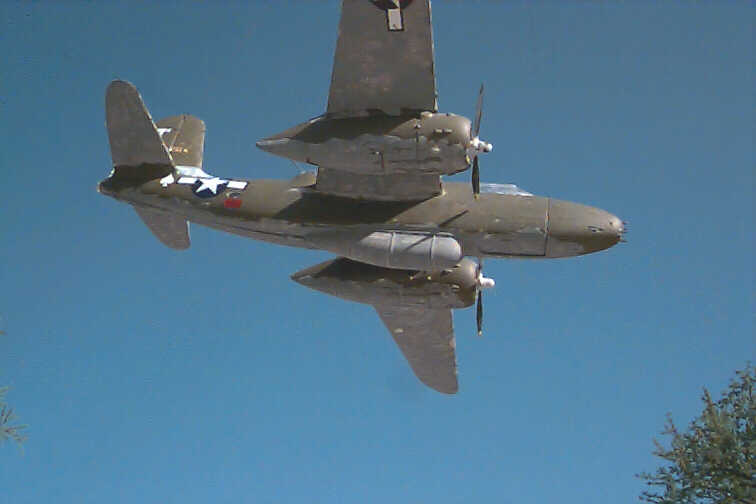
Douglas A-20 Havoc
The A-20 Havoc was designed first without a contract, and it interested the French government. 100 were ordered, but by the time they were completed, France had been overrun by the Germans. The performance of these planes interested the US Army Air Corps, so the US ordered A-20s. France's planes were then delivered to Britain under the name Boston. These first versions of the A-20 had glass noses for bombsighting. British experience in combat induced Douglas to produce a hard-nose version. That is the -G version pictured here. The A-20 line was ceased in September, 1944 when the A-26 Invader started production.
By New Guinea on February 28th, 1943 the Japanese sent a supply convoy from Rabaul to the final destination of Lae. This would have given the Japanese enough material and forces to disloge the Americans from New Guinea and control Austraila and the rest of the South Pacific. Bad weather prevented the American planes from striking at the convoy for days. Finally, on March 3rd, when the convoy was hours away from its destination, 15 A-20s and 11 B-25s were loaded with skip bombs*. They found the convoy and sank 13 destroyers, cruisers, transports and freighters! This crippled the convoy, and made it impossible for the Japanese to take Austraila. General MacArthur said "It was the most decisive aerial engagement in this theater of war."
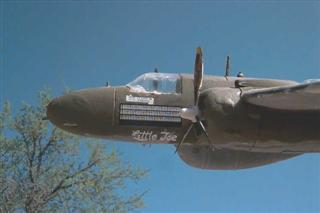
This plane is "Little Joe" from the 389th Bomber Squadron, 312th Bomber Group, which flew in the South Pacific.
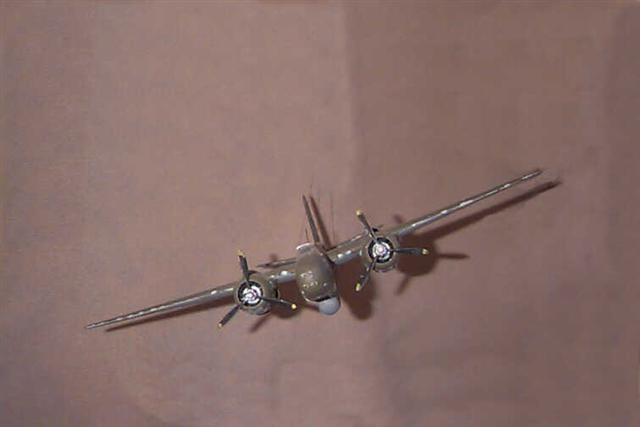
The A-20 would dive down on targets at low level and bomb them and strafe them with its nose machine guns.
| Crew | 3 |
| Armament | 8 machine guns |
| Maximum Speed | 339 mph |
| Engine | 2 Wright R-2600-23 Cyclones |
| Other Weapons | 4,000 pounds of bombs |
| Uses | Used in mainly the Pacific, but also in North Africa as a land-based low level ground attack plane. |

