
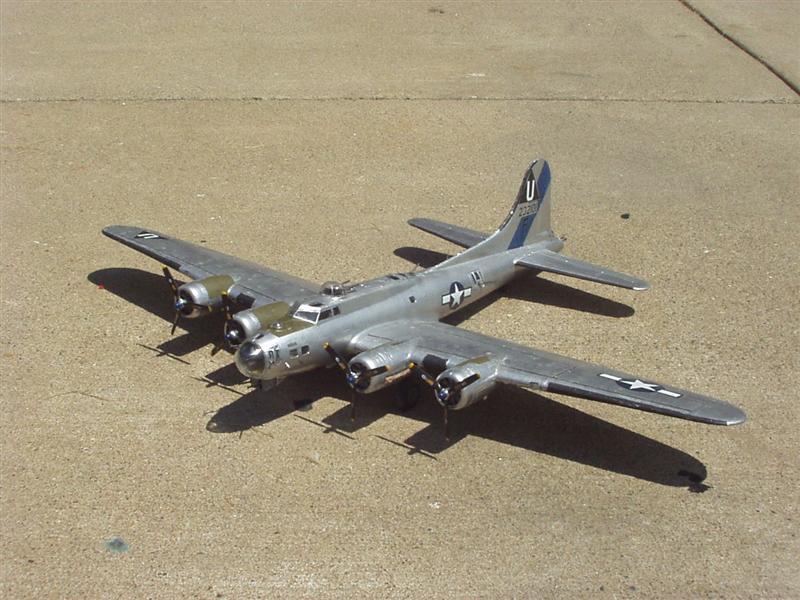
Boeing B-17 Flying Fortress
The B-17 Flying Fortress was America's signature bomber in World War II. Even though there were more B-24 Liberators produced, the B-17 got more publicity. Born of the "299 project" in 1934, the B-17 went through many models before becoming the most fearsome bomber around. Thirteen machine guns helped the Flying Fortress live up to its name. No matter where attackers came from, there would always be a machine gun able to fire upon it.
The Flying Fortress had no pressurized cockpit, so the crew wore very heavy jackets to keep the cold out. It was often uncomfortable and harrowing flying in one of these. Despite these shortcomings, the Americans flew their B-17s over the heart of Germany and bombed German war factories, plants, oil refinaries, and anything that would hurt the German war effort. Their work paid off as it forced the Germans to spend much of their time defending and wasting personnel when they could be fighting elsewhere.
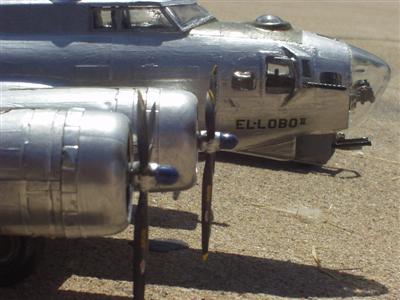
Here are two of the massive Wright Cyclone engines which could produce 1,200 hp!
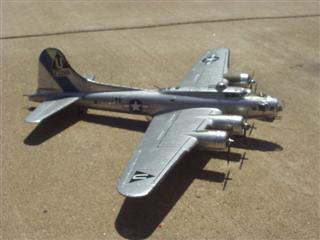
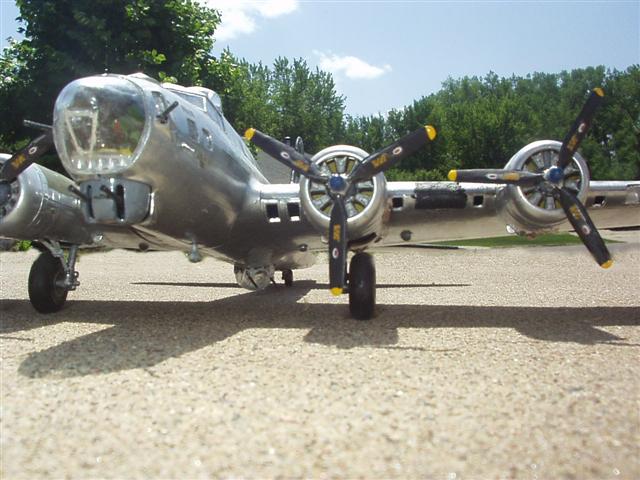
There are dark anti-glare panels on the inboard sides of each engine, and on the nose.
| Crew | 10 |
| Armament | Thirteen defensive machine guns total: two in remote nose turret (chin guns), one on either side of nose (cheek guns), two in top turret, two in ball turret, one on either side of rear fuselage (waist guns), two in tail. |
| Maximum Speed | 287 mph |
| Engine | 4 Wright R-1820-97 Cyclone engines |
| Other Weapons | 17,600 pounds of bombs |
| Uses | Used in all theaters as a land-based strategic bomber |


The El Lobo II, 457th Bomb Group, 748th Squadron.
Stationed at Army Air Force Station #130, Glatton, England
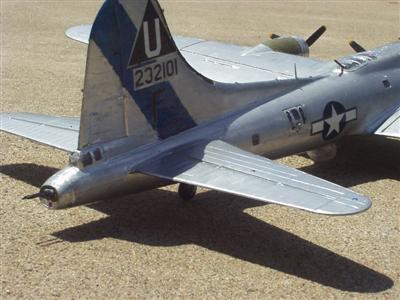
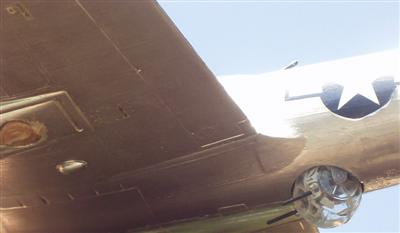
The tail has the blue stripe of the 457th B.G.
The black on the leading edges of the wings, tail and elevators are rubber de-icers.