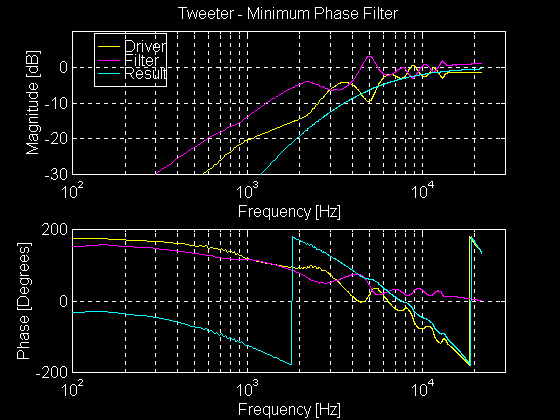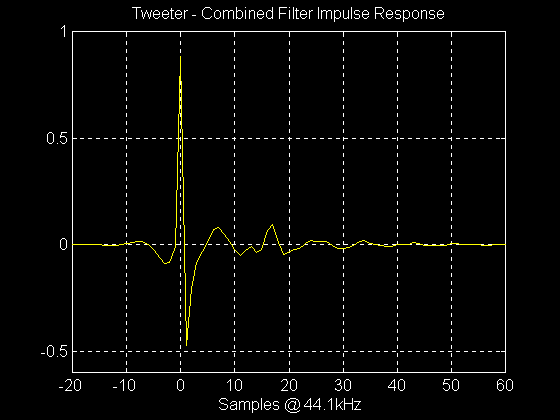
Here the high-pass filter for the Howard Dawson HRL-1 Ribbon tweeter is revisited. The filter is designed to allow perfectly in-phase acoustic summation between each of the drivers in a 3-way speaker. The amplitude target is 36dB/octave at 1kHz. It is designed as the combination of the following two sections:
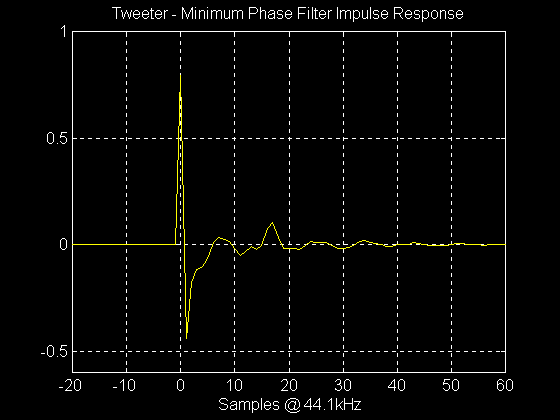
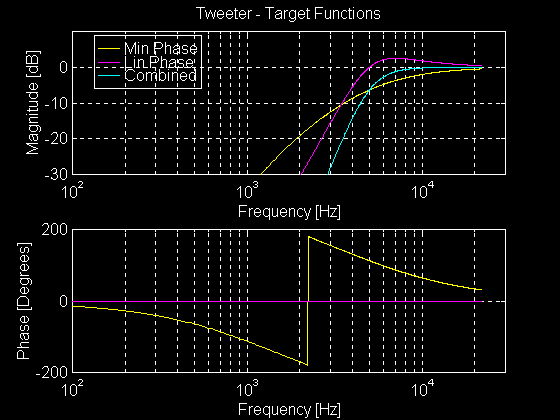
* Minimum phase section: This has two 12dB/octave breakpoints, each one having Q = 0.5. The first is at 5kHz which is the intended crossover for the tweeter crossover.. The second is at 1kHz which is the intended crossover for the midrange driver. It is necessary to have two breakpoints so that the phase response will match the phase shift of the midrange driver's bandpass response.
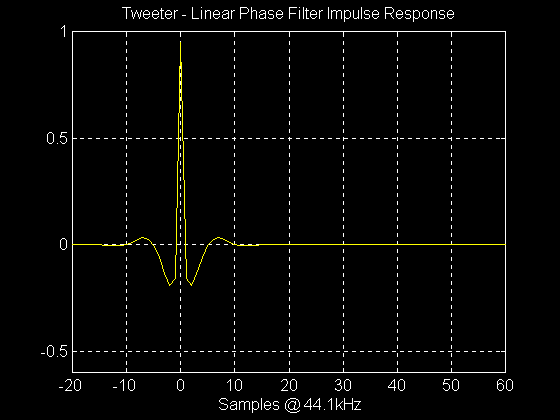
* Linear phase section: This has a 24dB/octave slope starting at 5kHz. Its amplitude target is that of a second order (12dB/octave) filter with Q=1.0 multiplied by itself to create a 24dB/octave slope.
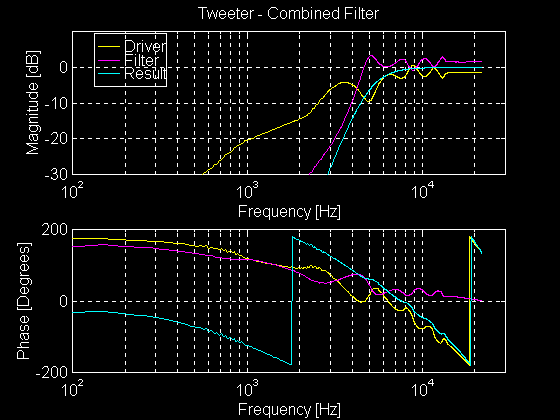
When the two above filters are combined, they result in a filter that is -6dB at the crossover frequency as shown by the blue curve in the figure below. Response contouring has not been added yet, but should be included in the minimum-phase section target response.