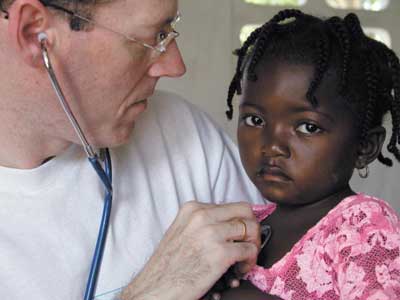
“The idea that some lives matter less is the root of all that’s wrong with the world.”
Dr. Paul Farmer grew up in a poor lifestyle in Florida, living in mobile homes, buses, and boats, being self-described “white trash”. However, his diligent work in school paid off when he received a full scholarship to Duke. He was at first taken in by the wealth of the school, but a visit to Haiti arrested his seductive obsession. He then moved on to Harvard and got a joint degree in medicine and anthropology.
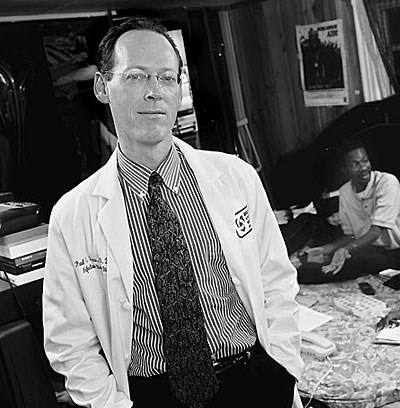
“If I saved one patient in my whole life that wouldn’t be too bad…I saved Michela, got a guy out of jail. So I’m lucky…To have a chance to save a zillion of them, I dig that.”
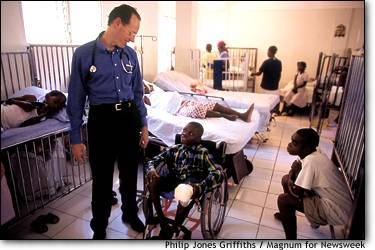
Dr. Paul’s mind has always been set on healing those that are deathly ill. He fights against what he calls “structural violence”- the inequality and resulting poverty that is the origin of so much human illness. He lives both in Paris and in Haiti, trying to cure one of the poorest of people from simple things such as shots to surgery and HIV treatment. Dr. Farmer works in a hospital in Haiti called Zanmi Lasasante , which has grown from a one-building clinic to a multiservice health complex, a primary school, an infirmary, training programs for health outreach workers, and a 104-bed hospital. Dr. Farmer says that every patient is told to pay 80 cents, but no one is to be turned away. Dr. Paul Farmer has also set up an organization called “Partners in Health” , one of the most profound charity organizations that builds schools and cleans water systems and has reduced the percent of HIV transmission from mothers to their children to 4%, half of what it is in the US.
Dr. Farmer still has close ties with Harvard, and, when he has free time, teaches there. He is the author of many books, including,
Pathologies of Power: Health, Human Rights, and the New War on the Poor,
Infections and Inequalities,
The Uses of Haiti , and
AIDS and Accusation .
He also has a biography written on him by
Tracy Kidder entitled
Mountains Beyond Mountains .
He tries to balance his work with his wife, Didi Bertrand, and his five year old daughter, yet sometimes sees them few times in months. This sacrifice to be away from his family shows how faithful he is to his cause. He spends most of his time globe-hopping from Haiti to Peru to Russia to Cuba to Paris to the US.
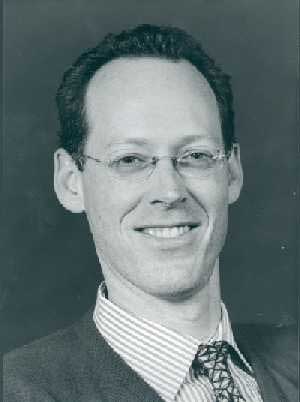
“Without some sort of utopian idea behind our policies, behind our practice, I think we’re going to move forward very slowly, if in fact we don’t move backwards.”
Dr. Farmer, while not devoutly religious, does agree with the Catholic teaching of liberation theology - a preference for the poor. Farmer says that we should treat the poor better than the rich because they need is more. He says that whatever we chose to do with our life, we do to the less fortunate. For instance, if you want to be a doctor, go to the places where people are the sickest. If you want to be a teacher, teach those who can’t read. Dr. Farmer is the living model of putting others before yourself. In Mountains Beyond Mountains, Dr. Farmer shares a story with Tracy Kidder: A pregnant Haitian woman came into the clinic in Cange with a complication that required immediate delivery of the baby to save both mother and child. The clinic was extremely busy, but Dr. Farmer worked frantically to induce delivery of the baby. The baby was alive when he started the procedure, but died during the delivery. A few months after the delivery, Dr. Farmer began to weep. Dr. Farmer recalls: “I had to excuse myself and go outside. I wondered, ‘What’s going on?’ Then I realized I was crying because of Catherine (my infant daughter).” Dr. Farmer had imagined her in the place of the stillborn child. “So you love your own child more than these kids?” he said to himself. “I thought I was the king of empathy for these poor kids, but if I was the king of empathy, why was this big shift (in emotion) because of my daughter? It was a failure of empathy, the inability to love other children as much as yours. The thing is, everybody understands loving your own children the most, encourages that, praises you for it. But the hard thing is the other.” So I thought a while and then said to Dr. Farmer: “Some people would say, ‘Where do you get off thinking you’re different from everyone and can love the children of others as much as your own?’ What would you say to that?” Farmer replied, “Look. All the great religious traditions of the world say love thy neighbor as thyself. My answer is, I’m sorry, I can’t, but I’m gonna keep on trying.” To me, that is the epitome of faith: knowing that you can’t fully reach a goal, but believing in the cause so greatly that you strive for it anyways. Dr. Farmer constantly struggles to achieve things he does not believe is achievable, and reasonably so, but by doing so he creates this image that makes people want to follow him. I believe that if all people had the belief and willpower of Dr. Farmer, the impossible could become possible. And his message spreading, creating hope for a world not only infection-free, but one that does not link serious illness to poverty. “All the great religious traditions of the world say love thy neighbor as thyself. My answer is, I’m sorry, I can’t, but I’m gonna keep on trying.” Sources:
www.sfms.org/sfm/sfm1103m.htm
myhero.com/myhero/heroprint.asp?hero=Farmer
www.fccog.org/2003sermon/sermon031102.htm
ncronline.org/NCR_Online/archives2/2005a/012805
www.inequality.org/farmer2.html