

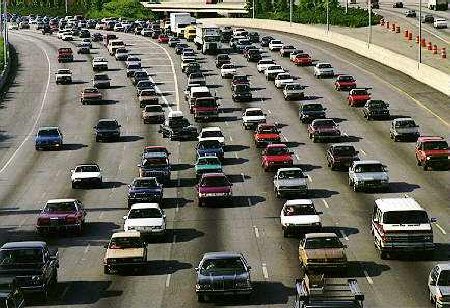
The answer is that Road Rage is an extreme reaction to situation. Some people may be predisposed to violent behavior but that does not explain how "normal" people commit the terrifying actions associated with Road Rage. As the examples elsewhere on this site show most Road Rage incidents are the result of several factors coming together at a precise time and place.
The Washington State Department of Licensing compiled a list of the most common reasons for aggressive driving that can lead to Road Rage. Obviously stress is the main cause but this list goes deeper to the root of the problem. In fact drivers make a decision to act dangerously.
- Drivers make a Choice for freedom, excitement, and pleasure over patience, control, and responsibility.
- Drivers want other drivers to "lose" on the road.
- Driver feel Road Rage or aggressive driving has become the norm, like drinking and driving used to be.
- Some drivers are acting out what is seen or learned through experiences of viewing others, or seen on television.
- Drivers want an adrenaline "high".
- The vehicle itself has become a defendable space with less risk for personal engagement because of the fortified structure, sound proofing, and window tint on newer cars.
These reasons resonate the loudest with younger drivers. It is clearly demonstrated that younger drivers have less skill, are more likely to take risks, have a lessened sense of vulnerability, and are more influenced by others actions. Couple this with a diminished amount of attention that is common among young drivers and the aggressive nature most prevalent in young adult males and their inherent competitive nature and there is a recipe for disaster. The problem lies in the fact that Road Rage is not limited to these groups. The trigger for Road Rage is more complex then Washington gives it credit for
Most of the time an inconsiderate driver is nothing more then an annoyance, but if that driver's actions are viewed by someone to be an issue Road Rage can occur. In fact often times Road Rage is not even precipitated by an aggressive driver. Many times the person committing the crime is upset by the actions of a law abiding or otherwise innocent driver. This is why Road Rage is such a tragic crime. Something as insignificant as a driver going slower then another driver would like can spark Road Rage. It is these incidents of innocent drivers being victimized that shows the true horror of Road Rage.
The other reason for the concept of Road Rage is slightly more psychological. Americans view cars as an extension of themselves. A person's car is viewed by most as a safe location. Further most drivers feel entitled to the area around their car. When someone violates the safety of a driver or impugns on their perceived car "bubble" they can become defensive. It is much the same reaction people have if their house is broken into. There is a sense of one's possessions and space being violated. Again this is a uniquely American trait and is a byproduct of the automotive culture of the country.
In the end Road Rage appears to be a convergence of a stressed driver becoming irrationally enraged by another driver either because of the other drivers intentional or unintentional actions. The stressed driver then feels a need to "show the other driver a lesson" this is where aggressive driving becomes Road Rage. The driver is in control of a two ton weapon and has lost rationality. When the driver uses that weapon or any other one as a result of actions on the road, Road Rage occurs. The end result is that a possible completely innocent individual is injured or killed because of the actions of another.

