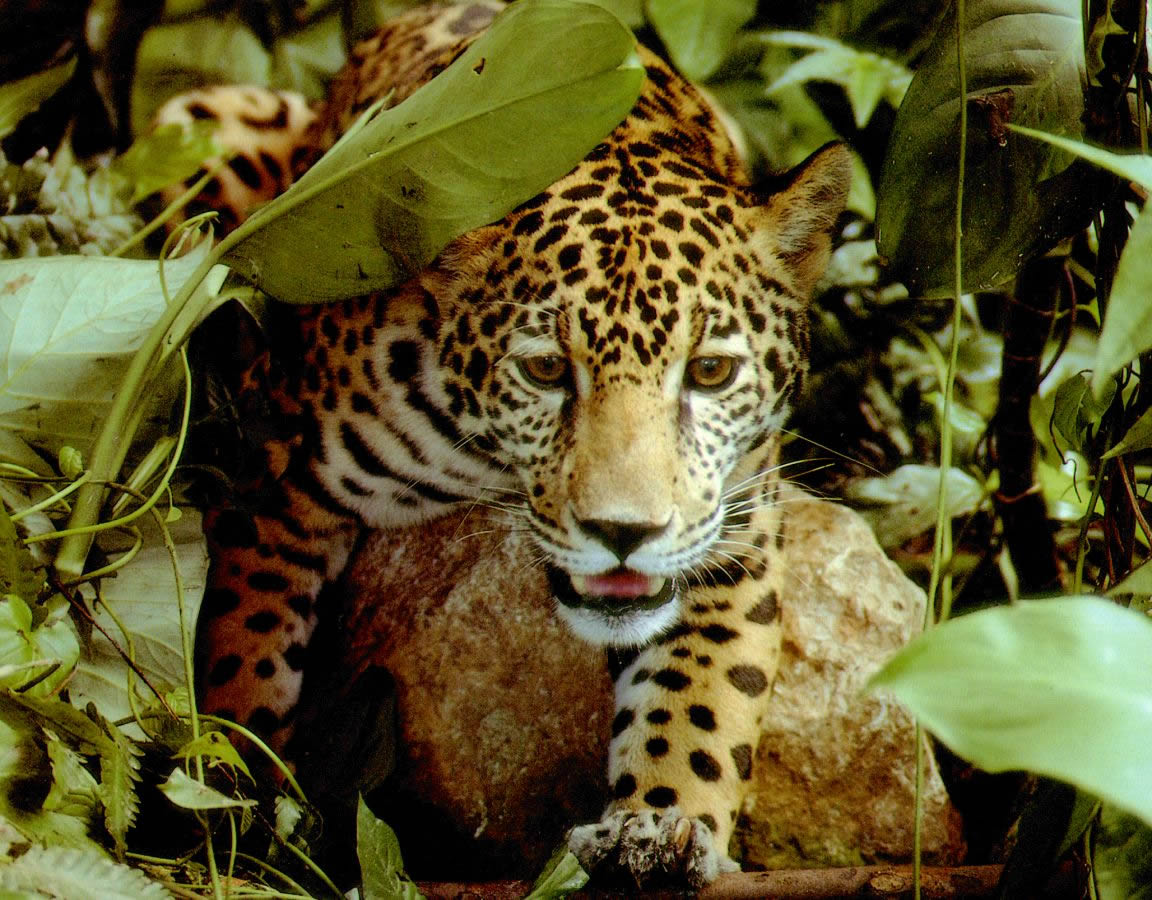
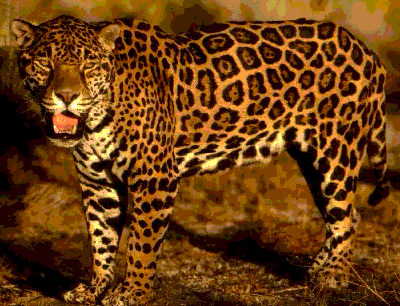
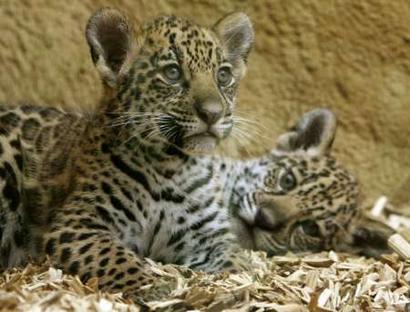
Jaguars are a compact and well muscled animal. They come in many variations of size and weights. Normally in the range of 56–96 kilograms (124–211 lb). Larger Jaguars have been recorded weighing 131–151 kilograms (288–333 lb) (roughly matching a tigress or lioness), and smaller ones have extremely low weights of 36 kilograms (80 lb). Females are typically 10–20% smaller than males. The length of the Jaguars varie from 1.62–1.83 meters (5.3–6 feet), and its tail may add a further 75 centimeters (30 in). It stands about 67–76 centimeters (27–30 in) tall at the shoulders.
|
|
Reproduction :
Jaguar females reach sexual maturity at about two years of age, and males at three or four. Jaguars are believed to mate throughout the year in the wild, although births may increase when prey is plentiful. With no seasonal variation in semen traits and ejaculatory quality; low reproductive success has also been observed in captivity. Female estrous is 6–17 days out of a full 37-day cycle, and females will advertise fertility with urinary scent marks and increased vocalization. Both sexes will range more widely than usual during courtship.
Mating pairs separate after the act, and females provide all parenting. The gestation period lasts 93–105 days; females give birth to up to four cubs, and most commonly to two. The mother will not tolerate the presence of males after the birth of cubs.
|
|
Social structure :
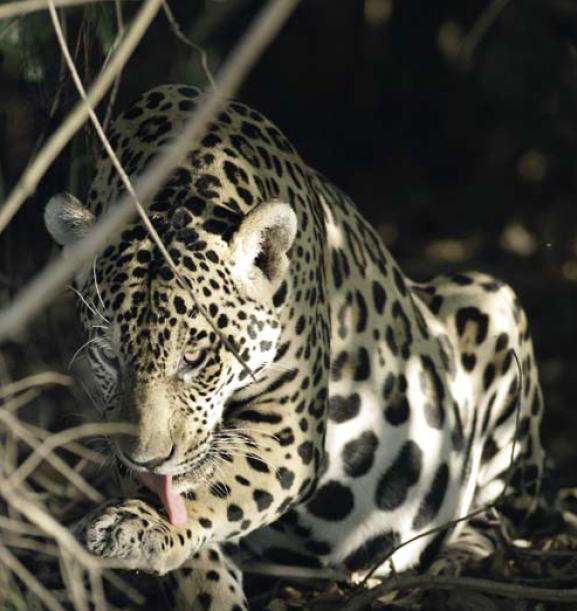
Most Jaguars are solitary outside mother-cub groups. Adults generally meet only to court and mate (though limited non-courting socialization has been observed anecdotally) and carve out large territories for themselves. Female territories, from 25 to 40 square kilometers in size, may overlap, but the animals generally avoid one another. Male ranges cover roughly twice as much area, varying in size with the availability of game and space, and do not overlap.Scrape marks, urine, and feces are used to mark territory.
|
|
Conservation status :
Jaguar populations are currently declining. The animal is considered near-threatened by the
International Union for Conservation of Nature and Natural Resources, meaning it may be threatened with extinction in the near future. Detailed work performed under the auspices of the Wildlife Conservation Society reveal that the animal has lost 37% of its historic range, with its status unknown in an additional 18%. More encouragingly, the probability of long-term survival was considered high in 70% of its remaining range, particularly in the Amazon basin and the adjoining Gran Chaco and Pantanal.
The major risks to the jaguar including deforestion across its habitat, increasing competition for food with human beings, and the behaviour of ranchers who will often kill the cat where it preys on livestock. When adapted to the prey, the jaguars has been shown to take cattle as a large portion of its diet; while land clearance for grazing is a problem for the species, the jaguar population may have increased when cattle were first introduced to South America as the animals took advantage of the new prey base. This willingness to take livestock has induced ranch owners to hire full-time jaguar hunters, and the cat is often shot on sight.
|
 |
Nutrition :
Like all cats, the jaguar is an obligate
carnivore , feeding only on meat. It is an opportunistic hunter and its diet encompasses 85 species.The jaguar prefers large prey and will take deer, tapirs, peccarie , dogs, and even anacondas and caiman. However, the cat will eat any small species that can be caught, including frogs, mice, birds, fish, sloths, monkeys, turtles, capybara, and domestic livestock.
.
|
 |
Resourses :
|
  |