| THE RECORDING SESSIONS |
 |
 |
 |
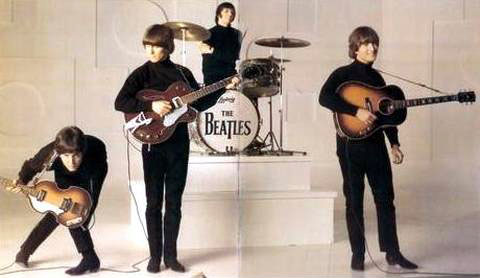
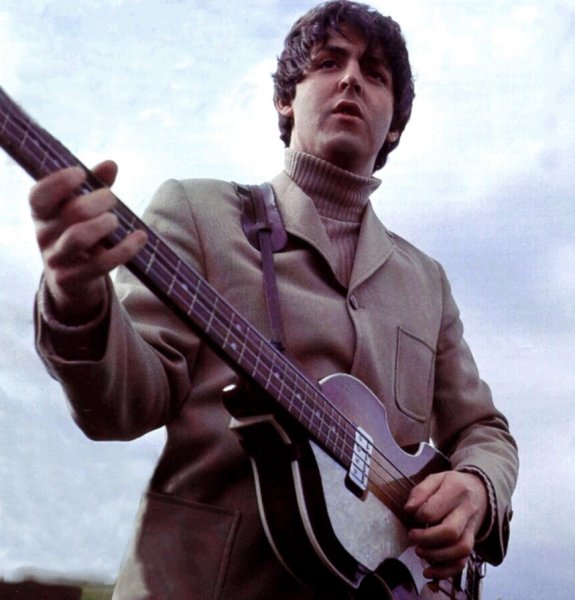
| The Beatles "Help!" is rightly considered one of their best songs ever. With introspective and personal lyrics by John Lennon, superb bass playing by Paul McCartney, those shining arpeggiated guitar solos from George Harrison, and masterful drumming by Ringo Starr, it was a natural #1 single. EMI/Parlophone, in those days, issued their singles strictly in mono. So, mono and stereo mixes were needed for every track. "Help!" was no exception, but some listeners quickly noticed differences in the single 45 version (mono) and the stereo LP version. And thats why we're here today. The differences boil down to this: SINGLE MONO VERSION: has different body than stereo, no tambourine, with stereo versions intro grafted on, but without beats before 1st verse. John sings more cleanly, example: "Now I find I've changed my mind, I've opened up the door" is ennunciated clearly; in stereo, "Now I find I've changed my mind, I've opened up the doors" is sung quicky, all together. Georges backing vocal is a bit louder than Pauls on the mono. So where does this mono version come from? When did they record it, and why ARE there two versions anyway? This article will attempt to shed some light on this fascinating subject. APRIL 13th, 1965, ABBEY ROAD STUDIO 2, George Martin,Producer; Norman Smith,Engineer. 7:00 to 11:00pm. John Lennon had written "Help!" after both he and film director Richard Lester became unsatisfied with the working title of the Beatles in-production motion picture:"Eight Arms To Hold You". So, taking a dare from journalist Maureen Cleave to write a song with words having more than 1 or 2 syllables, John went for it. Lennon produced a song which even he still loved years later. Most of the "Help!" album had already been recorded in between filming, so all it took was one nights worth of sessions, and a little bit of tape, to capture a classic....The Beatles began recording... TAKE ONE: Paul counts off...This take goes as far as the beginning of the first verse, complete with Georges spiraling guitar run. John then cries "Stop! String gone!". After some hem hawing... TAKE TWO: Paul putters around on bass, George Martin intends to go into take 2, until GH informs him Johns string is still broke. The tape stops, and when it continues, John is probably just done re-tuning his Guitar. When the take commences, it is short, and doesnt even go as far as take 1. TAKE THREE: Goes at a pretty good clip, until just before the second verse, John hits the wrong chord, and is incredulous at being informed so! Some discussions ensue (is that Neil Aspinall in the studio, or Norman Smith talking?) about the speed of the song, with George commenting that its too fast. George then complains he'll have to play and sing at the same time, meaning play his spiraling guitar part, and that in order to avoid that, they should 'double-track' the vocals. George cries "It'll be even harder still!".Paul then explains: "No, we've got two voice tracks!"Then discussion about the rhythmic thumping you hear during the ending of each chorus. Paul adds this should be done, but John tells him hes doing it anyway. Theres a quick burst of John singing, what it is, we can't tell. Again, another taped over snippit, after John impatiently declares, 'lets go, c'mon!'. After some discussion about the speed of the performance... Take FOUR is never heard,but we have to assume one of the taped over snippits must have been considered four. TAKE FIVE: After some strums of the guitar, John declares 'thats it, come on". The Beatles go into a near perfect instrumental performance, this time however missing Georges spiraling guitar arpeggios after the choruses. He instead concentrates on rhythmic stabs during the chorus. George Martin apparently does hear some duff chords from John, as TAKE SIX then begins...and ends with some snare thwacks from Ringo. Apparently too slow. TAKE SEVEN begins with John tuning his guitar, as so many Beatle outtakes do! And he tunes, and retunes...then laughs a maniacal laugh! The tape cuts, and then goes into take 7 proper. Everything breaks down going into the final verse. TAKE EIGHT: Doesnt even go as far as the first verse. TAKE NINE: Double tracking of vocals begins. Huh? From what take? Probably take 5, as its (apparently) the only full instrumental take. TAKE TEN: Is a four track to four track reduction. This means Take 9 had used 3 tracks by that point.Here, we have double tracking on the rest of the song, but not the intro, as we did previously. A diferent intro althogether? TAKE ELEVEN: A duff attempt at double tracking the intro, and adding Georges lead guitar. But why call it another take? TAKE TWELVE: The final recording is done. Now onto the mixing stage, where further confusion begins... |
 |
| Mixing commenced on "Help!" April 18th, 1965.Three mono mixes of "Help!" were done, with the last deemed best , with one stereo remix being done and taken away by United Artists for the film now titled "Help!". BOTH mixes are documented to be from Take 12. Further mixing was done June 18th. |
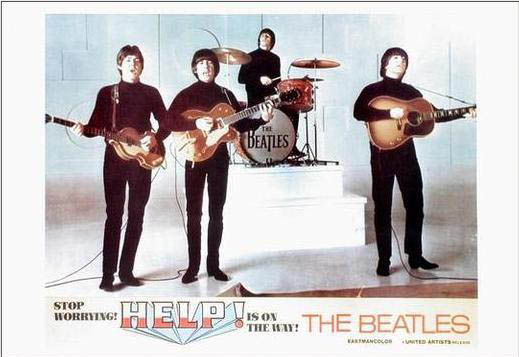
| In that case, there was mono remix 4 for the song, as well as stereo remix 2. On April 22nd, The Beatles filmed the black and white performance sequence, which would serve to open their movie, at Twickenham Studios, London.. On original film prints of "Help!", during this sequence we hear a very different intro on the song, with the body of the mono 45 version.So, was this the April 18th mix? That could be, but this depends on when the United Artists production acetetes were made. The "Help!" acetate has the stereo version, albeit mixed a bit diferently, and probably 'reduced' to mono. So, where does the mono mix come from? Mark Lewishon says in his book "The Complete Beatles Chronicle" that its not a different take, but clever editing from George Martin. Not even clever editing can provide an alternate vocal take Mark! But, after take 9, thers no space on the four track FOR another vocal. Had the vocals been done on a prior take, however? This all depends. Are the instrumentals on the mono and stereo takes identical? If not, then we must assume the mono version may come from somewhere around take 4. Remenber, there's talk about the difficulty of playing and singing around there. After that, the band plays it a bit differently. But is there no studio documentation providing the answers? All documents from the session, recording and mixing, show take 12 is the version used for everything. There is also the possibility that the mono vocals were recorded before the stereo vocals; meaning, the original mono version may have been recorded using take 5s backing track, mixed to mono as heard on the "Help!" filmprint, and then reconsidered and re-recorded over the multi-tracks 'mono' vocals. The only problem with this is no record of it, or change in take numbers. But would there have been anyway? Bottom line: there has to be another 4 track with the mono mix on it. So...in essence, we're left with no clear answer, just plenty of conjecture. It's doubtful anyone involved in the session remembers details such as the ones we need; Lewisohn feels information like this to be beyond trivial, hence, his ignoring these problems in his books. A look at John Barretts detailed studio tape summaries might be helpful, for he too must have puzzled over the differing versions. So, the detective work will continue. Or WILL it? It seems we finally have an answer after all these years: The Beatles recorded new vocals for "Help!" at CTS Studios, the same place they were doing looping for the film. This indeed was AFTER the recording of the stero version.Why here, and not Abbey Road is unclear. CTS utilised 3 track recorders, however, which couldn't be used to mix with at EMI. So George Martin simply took the mono mix that had been done there, spliced the fold-down of the stereo intro, and voila! The 45 mix was ready and perfected. Still, WHY the Beatles felt another pass at the vocals was needed is unclear, but you now know why there are two different versions of this beloved song. |
 |
| Help Me if you can....if you can provide enlightenment or information about this article, or you simply want to comment, please e-mail me: [email protected] |
|
| Version 1.4 (c) 2009, David W. Reynolds, |
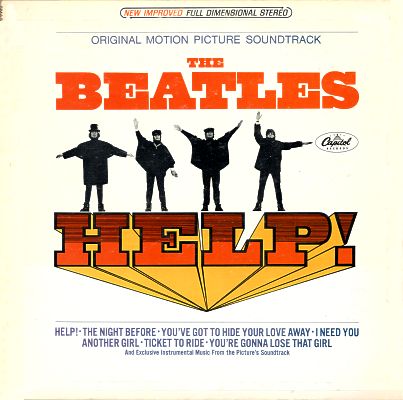
| Notes: Commencing with 1965, George Martin no longer used individual take numbers on Beatles songs, in other words, no longer was each individual performance accorded a take number. Takes would only be counted until a usable 'backing track' was arrived at, then, usually,("Ticket To Ride") take numbers would end there. This was not always the case though, as you can see above. Usually, a seperate take number would also be given to a tape reduction, as seen with take 10 of "Help!". All this was not a hard and fast rule, and as this session was an early one for the new system, things probably didn't always go the way of Mr. Martins new rules. Also remember, the Beatles frequently rehearsed with tape rolling. This MAY explain the snatches or bursts of performance we hear on the session tapes. Or it may not...! |
 |
| LINKS WE APPRECIATE BEING 'ROUND: |
 |
 |
| NOTICE: ALL SOUND FILES ON THIS SITE ARE FOR EDUCATIONAL PURPOSES ONLY, AND ARE SIMPLY MEANT TO HELP ILLUSTRATE POINTS ABOUT THIS SONG. NONE OF THE FILES FEATURE MORE THAN A FEW SECONDS OF MATERIAL. |
 |