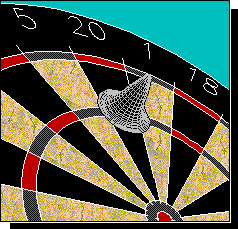
當我們這裡說"專業玩家 "即是表示他每投十套鏢平均最少總有一次拿到180分, 如圖所示,如果他們瞄準60位為目標, 他們所投的鏢與60位是非常接近, 最遠亦只是在高低一 二分之間. 換一句說話, 他們在投鏢時我們應只有鼓掌可以做. 世界上這個水平的真正專業高手不多.
我們常常聽到有些朋友說這個,那個如何好鏢, 或者這個,那個如何屎鏢; 雖然有修養的高手會向你解釋飛鏢運動與其他運動有一種很不同的地方, 就是飛鏢運動本身是一種交友活動, 不同層次的玩家可以一起比賽,一個初學者可以很幸運地偶然勝了一個經驗者. 有一個俱世界水準的香港鏢手更曾經對我講飛鏢運動取勝三分靠技術而七分在於修養. 但無論真正的高手如何講修養, 我就曾經有過不愉快的經驗. 我本人自知技術水平不高, 但對飛鏢運動就是真感興趣, 故不論張三李四亦不管你是否世界冠軍或初學者都可以一起投鏢. 有一次其中一個朋友對著我認真地說:"你技術太差,我們不要和你一起比賽!"天噢! 這是不是太嚴重了, 我承認我真的有些希望能與他們這種高手一起練習,大哥, 但這不是代表我乞求你! 我有種很不開心的感覺, 我其實只是希望能與有興趣飛鏢這種運動的朋友一起開心玩鏢.
為了他們這一群特殊眼光高手, 我想了很長時間如何真正知道國際的所謂高手界定, 後來偶然看到KARI KAITANEN - THE DARK BOOK (1994) 的介紹, 其中玩家水平這一篇介紹和把鋼針鏢玩家分類非常不錯,故抱著侵犯板權的危險,把它節譯過來.
作者把技術水平分為(我簡化了作者如何計算機會率, 而其中軟針鏢的機會率應起碼提高三倍以上) :
1/. 專業玩家 - 專業玩家投中三倍分(treble)的機會率是46.42%, 投中180分的機會率
是10%.
2/. 高手 - 高手投中三倍分(treble)的機會率是21.54%
3/. 普通玩家 - 普通玩家投中三倍分(treble)的機會率是10%
4/. 初學者 - 初學者投中三倍分(treble)的機會率是4.64%
|
專業玩家 當我們這裡說"專業玩家 "即是表示他每投十套鏢平均最少總有一次拿到180分, 如圖所示,如果他們瞄準60位為目標, 他們所投的鏢與60位是非常接近, 最遠亦只是在高低一 二分之間. 換一句說話, 他們在投鏢時我們應只有鼓掌可以做. 世界上這個水平的真正專業高手不多. |
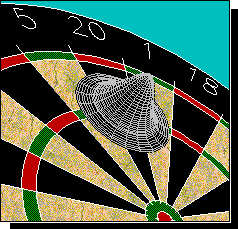 |
高手 高手所投的鏢仍然比較集中, 當他們瞄準20三倍時, 縱然不中目標, 亦不會超出1和5位以外. 而用平均機會率計算, 每100套鏢應可以得到一次180分. 平均分數74.7以上. 為了這種功夫他們應該花了很多時間在酒吧? |
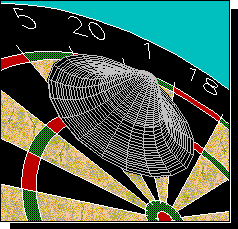 |
普通玩家 雖然普通玩家投鏢每套之間很接近, 但鏢與鏢之間的距離相差較大, 他們瞄準20三倍時,大致有十分之一可以射中目標.(不是指180分/套) 你是否上述似曾相識, 與你平日投鏢很接近? |
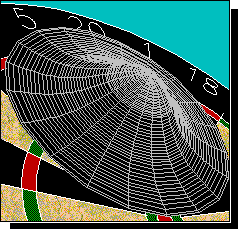 |
初學者 雖然我們說初學者投中三倍分(treble)的機會率是4.64%, 但初學者 這組別亦是技術水平最參差不齊.
|
另下面是作者有關機會率的內容, 亦十分有趣, 但可惜我最近沒有時間把它翻譯過來.
After solving how the darts are spread around the aiming point you must decide which kind of players you want to take into your calculations. I decided to use four different levels of players. Just to make it easier for you to know what level I am talking about, I have named these levels: professional, expert, average and beginner. Since the dispersions of darts should be exact for finding the exact percentages for these levels, there must be something that makes them exact. I have chosen the probability of hitting the treble-bed. The 'professional's' probability of hitting the treble is hereby always 46.42% in the book. An expert can hit the treble with the probability of 21.54%. For an average player the same figure is 10.00% and for the beginner only 4.64%. I have not chosen these numbers randomly: the percentage of a professional raised to the third power makes exactly 10%. You can thus say that a 'pro' can get 180 points - three darts to treble-bed - every tenth time he tries. As you may already have guessed an expert can score 180p every 100th time and so on. probability of probability of
hitting the scoring 180
treble points
------------------------------------------------------
professional (pro) 46.42% 1 to 10
expert (exp) 21.54% 1 to 100
average (ave) 10.00% 1 to 1000
beginner (beg) 4.64% 1 to 10000
------------------------------------------------------
You must, however, notice that the probability of getting 180 points is only theoretical: (46.4%^3 = 10%). After the first two darts there is already considerably less space on the treble-bed for the third dart. Therefore you often have to change your aiming point. Thus the 'right' probability of scoring the maximum score may be one-to-twenty or even less. Then there is the mental pressure, which may be enormous. If you have never reached 180 points before, your hands may start to tremble. If you have practiced darts for many years already and have never scored 180, it is probably the biggest reason for this. It doesn't mean that you must now rank yourself in the 'beginners' group. In fact, even if you try to test the level of your play to find it out, there is no reason to start calling yourself 'an expert' or 'an average player'. As mentioned earlier, the names are used only because it's much easier to understand what kind of sprays I'm talking about. However, the test can help you to see what level you should be interested in. On the other hand, after the first dart the beginner e.g. might have a good 'sighter' for his next shots, and the probability of throwing the remaining darts into the target can be much bigger than before. So, it's very hard to tell the exact level of scoring 180 points. It would be more correct to say that an expert
can hit three different trebles, for example T20, T15 and
T16, every hundredth time. Since the theoretical
probability is approximately right, it's easier to say
that an expert can get 180 points every tenth time. ProbabilitiesAs you have noticed, everything in darts has something to do with probabilities. When you choose the way of finishing you just try to find the best probability to win the game. The probability of the opponent finishing the next turn is also important. You can estimate these probabilities in your head or you can even calculate them mathematically, as you have seen done in the book first time ever. At first you must find out the dispersions of darts for the player. You can do that with a test, but that would require a lot of throws to be reliable. Or you can do it purely mathematically when you know the theory of normal dispersion. Since we want to make the results of optimal play as general as possible, we must use a circle as the form of the dispersion. One way or another you have to know what the player's probability of hitting for example a double is, how many darts then fly to a single, which percentage to the sector beside and so on. These probabilities have to be known for every aiming point you want to calculate. When you have found a suitable spray of darts, you simply move it around the dart-board. When you place exactly the same dispersion to the centre of a double you get the percentage of hitting the double. Note that for the computer there are three aiming points in every bed of treble, double and single. Naturally, you must also use the same spray of darts
for the bull's-eye. |