|
Learn as you fly |
| I got thinking one day and thought
hey! the best way to learn how to fly is too fly. So I decided I would make 1 page with
flights for you to do. You can have this with you whilst flying, its like a co-pilot.
Follow the instructions and you will soon pick up what's going on. Unfortunately the inter
costs, so its kind of annoying flying whilst on the internet. That's why I decided to put
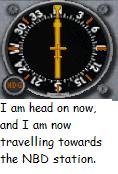
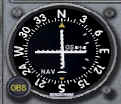
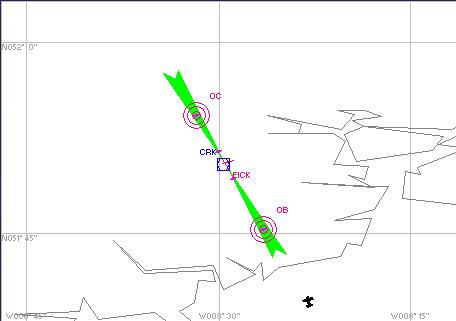
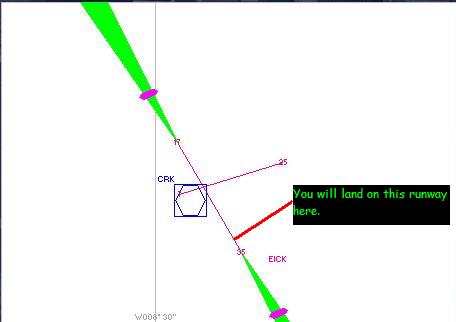
this page in your file which you can download and save time. Download the folder (CLICK HERE) Your first flight with me.I have always liked cork airport, and its got an ILs station and an NBD station, perfect for the best skills in flight simulator. On toady's flight you are going to land at cork airport using ILS and ADF. Geocities only gives me 15MB of space, most half decent aeroplanes are at least over 5MB (I say most not all of them, don't shout at me if that last comment insulated you). Luckily what I want you to download is only 177KB big. You should download that really quick. To install these flights follow the instructions in installation_flight_Cork.htm, that can be found in the folder you downloaded. For starters, ILs and ADFIf you have not read ILS part1, ILS part 2, landing (advisable but not completely neccecery), and ADF pages I suggest you do so. Its probably easier for you to just go and go to those pages save them and read them off line. When you have read and understood all 4 pages we are ready to move on. What is going to happenYou are about 6 miles from the runway, in a trainer Cessna. You are almost lined up. With your powers of knowing how the ILs works and the NBD you are going to land. Do not rely completely on the outside window, you should look from time to time to check up and conferm with your self what your VOr 1 indicator shows. The only time you should constantly look out the window is when you are about to touch down. You will need basic skills in knowing how to use the ATC function of Microsoft flight simulator 2002. You will be landing at runway 35, or in terms of degrees about 350 degrees. Okay lets startUse your VOR 1 Indicator to land. Stay at 2000 feet until your sideways(horizontal) needle (its more of a stick really) centre's, then begin to slowly descend at about 700 feet per minute. Make sure that you have your flaps set to 10 degrees and you fly at about 60 knots. Why do we have flaps on aircraft? Flaps do something wonderful, they give your wings more lift, as because of this you can fly at slower speeds with out stalling. Being able to fly at slower speeds make landings more soft, flaps also make you slow down because they add a great amount of drag to your aeroplane, but don't use them to slow down when going above 90 knots in the Cessna, flaps get damaged at high speeds. You might be wondering what is stalling? Stalling is what occurs when an aeroplane is moving too slow through the air and therefore its wings are not producing enough lift to support it. It causes your plane to fall to the ground like a rock, rather than glide. Make sure that at the same time you keep your vertical (sideways) needle centred, if it goes off track correct it. When you are trying to do all these things at once it gets difficult. Luckily for you you can look out the window, but you need to practice the skills of using ILS so that you can do this 0 visibility. Your plane is tuned into the right ILS station, and your NBD is also tuned. Notice however that once you approach the runway your NBD needle will completely turn round. This is expected, this occurs because the NBD is located on the outer marker. The outer marker is just a point along the runway centre line about 3 miles before the runway begins. You should hear some beeping sounds and a light should flash in the cockpit when you pass over, this indicates that you are directly above it. It acts as a warning to you that you are about to land. There are 3 markers, the Outer the Middle and the Inner. The middle is located between the outer and the inner, and the inner is located at the point where you should cut your thrust and flare. All flaring involves is you bring the aircraft's nose up, so that you are pitched up by about 10 degrees. This allows you to land very softly and slowly, make sure that you flare about 5 meters above the runway in the Cessna, and that you are not going too fast. Doing all this at once can be quite demanding, which is why you need to develop an instrument pattern. Simply put you look at one instrument for a second or 2, move on to the next one and so on. Never look at just one instrument for too long. Once you have done this flight, reset it and this time do the flight in 0 visibility. Don't have any wind, that makes it very difficult, lets move at one step at a time. Cool tipWhen landing its sometimes difficult to see below you because you are pitched up(your nose is aimed towards the sky), in real life you just raise your seat. You can do just the same and raise you seat or lower it. To raise it hold down "shift + Enter" To lower it hold down "Shift + Backspace " Important pictures.Cork Airports Map | Cork airports map (zoomed in) | A classy landing at cork airport. |
|
When passing over a marker, one of these will flash. If you are above the outer marker the "o" will flash.
The ADF Indicator.
The VOR Indicator. |