| Welcome to Dreamcast Magic |
| Article: Sega's Online History |
 |
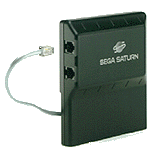
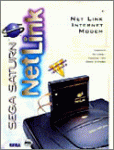
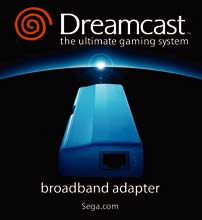
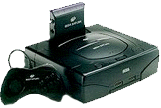
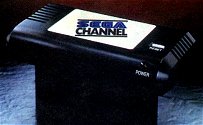
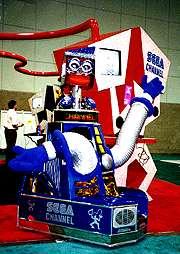
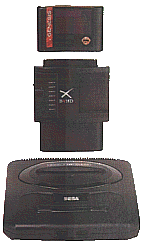
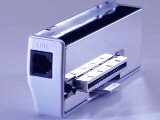
| In this months article I will discuss the deep online history of Sega it all started in 1989 with the release of the Genesis, which was a big success seller over 13 million in the US alone. But in 1994 with a vision of the future the made the first successful consol modem it was called The Sega Channel. "The Sega Channel was a joint venture by Sega, TCI, and Time Warner that used existing Genesis technology to deliver a game-on-demand systems to users of TCI's and Time Warner's various U.S. cable TV franchises. Test-marketed all through the summer and fall of 1994, the service saw its debut in Pittsburgh, PA in December of 1994 and launched nationwide in both the U.S. and Canada in March of 1995. It was eventually introduced in Europe in June of 1996 through a variety of distributors - Flextech for the UK, Detusche Telekom for Germany, Eneco in the Netherlands, and Telenor in Norway. For $15 a month, Sega Channel subscribers could download their choice of up to 50 different Genesis games (changing every month) inside specially build combo modem/RAMsave adapters based on Catapult's X-Band modem hardware. Many of these were previews of up-and-coming games, such as Time Killers. Others were custom versions of existing games, such as the 24-bit version of Super Street Fighter 2: The New Challengers and a custom port of the Sega CD's Earthworm Jim Special Edition; and still others were titles were never released in their subscriber markets, such as MegaMan: The Wily Wars (a European market exclusive that only U.S. Sega Channel subscribers got to see in those days). Downlink transmission of the Sega Channel was carried nationwide across the U.S. on transponder 1 of the Galaxy 7 communications satellite. At its peak of popularity in 1997, the Sega Channel was carried by over 100 cable TV systems in 140 U.S. cities and enjoyed a steady subscriber base of some 250,000 users. The Sega Channel was officially discontinued in the U.S. on June 30th 1997 due to declining popularity in the wake of the Sony PlayStation. A bizarre fact is that when showing off Sega Channel at E3 in 1994 Sega used a robot pictured here. Next came the X-band while not an official Sega product was based on the same concept. Released for both the Genesis and the NES it allowed users to send e-mail and play online. It also featured "call waiting" you were notified when you are using the X-band modem, and someone is trying to call you. And parental controls, launched in late 1995 and the X-band servers were shut down on April 30, 1997. The company sited many causes for the discontinuation of the X-band service; the lack of new interest in the service, and the end of the 16 bit gaming era being the primary reasons. Both the Sega Channel and X-band would have no doubt been much bigger if only released earlier in the 16 bit era. Sega then pursued its online dreams with the Saturn and the release of the Saturn NetLink. Which not only allowed online gaming for some of the best Saturn games but also allowed you to surf the net. Like the X-band the NetLink also featured parental controls for surfing the internet and allowed you to send e-mails. There were no central servers used and you would direct connect (like making a phone call) to a someone�s Saturn to play online with them. So even now you can still play the following games online: Daytona CCE Championship Edition Duke Nukem 3D Saturn Bombermanst Sega Rally Virtual On Planet Web like they did for the Dreamcast made the web surfing software and there site for the NetLink along with downloads to upgrade your version are still online Click Here to visit it. There are many groups still together playing the NetLink Click Here to visits DCM's top pick. Sega's plans for the Dreamcasts online functions were huge to say the least. Released in Japan in 1998 and late in September 1999 for the US it came with a built in 56K modem. Later a Broadband adapter was released in Japan and mass produced until May 5, 2002 but was only released throw Sega's online store for the Dreamcast in limited numbers. This marked a new standard in gaming history the worlds first build-in modem console and also the first high speed internet console and the first console to feature high resolution and high polygon count online gaming. It featured true 3D online gaming, web surfing, high speed internet web surfing, e-mail, voice chat, in-game online voice chat, mp3 downloads, view streaming video and vmu downloads (games, save files and vmu videos aka vmuv's). Sadly many of the online games for the Dreamcast are now offline (Click Here to view a complete global online games list) due to the fact that the Dreamcast online games all used there own central server. Many were shutdown with the official closing of the SegaNet the Dreamcasts official Sega run ISP in June 2003. Planet Web made the Dreamcasts US web browsing software Click Here to go to the official site featuring vmu downloads and much more. From Sega Channel to the Dreamcast, Sega has been a major leader in console online gaming history. Its bold steps it has taken where looked as crazy in the past and said to lead only to failure but they were proved wrong and now Sega's online steps are being followed with the next gen of consoles. |
 |
 |
 |
 |
 |
 |
 |
 |
 |
 |