This week we looked at challenges to faith/Faith and focused in on modern-day concerns, such as our consumerist society and the relationship between science and religion. We began by defining the four responses to the �God question�: Theism (belief in the existence of a God), Atheism (belief that God doesn�t exist), Agnosticism (belief that it is impossible to determine whether or not God exists), and indifference. Of these, the first three are often Faith responses in that it takes reflection, courage, and faith in oneself to accept and profess any one of them. Indifference and practical atheism (the practice of living one�s life at odds with the religious beliefs one professes to hold) are Faithless stances In our discussion of the differences between each, we compared the teachings of Nietzsche, Hobbes, and St. Ignatius Loyola.
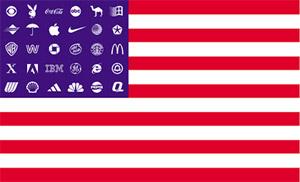
In Advertising, Consumerism, and Its Influence on American Society, John Kavanaugh, SJ, discussed the effects our consumerist culture has on its people. Although we have created it for our own benefit and culture usually is a reflection of its people, the consumerist culture actively attacks us through advertisements and other media outlets, encouraging us to conform with its own moral system. Instead of working to develop the internal person, its moral system tells us that the external possessions define who we are, and only they can bring us happiness, security, and comfort. Only they can fill the hole of the human condition. As Kavanaugh tells us in Idols of the Marketplace, consumerism sets itself up as a god to be worshipped, one that we should center ourselves around.
The Frontline story Merchants of Cool informs us as to how the corporate world has built and continues to build this idol in the teenage world. By stealing the artistic appearances of underground cultures, the consumer-feeding giants find new styles to market. Their tactics constantly change as teens figure them out and become cynical. Nothing (not even cynicism) is off-limits to the advertisers. They create the ideal people they want teens to be (the mook and the midriff), allowing them to more easily understand what the teens want because they own teens� goal. In addition, by enticing elements of underground resistance (bands like Insane Clown Posse), they pull in even those who think they�re opposing the mainstream.
Another opponent to Faith is scientism, the belief that science is the only valid source of truth. We looked at science�s three main weaknesses (its presupposition that nature is uniform, its emphasis on empirical knowledge, and the fact that it cannot give certitude) and the three stages of science�s relationship to the Church as it matured (unreflective unity, reflective disunity, and reflective unity), which mirror the maturation process of any human being in relation to his/her parent(s).