How a trebuchet works.
There are two types of trebuchet designs. Both of them have the same basic designs but are powered by two different objects. The first is called a traction trebuchet. It is powered by a bunch of men pulling down all at once that. This force whips the arm around and flings the object. The second type, and the one that we will be doing our experimentation on, is the counterweight design. This design uses a massive weight on the opposite end of the arm to fling the object. For all intents and purposes this article will be written about the counterweight type.
The motion of a trebuchet is fairly simple. The weighted end of the arm is hoisted up into the air and the sling is wrapped underneath the pivot point (more about the sling later). After it is all set up the weight is released. The weight falls as the sling is dragged underneath. As the sling nears the top one end releases and the object is flung out. The most critical action is that of a string holding the sling being released. In order for the most efficiency the object has to be "let go" by the sling at the perfect point. if the sling slips to early the object may go backwards. To late and the object may hit the ground right in front of the trebuchet. Slightly to early and the sling will fly straight up. A sling is attached two different ways. One end is tied tightly to the arm. The other is hooked losely to an end spike. The angle of this end spike is the main piece that is responsible for when the object is let lose. The length of the sling also can change how quickly the object is let go. A shorter sling length makes the sling come around quicker. A longer length takes it longer for the sling to whip around.
In a perfect world. I believe that the best launch position for the sling will be the best launch postion for the arm. For maximum range these both will correspond to the launch angle of any other object (with out air resistance) which is 45 degrees.
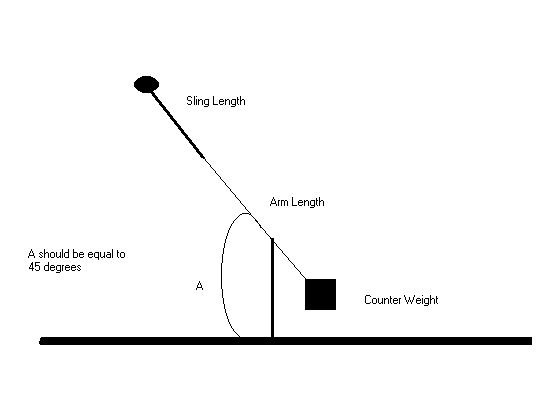
Therefore, for the best results the sling should slip of the spike when everything is in line. Note: All of this only applies if there is no air resistance. With air resistance the optimal launch angle is going to be less.

