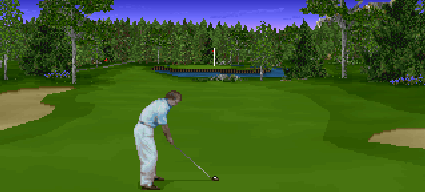
This is a superb risk-reward hole. Obviously, the good old island green is used here. A 475 yard par 5 usually means risk-reward, and that is the case here. Although the island green is very often used on a short par 5, I think that Holden used something else to make this hole difficult, and make you really think about every shot you hit.
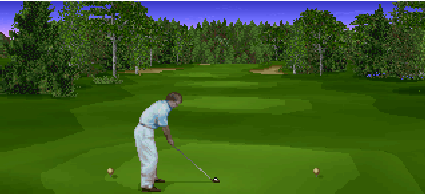
The tee shot is a very demanding one. There are bunkers both left and right, with trees fairly close to the fairway, and the fairway itself is tight.
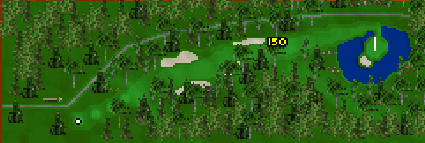
The tee shot here is key. Not only accuracy is key, but I also feel that distance is key as well. I think this can be shown by the lay-up area. The lay-up area gets really narrow about 75 yards to the green, which calls for accuracy (which is not something you want to be counting on from heavy rough), and if your distance is too far then you're in the drink as well.
Now why is distance so key off the tee then? In my mind, you should avoid the lay-up choice as often as possible. A lay-up is usually supposed to be the easy shot, but Holden made it so that it is not. The best option, if you have the right distance is to go for the green. If you hit your drive only 240, then you have
235 to the green. You do not want to hit a 3 wood into the island green. If you hit your drive 270 or 280 yards, then all you have left is 190 or 200, and just a 3 iron or 2 iron. With the iron, hitting this green is a lot easier.
Now, going to the green. This is one of those few holes where laying up can be more difficult than going for the green. The fairway gets really narrow at about 75 yards from the pin and if you go too long, or too far right, then you're in the water and facing a tough pitch to the island green for your fourth shot. You probably won't put it in the water again, but that bunker on the right could catch your ball.
This is one of those par 5's where eagle and double bogey are both a big possibility. A great hole to finish a great course designed by a great designer.
 The tee shot here is key. Not only accuracy is key, but I also feel that distance is key as well. I think this can be shown by the lay-up area. The lay-up area gets really narrow about 75 yards to the green, which calls for accuracy (which is not something you want to be counting on from heavy rough), and if your distance is too far then you're in the drink as well.