Virgin Land of Afar for Investment
Forward
The Afar Regional State, the cradle of mankind, the home land of Lucy, is not only known for its proximity to ports, accessibility through different directions, outgoing and straight forward people, but also for its range lands with their natural endowments.
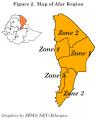
The region, located in North-East Ethiopia between 80 40` 13`` 3``to 140 27` 29`` N latitude and 390 51` 13`` to 420 23` 03`` , is bounded to the north by the Republic of Ertrea and Tigray regions; to the south by Oromia and Somali region; to the east by the Republic of Djibouti and to the west by Tigray, Amhara, and Oromia regions.
It has a large geographical area ranking as one of the four largest regions of the country with a substantial and varied natural resources base.
The climate of the region is arid and semi-arid characterized by an extremely variable and low rainfall distributed bi-modally. The temperature is usually high with hottest months of June, July, and August during which the temperature ranges from 80c to over 450c.
Multi-species of livestock population; one of the richest river valleys in the country with a large agricultural land, mineral water, energy resources, and tourist attractions are the major features, characterizing the region.
Wildlife are supposedly the best adopted living creatures to the region’s arid, semi-arid, and desert lands. The region also has a large number of perenial rivers that include Awash, Mille, Dewae, Gelahlu, Awra, Uwa, Agu, and
Dewae all of which have a potential for irrigation while some are suitable for hydro-electric power generation.
However the situation in this region is rosy and inviting, the efforts made to introduce these exploitable resources is, unfortunately, tantamount to none vis a vis the diversity and size of the potentials.
Thus, having this in mind, the purpose of producing this piece of work is to generate information about the untouched virgin lands (with their magnificent treasures on the crust and in the bowel ) of the Afar Region to those who are looking for a place where they can find themselves in the flood of treasure and pleasure.
LAND RESOURCES
The Afar Region has vast unoccupied plains in different zones. The virgin land of Aldeghi plains (Zone 3); Logia, Dubti, and Ayssaita plains (Zone 1) Uwa and Awra plains (continuously) extending to Ayssaita area in the south east); and Zone 2 in the north are highly suitable for mechanized farms.Awash Basin
The agricultural farms in the Awash river basin mainly depend on irrigation. According to a survey made by FAO(1965) about 650 ha. at Kessem-Kebena and small areas at Melka Werer were developed.
The study made by FAO (1965) indicated that the Lower Awash plains are made up of delta, with a complex and unstable network of channels. The proposed layouts for the individual schemes in the Lower Awash
includes; Dubti, Det Bahri, the area between Dubti and Det Bahri , Ayssaita and Awash area.
At Dubti, in addition to the 600 ha. of land owned by Tendaho Plantation under a concession, an estimated 9050 ha. of land could be developed ,and could also supply water to private cultivators outside as far as the Boyale branch and swamp.
At Det Bahri about 6,000 ha. of land was under a cocession by the Tendaho Plantation Share Company. Minor riverside areas between Dubti and Det Bahri were proposed to be developed under irrgation.
Although lands were cultivated by small holders at the floods receds in the Ayssaita delta with short term crops, proper regulation of water and control of floods were proposed to ultimately bring some 26,000 ha. of land under cultivation.
MELKA SEDI
Some 8550 ha. of land was estimated to be developed from the Awash river by a weir and head works on the right bank at the outlet of the gorge below Awash station so that it could supply a main canal aligned along the foot of the hills above the Aldeghi plain.
AMIBARA ANGELELE
Some 16,650 ha. of land which lies on the right bank of Awash immediately down stream from Melka Sedi can be irrigated. The proposed water gates on the rock hill at Melka Werer, below Mount Dofan.
BOLHAMO
There is an estimated area of 8900 ha. on the left bank opposite Amibara which is delineated by the hills through which no permanent river runs. Water for this area was proposed to come from Awash at the Melka Werer barrage via Amibara riverside canal.
MARO GALA
This is the area which lies further north of Kessem-Kebena and Bolhamo along the western edge of the Gewane swamp. The ultimate area could readily be supplied with water from a headword on the Awash at the lower end of the gorge near Mount Dabitale. About 80% of the area could be irrigated by gravity and the rest by pumping.
LIVESTOCK RESOURCES
CATTLE
An exact number of livestock in Afar is not known. Different sources indicate varying figuers. The most realistic estimate, however, is that there are about 300,000 cattle in the current Afar Regional State.
The primary purpose of keeping cattle is for milk production and occasionally for meat and blood consumption.
Though the milk production potential of the region is not well documented , estimates show that about 600-00 kg/cow lactation can be produced during the lactation period of about 200 days.
SMALL RUMINANTS
There are 114,600 sheep and 230,850 goats in the Afar Region which comprises about 1% of sheep and 2.4% of goats of the total flock of Ethiopia. The small ruminants are used for milk and meat production and also are the major sources of cash. cow
The Afar pastoral area is relatively better situated
for livestock marketing. It is close to the highlands of Oromia and Tigray regions and very accessible to Djibouti port and Addis Ababa markets.
There is a huge potential of selling live animals
(cattle,sheep,goats ) whether for local markets or export markets . The highland farmers depend on the male flocks coming from lowlands
.
CAMEL
Camels are animals of mainfold interest to Afar. About 34%of the total camel population in Ethiopia is found in the Afar Region. One humped camel (dromdary) are the type found in Ethiopia. In the arid environment camels are more valued than cows due to more milk production potential.
Milk yields of about 1500 kg/lactation was recorded under traditional management condtions and yields of as high as 3,700 kg/lactation was recorded under improved feeding condition in Awash valley.
INVESTMENT OPPORTUNITIES
MINERAL LICKS PLANT
Mineral licks are supplementary animal food components in a cylinderical shaped blocks which are useful to enrich the food with desirable
minerals. The major components of this product are molasses, bone meal, salt, lime and sulphates of copper, zinc, magnesium and cobalt.
With the development of cattle farming industry, the production of animal food has been essential. Due to new stress with cattle and increasing milk output, the need for animal food is raising significantly.
Though Ethiopia is known as the first in Africa and tenth in the world for its cattle production (35 million heads and 24 million sheep and goats), low productivity due to backward method of animal development has made the use of cattle food remain underdeveloped in the country
.According to a study by FAO, if only 10% of the 59million cattle (5.9 million ) were to be fed with balanced ratio, the country could require 785,000 tons of balanced animal food.
On the contrary, mineral licks in Ethiopia are solely produced by one public plant located at Awash Arba, Afar Region which has got the capacity of producing 1.012.5 tons of mineral licks which is tantamount to none in relation to the yearly requirements of the country. Mineral Licks
POWDERED MILK PLANT
Despite the lare cattle population, the dairy industry in Ethiopia has not yet developed, so milk production remained too low. The extremely perishable nature of fluid milk in conjunction with absence of vital procurement and marketing infrastructure such as transport, refrigeration facilities, collecting
Centers and processing plants have inhibited the commercialization of dairying.
The present demand for the proposed product is estimated to be 502 tons per annum; and taking into account the effect of growth in income and change in consumption habit of the population, the growth rate of the future demand is projected to be 7% per annum.
Lactation
As there is no registered project by Ethiopian Investment Office, the new plant may safely aspire to supply about 50% of the market demand.
The processing of powdered milk is critically dependent on the avialability of a large and stable supply of fresh cow milk. Thus, the lareg cattle population of the Afar Region from which a great deal of cow lactation can be produced is ttractive source for the product.
FINISHED LEATHER PRODUCTS
Finished leather product is a product obtained by processing the crust leather so as to give its final colour, shape, full in substance and smooth in texture. Finished leather is used mainly for shoes and garment making.
The product envisaged here is mainly for export, and according to the figuers obtained from Foreign Trade Statstics leather export accounts for more than 20% of the country`s foreign exchange earnings. Thus, Ethiopia`s hides and skins have remained to be the second most valuable export next to coffee.
Due to the various socioeconomic reasons Ethiopia and high income developing Asian countries have adopted the preference of importing processed or
finished leather rather than the unfinished ones.The existence of this opportunities
for processed and finished leather has resulted in the substantial growth of export
market for the product which proceedes from
Finished Leather1969 tons in the year 1990 to 4,173 tons in 1977.
The principal raw material required by the plant is raw goat`s skins which is supposed to be available in the Afar Region . The cattle population of the region also ensures constant reliable supply of local input.
VETERINARY MEDICINE PLANT
Although Ethiopia has the largest cattle population in Africa, insufficient supply of veterinary medicines, especially anti parasite drugs, causes losses in animal production.
Currently, there is only one pharmaceutical plant in Addis Ababa which produces veterinary medicine besides other medicines. As per data obtained from Ethiopan Investment Authority, no other plant specially producing veterinary medicine is under implementation. Hence, the envisaged plant could capture 50-60 % of the market for the product.
VEGETABLES
GREEN BEANS
This crop requires a well drained soil of medium texture and high fertility to produce best results, but production is possible on a wide range of
soil types provided that drainage is good and the PH is between 6.5 and 7.5 except during the early stages of crop growth.
A dry climate with irrigation is most favourable for bean production since there is less or no disease incidence under this condition.
The crop planted under irrigation during the dry season have shown excellent adoption and potential at Melka Werer Research Center. The European market for this crop has been increasing considerably, thus creating wider possibilities for export.
SWEET POTATO
This crop is suitable in the drought prone areas where recurrent food shortage poses a major threat. Sweet potato flour can be mixed with wheat flour for bread making and can be used for making popular local liquors.Because of its versatile nature and its production being location specific, the local market is very attractive.
This crop has shown good promise at Melka Werer Research Center and suitable varieties are available for large scale production.
S
weet PotatoMUSK MELON
It is known that musk melon performs well on sandy loam and loamy soil. It grows best on neutral to slightly acidic soils. This crop, which requires high water until flowering, has been exported manly to Europe.
The productivity of the crop is bo-125 qui. / ha. Varieties that produce fruits of good flavour are available in Ethiopia and this could be exploited for production under irrigation.
ASPARAGUS
It is a perennial crop and the plant can remain productive for 15-20 years. Asparagus was introduced to Ethiopia because of its export potential. Good fern growth was observed in the low land location particularly at Melka Werer, Melkasa, Metehara indicating that the crop has excellent potential in the Awash basin.
FLOWERS
Flower production is exclusively for the export market and it has accounted for over 50% of the total export value of Horticultural Development Corporation.The international markets for flowers is rather stiff, but Statice and Allium can be produced relatively easily with acceptable quality for European markets. These cut flowers can be grown successfully in the rift valley and
Afar Region. If grown by privte investors, they will undoubtedly be a good source of income for them.
INVESTMENT OPPORTUNITIES
Essential oil manufacturing plant
The essential oil is broadly defined as flavour or fragance bearing chemical derived from plants. The origin of these chemical could be from leaves, flowers, fruits, barks of roots of plants or a combination of them.
Fragrance and flavour are an integral part of every day life. The application of fragrance and flavour has become so common.
Thus, essential oils have gained a very important place in industries due to their wide application in perfumery and flavouring of all kinds of consumable finished products which include the day-to-day required luxury items of modernity.
In spite of the existence of large number of essential oil consuming industries, the country does not have essential oil extracting plant. Thus, the requirement of essential oil for alcoholic beverages, non-alcoholic beverages, flavoring food and other uses is met through import.
The only required raw materials are the leaves of lemon grass, geranium and eucalyptus plants which are widely grown in the country. Thus, the envisaged plant is proposed to be located in Zone 5 and Zone 3 of the region where eucalyptus plant can be easily available from neighboring regions ( Tigray, Amhara, and Oromia)
BEES WAX
Bees Wax is soft substance, generally lemon-yellow and orange in colour, produced by bees. It is used in the manufacturing of ceramics, as plasticizer in soaps; as glaring and polishing agent in dental utility; in brilliantine(cosmetics used to make hair lie flat ); and in candle making.
White wax is an important constituent of many creams, lipsticks, and eye-make ups. Hence, cosmetics industries are the largest users of bee was at present.
In spite of its applications in pharmaceuticals, cosmetics and polishing agent industries, sue to various reasons the local industries are not in the stage of using locally produced bee wax.
Though the availability of substitute products such as paraffin wax at a relatively cheaper price has contributed to the absence of registered figure for local consumption of bee wax, the attractive export price ,on the other hand, has made bee wax required for export purpose.
Ethiopia has been exporting, in the average, 433 tons of bee wax for the last five years (IPS). Thus, taking the average historical export demand as effective figure for the year 2000, the future export market shows annual growth rate of 18%.
According to the Ethiopian Investment Office, no registered project is currently under implementation in the country. Thus, the gap between local supplies and the estimated demand will not be affected in the future.
The honey processing plant should be located in Zone 5 of the region where various trees, plants, and water are plenty. However, it caned located in other zones where there are other pocket green areas.
OIL CROPS
Oil seeds are the major sources of edible oil in Ethiopia. The by-products (cake meals) are the essential ingredients of animal feeds. All domestic oil factories and oil moll are fully dependent on oil seeds produced in Ethiopia. The demand for oil seeds is increasing due to increasing population and rising price of the animal products. Therefore, the high yield potential of oil seeds which are suitable for the low lands of warm climate can be exploited in the Awash basin.
GROUNDNUT
Groundnuts are the second largest sources of vegetable oil in the world ( the largest being soybean ) and for the manufacture of vegetable ghee and soap. It is a warm season crop and dry weather is required for ripening and harvesting. The yields of unshelled groundnuts under irrigation at Melka Werer are usually more than 500 kg / ha. revealing that this crop has excellent potential in the region if grown under irrigation.
SESAME
The edible seeds of sesame are the sources of good oil ,a semi drying oil used as a substitute for olive in salads, and for cooking. The oil cake is rich in protein and is good cattle food. Seeds are used for various calinary purposes and the young leaves are used as vegetable soup.
Generally its oil is of high quality, odourless and does not rancid. Both seeds and oils have very attractive prices in both domestic and export marketss at Melka Werer and it can attract commercial producers.
CASTOR OIL
Castor is an oil seed with economic importance since it has many industrial values. The seed contain 40-55 % of non-drying oil which is used for industry, medicinal, lubricating, and lighting purposes. The oil is best used as body lotion and as purgative. Industrial uses include coating fabrics and other
protective coverings, dyeing of textiles, preservation of leather, manufacture of paints and varnishes, waxes, polishes and candle.
It grows best in rich well-drained, sandy-to-clay loam and light alluvial soils which are commonly found in well stretched alluvial plains of Afar plains. Ti is also commonly planted on the sides of irrigation channels and borders of other crops to serve as wind breaks. Hence, it will well fit into the irrigation system along the Awash River.
INVESTMENT OPPORTUNITIES
EDIBLE OIL PLANT
Edible oil is usually produced from oil seeds such as groundnut, cotton seed, sesame, rapeseed, linseed, nigerseed etc... The first three are potential
crops of the Afar Region, particularly the region is known as an important source of cotton seed for the country.
The Tendaho Cotton Plantation in Zone 3 of the region is the most attractive source of linseed at present. High yields such as groundnut and sesame can be exploited from the Awash basin.
Despite the existence of substantial wide market, there is no single oil extracting plant operating in the Afar Region, All the needs for the region are supplied either from import or suppliers of neighboring regions, or Addis Ababa.
SPICES PRODUCTION PLANT
Spice is an aromatic or pungent plant product used to season and flavour food in cooking. Those commonly used in cooking and pastry are: mustard, nutmeg, mace, all spice , ginger, and cloves.
The demand for spices in the country is supplied by local production and import. Import covers only a few portion of the local demand.
On the basis of the annual growth rate of population who are the principal consumers of industrially processed spices, the national demand for the product is projected to grow with 4% per annum which will change the present figure from 3.383 tons to 5.633 tons in the year 2010,
The main raw material required for the envisaged
plant are : peper,cinamon, mustard, nutmeg,turmeric, ginger and cloves. These plants are widely grownthroughout the country. In particular, the Afar Region has favourable climatic condition for growing most of these inputs.
According to a project profile by IPS, cinnamon the project will not only generate profit after the first year of operation
but also have a good potential in generating foreign cinamon
exchange through exporting the product to neighboring
countries such as Djibouti and Middle East countries.
FRUITS
Studies undertaken in the Awash Valley at Melkasa Resaerch Center (Oromia) and Melka Werer research center (Afar) clearly shows fruit types suitable for Afar Region.
BANANA
Among so many introductions and collection evaluated at Melka Werer and Melkaka, Cultivar Dwarf Cavendish was found to be suitable for Middle Awash. There are many other introductions at Melka Werer. Banana is considered as a semi-perenial crop and gives the first harvest in less than two years.
GRAPES
Although grapes are produced by Horticultural State Farms and and some farmers, the amount reduced is far less than what is consumed for wine
making and as table fruit. As a result, large quantities of grapes and raisins are imported annually. Increasing production of grapes would enable the region to substitute import and save foreign currency since wine factories will buy for wine production.
There are different types of grapes that are used as table fruits, wine production, and raisins. The yields of some varieties that are suitable for wine production are very high ranging from 37q/ha. to 319q/ha. This is crop is grown well under irrigation.
PAPAYA
Papaya is also considered as a semi-perennial crop and gives excellent return in a very short time.
Research results indicated that scions and Rootstocks of sweet oranges, grapes fruits, lemon and lime that are suitable for the Middle Awash region are identified. These can be verified in Lower Awash and other potential areas.
INVESTMENT OPPORTUNITIES
CANNED FRUIT PLANT
These products are fruits and vegetables which are washed ,steamed and filled into tin cans, slammed under vacuum and sterilized. Canning adds taste in addition to extending the shelf life of the otherwise perishable food. It makes the food available fresh for a long time.
The present demand for the proposed product is estimated to be 444 tons per annum, and is forecasted to grow at the average rate of 7% per annum.
As there is no fruit canning plant in Ethiopia, all of the supplies are derived from import. Hence, the domestic canning of fruits will have good market prospect.
Currently, the Afar Region mainly the commercial farms in the Awash basin, is the main supplier of fruits and vegetables to the domestic as well as export markets. Moreover, studies undertaken by Melka Werer Research Center indicate that the Orange Production
Afar
region has vast area of land and ecologies that could be suitable for the production of vegetables and fruits such as green beans, sweet potatoes, musk melons, oranges, grapes, papaya, lemon,lime, etc... Therefore, the envisaged project is not expected to face any problem in the supply of raw materials. Mandarin prod.
JAM AND MARMALADE
Jam and marmalade are bread dressings served alone or together with margarine or fresh butter. Jam is produced by boiling fruit pulp with sugar to
yield thick consistency while marmalade is prepared from the pulp and rinds of the fruits. The present demand for the proposed product which is estimated to be 2,014 tons per annum is forecasted to grow by 4% each year. The major
raw materials: orange, mandarin, and lemon are available in the region mainly the commercial farms of Zone 1 and Zone 3 are rich.
INDUSTRIAL CROPS
SUGAR CANE
Sugar cane is grown for the sugar content of the stem. Various by-products of the extraction process have additional use. Molasses can be formulated to make rum, industrial alcohol or methanol, while the fibrous residues left after the sugar extraction is known as baggase and is used for fuel within the sugar factory.
This can also be used for paper and cardboard manufacturing. The filter mud, which settles out from the clarified juice is often used as a fertilizer on the canes fields and it has a potential as a carrier material for Rhizobium in legume production.
SISAL
The fibers from the leaves of sisal are used in the manufacture of ropes, twines and other ordiage. Sisal provides over 60% of world trade in hard fibres. It is also used for bags, mattings, paddings, plaster board and paper production.
COTTON
Cotton is virtually a crop of the twentieth century in Africa south of Sahara, but is also a crop of major economic mportance in many countries. Weather records show that the cotton belts of the world are found in Zones which receives much sunshine during the growing and ripening season of the
crop. The meteorological data available in Afar Region reveal that it is suitable for cotton production. This is further confirmed by the productivity of cotton crop at the commercial farms.
Cotton
production
SUGAR PLANT
The present demand for this crystalline sucrose extracted from sugar cane, sugar beet, and to a lesser extent from sorghum and maple is estimated to be 168 tons per annum in 2000, and is expected to grow to 316 tons in the coming ten years.
The main raw material is sugar cane, which requires a range of temperature between 32-38 and a minimum of rain during the growing season or supplementary irrigation.
Since there are many areas in Afar Region which fulfill the above conditions, the envisaged project will not be constrained by raw material avialability.
ABSORBENT COTTON PLANT
Absorbent cotton is cleared, deolied, bleached, and packed cotton. The main raw material is virgin cotton or waste cotton. It is used mostly for sanitary, surgical operation and ordinary daily purposes.
The demand for the proposed product which is 192 tons per annum at present is expected to grow to 345.5 tons within the coming ten years.
Up to now, there is no private or public plant that manufactures absorbent cotton in Ethiopia. Hence, the entire supply is dependent up on import.
The major raw material, virgin cotton and waste cotton are produced in large quantity in Dubti, Amibara, and Ayssaita, in Zone1 and 3 of the region. Thus, any project can have easy access for the supply of cotton.
FUEL BRIQUETE PLANT
Briquette is a block of compressed coal-dust, cotton stalks, or other concentrated agricultural residues used as sources of heat.
About 81% of all households in the Amibara area of Zone 3 use cotton stalks as source of heat.
These urban and rural households in particular, the urban and rural households of Afar region, and the community at large to whom firewood and charcoal accounts for 82% of the energy needs in general will be a potential market of the product plant.
The projected future demand for fuel briquette only in Afar region, according to a study by IPS, is 0.913 tons per annum the sum total of which will be 4202 ton up to the year 2012
The basic raw material required for the production of fuel briquette are: cottonshells, residue, and agricultural rejects. These will be collected from various agricultural places like the Awash Agricultural sites. The cotton stalks from Tendaho Plantation in Zone 3 of the region is the most attractive source of raw materials. Thus, it would be advisable to locate the plant in these places.
SALT
Of all the mineral resources of the world, the single commodity of the most direct importance to each and every individual is salt. It is the most readily abundant and the least expensive source of chlorine ions and sodium. It is also applied for nutrient and flavour, preservation, food processing material, hydrochloric acid production, freezing depressant, metallurgical processing for miscellaneous processings such as dye processing, dehydration agent, and for the production of soda-ash.
The salt plain of Danakil occupies the bottom of the Danakil Depression which is 120 mts. below sea level. The principal production of salt has come from Badda, Gebro, and Assale areas, which are in the central part of the salt-plain, southern terminus of the old narrow gauge railway from Red Sea port of Mersa Fatuma, about 65 km. away. In Dallol Depression, there are also minor occurrences such as the salt marshes near Adeli; the hot springs near Mataka and filling factures in the rock of Aden series on the plain North East of Gewane. Moreover, extractions of salt from saline lake of Afdera is known which is about 125 km. south of Dallol.
Badda Salt Plain Gebro Salt Plain
It has been estimated that out of 5000 km2 of the salt plain 1,200km2is actually covered by salt. On this basis assuming an average thickness of only 50 cm. , there would appear to be over One billion tons avialable. Concerning the quality of samples, the rock salt of the salt plain show 96.7% sodium chloride.
In Ethiopia where industrialization is at early stage of development, the demand fro salt, which at present is estimated to be 244,844 tons per annum, is mainly influenced by population.
INVESTMENT OPPORTUNITIES
HYDROCHLORIC ACID
Hidrochloric Acid is strong, toxic, highly coressive and colourless to slightly yellow funing liquid having pungent smell. It is one of the most important mineral acid. The commercial hydrochloric acid contains about 30% hydrogen chloride, and 70% water.
This mineral acid is used in chemical industries in the production of calcium chloride, potacium chloride, chloroform metal chloride, and methylchloride. It is used in pharmaceutical industries as an intermediate in various formation and in sugar industries for refining. Moreover, it is used in glass industries for removing sand and dirt from the glass, and for purifying the metal from dirty traces in steel plants.
The present demand for hydrochloric acid (295 tons pwe annum is forecasted to increase by annual growth rate of 10.5% in the near future on the one hand and the major raw material for the production of this minerl acid,i.e. salt, is found in enormous quantity in Dallol area, Lake Assale, and Lake Afdera.
CAUSTIC SODA PLANT
Caustic Soda and Chlorine are inorganic products by the electrolysis of aqueous sodium chloride )salt). Both are produced at the same time, and are roughly one to one ratio. The final products are in liquid form.
Caustic Soda is used in bleaching cotton yarns, in food processing plants, disinfecting and deodorizing public facilities like hospitals, schools etc..
The present demand for the proposed product is estimated to be 4515 tons per annum. This demand is expected to grow to 11,204 in the year 2010.
The major production input is salt, which is found in enormous quantity in the aforementioned areas.
CALCIUM CARBIDE
Pure calcium carbide is a transparent and colourless solid with a specific gravity of 2.22 at 18 oc. Commercial calcium carbide varies in colour from steel-gray to reddish-brown depending on impurities and method of manufacturing. The most important is the principal source of acetylene. Acetyline is used in the synthesis of organic chemicals.
The different organic chemicals: raisins and plastics derived from acetylene are used in metallurgical processes; as dehydrating agents; as fertilizers; for lighting purposes in place of electricity or in place of petroleum, natural gas or in the production of cyanamide which serves as nitrogen fixative; for cutting, welding etc..
The scope of calcium carbide in the industry such as tyre, metal, and wood and mines etc... is increasing rapidly. Despite these rapidly increasing demands for the product, so far there is no plant in the country engaged in the manufacturing of calcium carbide. Demand is, thus, met through import mainly from Europe and Far East.
The major raw materials required by the envisaged plant are: Limestone (72%), Charcoal (27%), and Electrode (1%). Limestone will be supplied from Juresi Antalo limestone occurance in Gewane, Zone 3, Charcoal from other administrations. Thus, Electrode, which constitutes only 1% of the components is to be imported.
The calcium carbide plant is recommended to be located in Zone 3 of the Afar Region, for Limestone, the basic raw material can be easily avialable in the area.
MINERAL OCCURANCES AND DEPOSITES
The major mineral occurrences and deposits of the Afar Region are : potash, sulfur, salt, bentonite, and gypsum.
POTASH
Potash is the seventh most common element in the world. Over 96% of the world production of potash is used as fertilizer in agriculture.
The center of the Danakil Depression is covered by an area of 1,150 km 2 of evaporites. The main area of evaporites known as the salt plain, centered at Dallol at approximately 14 o 15` N and 40o 20` E of the region in Zone 2. Exploration work has revealed the presence of two ore bodies; namely, the Cresent and Musley ore bodies in the Dallol salt plain of northern Afar Region.
The ore reserve in the cresent ore body has been estimated to be 12 million tons at a cut-off-grade of 25% kcl over a minimum thickness of 5 ft. Three million tons of kcl is said to be recoverable, which is proposed to be mined by open cast mining method
The generally accepted figures for the Musley ore body reserves are as follow:
Category A : proven 66,228,000 tons, at grade of 33.04% kcl.
Category B : proven 32,331,000 tons, at grade of 33.96% kcl.
Category C : possible 61,897,000 tons, at grade of 31.22 kcl.
SULFUR
Sulfur is found naturally in the elemental form in sub-surface deposites associated with gypsum and anhydrides in salt domes and stratiform evaporate sequences. It is also associated with volcanoes and hot springs as a result of sublimation. The various sulfur deposites of the Danakil Depression and Dofan area are genetically classified as volcanic origin, formed by gaseous or fumarolic activity near volcanic craters and hot springs.
Sulfur is used as a raw material in the production of sulfuric acid in the manufacturing of plastics, matches, explosives, insecticides, paints, in vulcanization of rubber, in water treatment plants to produce, to produce aluminium sulphate and in refining kerosene and oil from crude oil.
This mineral occurs at Zariga, Zone 2, located about 20 km north of Dallol on the road to Mersa Fatuma.
It is also known to occur at two localities in the Dallol areas; namely, on and near Dallol hill and west of Dallol hill on the road to Musley. The most impressive deposite is in the Chebret Ale deposite which is located about 60 km
south east of Dallol, at the southern half of the salt plain and bordering areas of the Danakil Depression.
Sulfur Deposite ( Dallol ) Sulfur Deposite (Chebret Ale )
An occurance of sulfur is also known at Dofan volcano, located in the central rift valley of Zone 3 at 90 21` N and 400 07` 09`` E. It can be reached by an all weather road of 80 km passing through Kebena Plantation Camp via Sabore,detached from an asphalt read of 7 kms. from Metehara.
BENTONITE
Bentonite is desired for its swelling capacity. It can be utilized for drilling mud, foundry application, filtering agent, ingridient in cosmetics, animal food, for pharmaceutical purpose and in ceramic industries.
The major Bentonite occurances are known in the Agar Region; namely, in the Haddar and Ounda Hadda river valley. Bentonite occurance is located 110 08` N and 400 35` E. Access is easy from the junction of Gewane-Assb-Dessie read 32.3 km. along the Dessie read, driving 8.98 km of day weather read to Ascoma and then 15 km to Haddar, finally 6 km down the stream.
Bentonite
Haddar River Valley
The Bentonite occurance of Semera is located 110 40` N and 410 01` E approximately. It is accessible and can be reached a kilometer south of Semera on the Assa-Addis Ababa highway.
The Bonketu shet Bentonite occurance is located at100 18` N and 400 48` E. It is 16 km north of Gewane on the road leading to Assab, and 500 mts west.
The Bentonite of Semera is encountered as well laminated greenish gray bed within lacustrine sediments capped by basaltic flow whereas the Bentonite of Bonkhetu Set, near Gewane, is from a bed of 6mts thickness exposed near the Bonkhetu Shet.
The Bonkhetu Shet
Bentonite Semera Bentonite
According to R.F. Ball, 1980, the Haddar and Ounda Haddar river valley bentonite iccurance is estimated to be 50,000m3 from a single bed. A number of samples collected on the swelling capacity and other physical tests show it was found to expand 2.5-3 times in water.
GYPSUM
Gypsum has a composition of 79% calcium sulphate and 21% water, and is used as commercial and genetic terms for all calcium sulphate minerals. The gypsum beds of Dallol area have a wide area coverage and hundreds of meters in thickness. Commercially it can be applied as calcined and uncalcined varieties.
The calcined form of gypsum is applied as stucco for the production of Plaster of Paris, wall board production, and medical purpose. The uncalcined variety is applicable in cement manufacturing, for agricultural and filler purposes.
As the gypsum deposits of the Dallol area are near the surface, they can be mined by stripping the over burden, developing either single or multiple bench-open-pits.
The Gypsum area of Dallol
CALCINATED GYPSUM
Calcinated gypsum is dehydrated calcium sulphate i.e. it is found in the form of calcium sulphate and calcium sulphate dehydrate. The calcium sulphate dehydrate becomes commercially useful substance by calcinating (driving out the chemically bound water) by means of heating and then grinding it to the required.
Studies indicate that the construction activity increases faster than the growth in the economy as a whole. Hence, demand for gypsum in the future is estimated to grow by 10% per annum.
No produce of calcinated gypsum is known to be operational in the region. Therefore, there will not be market problem for the envisaged project. Moreover, the plant is proposed to be located near the raw material that is in sites of Zone 2 and Zone 4 of the region.
BRICK PLANT
Bricks are ground, shaped, mixed, and burnt clays. They are usually produced in the form of common wall bricks hollow bricks, and roof tiles. The major use of bricks is for construction purpose, i.e. house, multi-storey buildings, dams, roads, sewers, tunnels, etc...
Based on the impression gained during the visit made to Afar Region as as part of Resource Potential Study by IPS, the present demand for bricks is estimated to be about 37,000 tons per annum, and the annual growth rate of this demand is projected to be 10%.
The raw materials for the envisaged plant are Red Clay and White Cla. The Red Clay which constitutes 25% of the input could be supplied in every zone of the region whereas the white clay which constitutes 75% of the clay mixture could be supplied from deposits whose particular location need to be studied though the availability is confirmed.
SODIUM SILICATE MANUFACTURING PLANT
Sodium silicate is any of various water soluble substance in the form of crystals, glasses, powder, or acqueous by melting silica with a sodium compound like sodium carbonate or sodium hydroxide.
It is an essential raw material in the manufacturing of washing soap, ceramic ware, flooring and metal foils,paper boards and corrugated containers, wall board etc.. Various silica compunds ( glasses, bottles, and tumblers ) are also produced in a suction type blowing machine.
The plant is anticipated to supply the domestic demand for sodium silicate which, at present, is estimated to be 340 tons per annum, and is projected to reach 766 tons by the year 2012.
The major raw materials in the production are soda ash and silica sand. Soda ash will be supplied from Abyata lake or caustic soda plant near Abyata lake (Oromia ). Silica sand is believed to be avialable in almost all zones of the Afar Region.
The plant is proposed to be located in Zone 3 of the region where soda ash is easily available from Lake Abyata.
FORAGE CROPS PRODUCTION
SESBANIA
Sesbania is a fast growing perennial multipurpose tree species adaptable to a wide range of soil and climate conditions. Sesbania grows best in warm and humid environment. The young branches can be harvested within three or four months after planting. It could be consumed as green, or can be dried, stored and fed whenever required.
RODES GRASS
Rodes grass can be suitable for soil conservation because of its vegetative spread in the medium altitude.
Rodes grass is a short day plant flowering throughout or at the end of the growing season depending on the cultivar. It is more tolerant of low temperature than most other tropical and sub-tropical grasses. It also tolerates a high salinity and it can accumulate high concentration of Na in the leaves without being damaged.
These characteristics makes it one of the best grasses suitable for irrigation. There is a lot of experience on Rodes grasses in the Afar Region both by Melka Werer Research Center and the previous Awash Valley Department.
Because of its wide adaptability, ease of establishment and acceptable nutritive value, Rodes grass will continue to play an important role in pasture improvement.
ALFALFA
Alfalfa is very potable and nutritious (high protein, calcium, phosphorus content ) under warm environment, it reaches harvesting stage within 25-30 days if properly irrigated once a week.
LIVE CAPTURE AND EXPORT OF
WILDLIFE
The socio-economic benefits of wildlife, among others, include the live capture and export of desirable species. They are captured from their home ranges for translocation programmes, country or abroad, for Zoological garden, free ranging ranches and/or farms outside the country. They are also sold as pets for individuals and to research and scientific institutions.
Thus, the demand for wildlife in this regard is at times high, and such translocation worldwide fetch large sums of money. The Ethiopian Wildlife Conservation Organization ( EWCO ) in the past issued live capture and export permits and licenses for a variety of wildlife species.
Gazelles Ostrich
In the past the Afar Region was one of the major areas where wildlife species were captured live for export purpose. At various occasions, a number of wildasses from Ayssaita and Serdo ( Zone 1 and 4 ) and Oryx, Gazelles, Ostriches and others were exported to Israel, Europe, and other Middle East countries.
Live primate exports with licence from EWCO have also captured and exported numerous species of Monkeys (Cercopiticus ), Baboons ( Papio species ) both the Amubis and Hamadryas which is mostly found in the Afar Region.
Monkey (Cercopiticus ) Baboon ( Papio species )
Based on wildlife population dynamics study, and establishment of fixed annual quota, species like Grevy`s Zebra, Oryx, variety of Gazelles, Primates, a variety of birds including Ostriches can be captured live and exported
While cropping or culling is using wildlife from free ranging population, game ranching, on the other hand, implies production, husbandary, and harvest of animals from semi-confined herds. In Afar Region rangeland, with a variety of plains wildlife, there is no reason why this can bot be put into practice by interested groups. Foreign investors who have the know-how and experience in wildlife ranching would certainly be attracted to this venture sooner or later. Oryx, Gazelles, Crocodile, etc.. including game birds are ideal species for this purpose
Crocodiles Zebra
The afar Region, as a large teritory and a marginal land is conducive for all these indicated schemes. Bush lands, deserts, semi-arid lands, and Savanah are suitable habitats for herding animal species which in turn can easily be converted to either cropping, ranching or farming. The process is a delicate venture, but can be achieved successfully through time.
The Afar Region`s potentials in this regard are promising and such schemes within the region could be economically beneficial, and also justify the conservation of wildlife as a form of land use practice in marginal lands.
HOT SPRINGS
NE-EYLE HOT SPRING
It is found at Erebti kebele which is about 60 km away from Afdera. The place is not accessible by road transport
.It takes 3 hours on foot through Afdera to this particular place . This natural hot spring is characterized by shining water with yellowish colour.
The water is believed to have special power of healing various diseases, and is used as medicine by the people of Afdera and the neighbouring Tigray region.
GODAYE HOT SPRING
It is found at Le-Ale kebele, in Berahle Woreda, which is about 135 km from Mekele and accessible by road transport. This natural hot spring was arranged as a spar resort area by Ras Mengesha Seyoum and was used to be a recreation area for forein and local tourists. At present it is used only by local people.
DABAHA HOT SPRING
It is found in Dabaha kebele, teru woreda at a distance about 100 km from Logia. It is accessible by road transport only up to Teru town. The journey from Teru to this particular place takes about 3 hours on foot. This hot stream is said to have high potential for geothermal power generation.
This information is taken from the research which had been done by:
Planning and Economic Development of the Afar Region,2003©
special thanks to :
Mesfin Tarekeghn Keberet.Semera, Afar Region
Back.................
Jemal Nur Murele
+91-9886-220517