Are the Mars Spherules Concretions?
I. A Comparison
of Mars Spherules Stalks with Concretion Spikes

Figure 1 – Concretions With Bumpy Conical Spikes
(Photograph at http://home.att.net/%7Eamcimages/nichols.html)
One of the arguments made for the Mars Spherules being
concretions is that both concretions and the Mars Spherules have stalks.

Figure 2 – Concretions With Conical Spikes
(Photograph at http://home.att.net/%7Eamcimages/edwards.html)
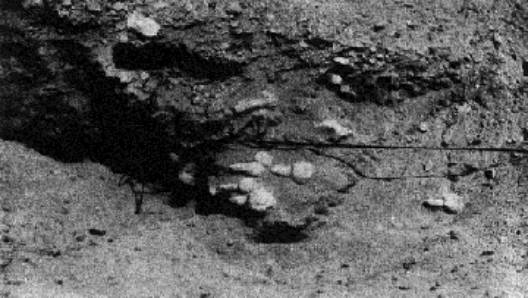
Figure 3 – Concretions With Conical Spikes In Situ
(Photograph at http://home.att.net/%7Eamcimages/garner.html)
However, as shown in these figures, there are some
physical discrepancies. In Figures 1 and 2, the stalks are actually large
conical shaped spikes that are formed out of the same minerals that make up the
concretion. Figure 3 shows that the large conical shaped spikes project outward
and away from the concretions.

Figure 4 – Mars Spherules on Stalks In Situ
(Image from Opportunity PanCam; Sol )
This is the exact opposite as shown in Figure 4. Here the
Mars Spherules are attached to thin cylindrical shaped stalks that project out
of the matrix.

Figure 5 – False Color Image of Mars Spherules on Stalks
(Image from Opportunity PanCam; Sol )
In Figure 5, the Mars Spherules are also attached to
stalks and point outward and away from the matrix. Also, the Mars Spherules do
not appear to have the same mineral composition as the thin cylindrical shaped
stalks. The stalks shown in Figure 5 are curved. This is not evident with the
concretion spikes in Figures 1 and 2 but is evident with the fungus shown in
Figure 6.

Figure 6 – Spherical Shaped Fungus With Stalks
(Photograph at http://www.plant.uga.edu/mycology-herbarium/myxogal.htm)
In Figure 6, the Spherical Shaped Fungus is attached to
stalks that point away from the surface and the fungal spherules and stalks are
of a different biochemical composition.
II. Mars Spherules In Triplets

Figure 7 – Triplet Ordovician Spherule (Concretion)

Figure 8 – Triplet Martian Spherule with a Stalk
(Image from Opportunity MI; Sol 46)
Figure 7 shows a Triplet Ordovician Spherule
(Concretion). While Figure 8 looks similar to Figure 7, there is a difference.
The Triplet Martian Spherule in Figure 8 had a thin cylindrical stalk that
connected it to the adjacent spherule. This appears to suggest spherule
division instead of spherule combining. Spherule combining is a characteristic
of concretions whereas spherule division is not. Also, the Triple Ordovician
Spherule does not have a stalk at all.
In fact, none of the Moqui Marbles, Ordovician Spherules, Pennsylvania
Marcasite Concretions, etc. have been found to have thin curving cylindrical
shaped stalks.
III. Mars
Spherules Have Concentric Layers

Figure 9 – Moqui Marbles With Concentric Layering
(Photograph at http://www.utahphotowild.com/small/pages/small4.htm)

Figure 10 – Ordovician Spherule With Concentric Layering

Figure 11 – Broken Mars Spherule Showing Three Concentric
Layers
(Image from Opportunity MI; Sol 28)
In Figures 9 and 10, the Moqui Marbles and the Ordovician
Spherule exhibit concentric layering with two or more layers. In Figure 11, a
very well preserved broken Mars Spherule only shows three concentric layers (no
more and no less). There have been no
observed Mars Spherules that have more than three concentric layers and yet this
is a common feature for concretions.

Figure 12 – Broken Mars Spherule With a Spherical Shaped
Center
(Image from Opportunity MI; Sol 186)
Figure 12 shows a less well-preserved spherule that
appears to have a spherical shaped center.

Figure 13 – Myxomycetes with Concentric Layering
(Photograph at: http://www.plant.uga.edu/mycology-herbarium/myxogal.htm)
Figure 13 is a picture of a species of Myxomycetes that
shows concentric layering. Figure 14 is
the biological model for Pachytheca Hooker. Pachytheca Hooker only has three
layers; a spherical core, a middle branching layer, and an outer membrane that
has a hole (or dimple).
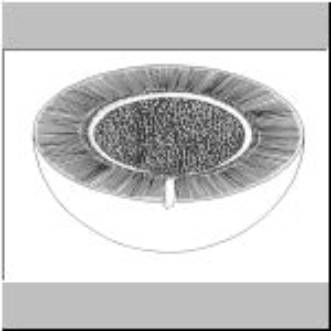
Figure 14 – Biological Model for Pachytheca Hooker
(Diagram at http://www.xs4all.nl/~steurh/engpach/epachy.html#sem)
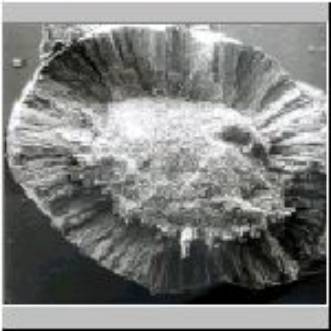
Figure 15 – SEM Photo of Pachytheca Hooker
(Photograph at http://www.xs4all.nl/~steurh/engpach/epachy.html#sem)
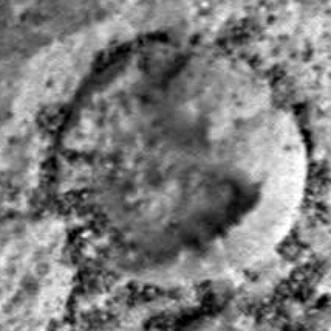
Figure 16 – Broken Mars Spherule
(Image from Opportunity MI; Sol 212)
This MI photo of a broken Mars spherule as shown in
Figure 16 appears to have internal microstructures that look similar to the SEM
photo of Pachytheca Hooker as shown in Figure 15.
IV. Concretions and Mars Spherules Have Holes

Figure 17 – Ordovician Spherules with Holes
Both the Mars Spherules and the Ordovician Spherules
(concretions) have been observed to have holes. However, the hole in Figure 14
(of Pachytheca Hooker) leads to the following quote: “Several times a channel has been observed and
there is a possibility that this channel had something to do with the, still
not elucidated, reproduction of the plant.”

Figure 18 - Mars
Spherule with a Hole Showing Something Coming Out of the Hole
(Image from Opportunity MI; Sol 177)
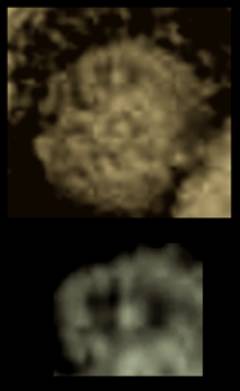
Figure 19 – Another Mars Spherule with a Hole Showing
Something Emerging Out of the Hole
(Image from Opportunity MI; Sol 106)
In Figure 18, the small object coming out of the hole in
the Mars Spherule appears to be a smaller version of the same type of object.
Figure 19 also shows something coming out of a hole in the Mars Spherule. This
is also not a physical characteristic for concretions.
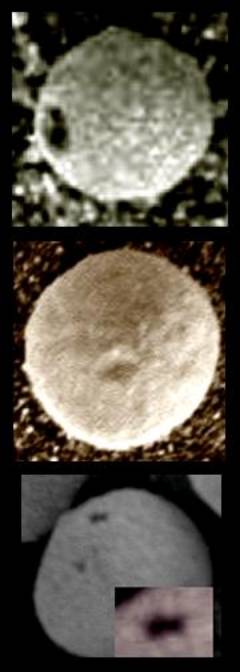
Figure 20 – Some More Pictures of a Mars Spherules With a
Hole
(Images From Opportunity MI; Sols 10 and 106)
Also, the holes in the above pictures (Figures 18, 19,
and 20) of the Mars Spherules appear to be relatively small and uniform in
size. However, the holes in the Ordovician Spherules (Figure 17) appear to
range from small to almost the diameter of the spherule (i.e. not uniform in
size).
Part V: A Comparison of the Size Distribution Profile of
the Mars Spherules With Concretions

Figure 21 – Ordovician Spherules

Figure 22 – Pennsylvania Marcasite Concretions

Figure 23 – Size Distribution Profile for the Ordovician
Spherules

Figure 24 – Size Distribution Profile for the
Pennsylvania Marcasite Concretions
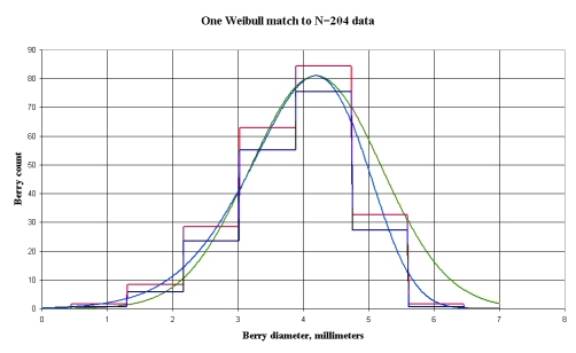
Figure 25 – Size Distribution Profile for the Mars
Spherules
Figures 23 and 24 are the Size Distribution Profile
Curves for the Ordovician Spherules and the Pennsylvania Marcasite Concretions.
These size distribution curves are lognormal whereas the size distribution
curve (Figure 25) for the Mars Spherules follows a left-tailed size limited
Weibull (logistic) distribution, which is the mirror opposite of a lognormal
distribution. For the Mars Spherules to be concretions, they should have the
same type of size distribution curve for concretions (i.e. lognormal). Instead,
they do not.
Part 6: Softness and Fragility of Some Mars Spherules in
the Rock Matrix

Figure 26 – Softness and Fragility of a Mars Spherule
with a Stalk In Situ
(Image From Opportunity MI; Sol 401)

Figure 27 – Softness and Fragility of Some More Mars
Spherules In Situ
(Image from Opportunity MI; Sol 401)
In Summary, when compared to concretions, the Mars
Spherules are morphologically different for the following reasons:
1.
The conical concretion spikes as shown in Figures 1, 2,
and 3 are of the same material as the concretion, whereas the thin spherical
stalks that are connected to the Mars Spherules appear to be of a different
mineral composition as shown in Figure 5 and is comparable in appearance to the
fungus stalks as shown in Figure 6.
2.
In Figure 3, the conical concretion spikes point
outward and away from the concretion whereas the Mars Spherule Stalks point
outward and away from the matrix and terminate with a spherule at the end of
each stalk as shown in Figures 4 and 5 and is comparable in appearance to the
fungus example as shown in Figure 6.
3.
There are no known Earthly examples of concretions
terminating on thin cylindrical curving stalks. However, there are examples of
Earthly slime molds and fungis (such as Myxomycetes) that have spherical shaped
bodies that terminate on thin cylindrical stalks.
4.
The holes in the Mars Spherules are relatively small
and uniform in size, whereas the holes in the Ordovician Spherules
(concretions) tend to be quite variable in size (from small to nearly the same
diameter as the spherule). However, this uniformity of size is consistent with
biological examples from Earth such as Myxomycetes and Pachytheca Hooker.
5.
Concretions have two or more concentric layers (Figures
9 and 10), whereas the Mars Spherules have only been observed to have only
three concentric layers (Figures 11, 12 and 16) that appear to be similar to
the three concentric layers of Pachytheca Hooker as shown in Figures 14 and 15.
6.
Very few MI pictures clearly show concentric layering
of the Mars Spherules, whereas concentric layering is a very common physical
feature for concretions.
7.
The size distribution curves of concretions (Figures 23
and 24) follow a lognormal distribution whereas the size distribution profile
for the Mars Spherules (Figure 25) follow a left-tailed size limited Weibull
distribution (i.e. a non-lognormal size distribution profile).
8.
The size range for concretions tends to be very large
(BBs to Basketballs), whereas the size range for the Mars Spherules is very
small and limited (1 to 6 mm) and is comparable to the size range profile for
Pachytheca Hooker.
9.
The Mars Spherules as shown in Figures 26 and 27
indicate a softness of the outer hematite shell and fragility of their internal
composition that is not a physical characteristic of concretions.
Part 7 – Speculation based on Size Distribution
Statistics Data Analysis and Findings; Growth and Decay Curves for the Mars
Spherules:

Figure 28 – Growth and Decay Curves for the Mars
Spherules
(From http://www.abcsite1.com/statistics_paper.html)
References and Credits:
Figure 1 - http://home.att.net/~amcimages/nichols.html
Figure 2 - http://home.att.net/%7Eamcimages/edwards.html
Figure 3 - http://home.att.net/%7Eamcimages/garner.html
Figure 4 – Courtesy of Charlie at (www.markcarey.com/mars/); NASA/JPL: http://marsrovers.jpl.nasa.gov/gallery/all/opportunity.html
Figure 5 – Courtesy of Jamdix at (www.markcarey.com/mars/); Website: http://gravity.webhostme.com/mars/index.asp;
NASA/JPL: http://marsrovers.jpl.nasa.gov/gallery/all/opportunity.html
Figure 6 - http://www.plant.uga.edu/mycology-herbarium/myxogal.htm
with credits to Mann for providing this example at (www.markcarey.com/mars)
Figure 7 – Courtesy of Robert
E. Page, Jr. at (www.markcarey.com/mars);
Webpage: http://www.lipfordm.com/wtsi/RPage/RPage.htm;
Credits to Hortonheardawho at (www.markcarey.com/mars)
for making this webpage possible. (http://www.lipfordm.com)
Figure 8 – Courtesy of Ups at (www.markcarey.com/mars); NASA/JPL: http://marsrovers.jpl.nasa.gov/gallery/all/opportunity.html
Figures 9 - http://www.utahphotowild.com/small/pages/small4.htm
Figure 10 - Courtesy of Robert E. Page, Jr. at (www.markcarey.com/mars); Webpage: http://www.lipfordm.com/wtsi/RPage/RPage.htm
Figure 11 – Credits to Robert
E. Page, Jr., Chaosman, and others at (www.markcarey.com);
NASA/JPL: http://marsrovers.jpl.nasa.gov/gallery/all/opportunity.html
Figure 12 – Courtesy of Chaosman at (www.markcarey.com); NASA/JPL: http://marsrovers.jpl.nasa.gov/gallery/all/opportunity.html
Figure 13 - http://www.plant.uga.edu/mycology-herbarium/myxogal.htm
Figure 14 - http://www.xs4all.nl/~steurh/engpach/epachy.html#sem
Figure 15 - http://www.xs4all.nl/~steurh/engpach/epachy.html#sem
Figure 16 – Courtesy of Henry C. Wallace at (www.markcarey.com/mars); Website: http://mann.smugmug.com/mars; NASA/JPL:
http://marsrovers.jpl.nasa.gov/gallery/all/opportunity.html
Figure 17 – Courtesy of Robert E. Page, Jr. at (www.markcarey.com/mars);
Figure 18 – Courtesy of Mann at (www.markcarey.com/mars); NASA/JPL: http://marsrovers.jpl.nasa.gov/gallery/all/opportunity.html
Figure 19 – Courtesy of Ups at (www.markcary.com/mars); NASA/JPL: http://marsrovers.jpl.nasa.gov/gallery/all/opportunity.html
Figure 20 – Courtesy of Ups at (www.markcarey.com/mars); NASA/JPL: http://marsrovers.jpl.nasa.gov/gallery/all/opportunity.html
Figure 21 – Courtesy of Robert E. Page, Jr. at (www.markcarey.com/mars/);
Figure 22 – Courtesy Robert E. Page, Jr. at (www.markcarey.com/mars);
Figure 23 - Courtesy of Henry C. Wallace and Robert E.
Page, Jr. at (www.markcarey.com/mars);
Figure 24 – Courtesy of Henry C. Wallace and Robert E.
Page, Jr. at (www.markcarey.com/mars);
Figure 25 – Courtesy of Henry C. Wallace, R. Lewis and
Mann at (www.markcarey.com/mars);
Figures 26 and 27 – Courtesy of NASA/JPL: http://marsrovers.jpl.nasa.gov/gallery/all/opportunity.html;
Figure 28 – Courtesy of Henry C. Wallace at (www.markcarey.com/mars);
Ordovician Spherule Sieve Data (Courtesy of Robert E.
Page, Jr.):
Sieve Number Size Samples Weight
(mm) (grams)
25.00 18 555.2
19.00 48 686.4
12.50
270 1117.9
9.50 581 978.8
6.30 1096 714.1
4.75 333 83.3
2.36 144 12.3
1.18 2 0.2
Pennsylvanian Concretion Size Distribution Data (Courtesy
of Robert E. Page, Jr. and Henry C. Wallace):
http://abcsite1.com/data/Pennsylvania_Marcasite_Concretions_Data.txt