|
|
|
| Home | | Our Mission | | Biodiesel | | Who We Are | | Contact Us | | Links | | Multimedia |
|
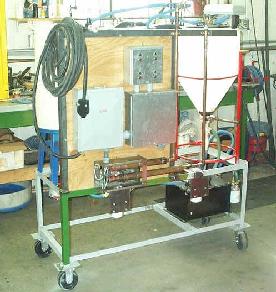
At James Madison, the Biodiesel program has been working on creating a small scale refinery for use in a local restaurant. By converting the restaurant's used cooking oils into biodiesel fuel that will be used in to heat the building, biodiesel is providing a clean, efficient energy source from what would normally be considered waste. Our first prototype, aka "Wanda Lucile," is shown in the picture below. The chemistry of the process also explained. The process takes approximately 30 minutes. |
|
|
|
| This image shows the front side of the first refinery that we have built. This will actually be used in the restaurant. We can see controls and the immersion heaters. The refinery has three tanks: a mixing tank, a tank for the vegetable oil, and a tank for the sodium hydroxide used to separate the oil into biodiesel and a byproduct, glycerin. The glycerin can be used to make soap. |