
The Nativity is an introspective, almost mournful work, filled with expressions of doubt and inadequacy. However, permeating the cantata is the certainty that salvation is at hand with the coming of Christ, and that all trials and tribulations will be moot in the final equation.

The opening chorus, anticipating the coming of Christ, was inspired by French Christmas carols in its voice-leading and melodic construction.
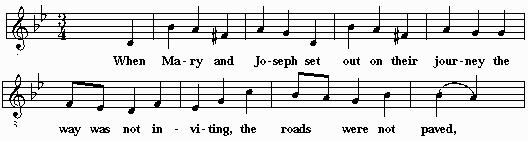
This piece tells the story of Mary and Joseph as they made the hazardous journey from Galilee to Bethlehem to take part in Caesar's census. The words make the point that the parents of Christ are not obeying the will of Caesar so much as Caesar is obeying the will of God.
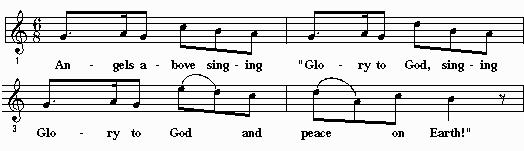
"Angels Above" follows the narration describing the appearance of the angelic hosts to the poor shepherds. The lively 6/8 rhythms deliver the theme that their jubilation echos down the centuries to the present day.
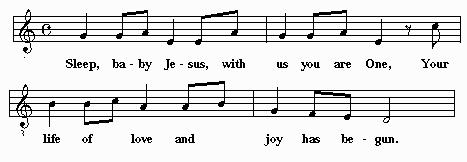
A simple lullabye to the baby Jesus, sung by all the witnesses to His arrival in the world.
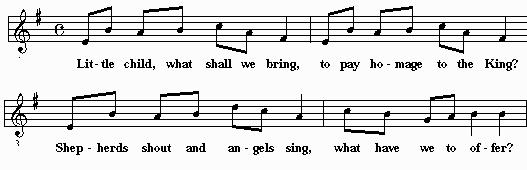
The choir takes the role of the Three Wise Men, who have arrived at their destination only to have second thoughts about their gifts, which seem hollow and superficial next to the singing of angels and the shepherd's jubilation. The song ends with a note of hope as they realize that Jesus accepts everyone, regardless of the gifts they bring: "To him we are undefiled, deserving of Salvation."

The most emotionally intense section of The Nativity, this lullabye is sung by the grieving parents of the Innocents killed by Herod's soldiers. As in the previous song, it ends with a ray of hope: "The evil of the world will pass, a Savior now has come."
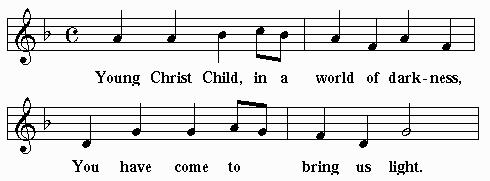
Added in 1997, this chorus provides a break between the sorrow of the previous lullabye and the joy of the concluding chorus. It is a contemplative piece, dealing with the hope of God's love in the face of adversity.

The final chorus invites all present to join in songs of celebration, repeating "Alleluia" over and over with a contrapuntal texture. This piece--and indeed, the whole cantata--is intended to a prelude to a congregational singing of traditional carols.
 Get your own Free Home Page