Marikina is not the shoe capital of the Philippines for nothing. For the greater part of the 20th century, Marikina was the biggest manufacturer of quality shoes. There was a time, between 1978 and 1982, when Marikina’s women’s shoes and handbags made of snakeskin were the rave on Fifth Avenue, New York City.
01/ SHOE MUSEUM
The Shoe Museum was conceived in 1998 under then Mayor Bayani F. Fernando on the assumption that the City, being the Shoe Capital of the Philippines, can be a significant venue for nurturing the historical and cultural values of its shoe industry. It was opened in February 16, 2001 and was initially called the Footwear Museum of Marikina.
The building which houses the museum was used as an arsenal during the Spanish period. It was also a detention cell during the Filipino-American war where General Macario Sakay, one of the leaders of the Katipunan, was held. At the latter part of the American regime, it was converted into a motor pool for the American soldiers. After the 2nd World War, the Tuason family used the building as a rice mill for the entire hacienda.
02/ THE COLLECTION
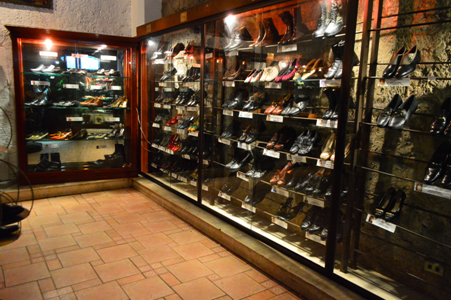 The Shoe Museum is deftly organized into the following collections: that of the world reknowned shoes of former Philippine First Lady, Imelda Marcos; assortment of shoes worn by personages such as former Philippine presidents, vice presidents, senators, ambassadors, and Marikina mayors; traditional footwear from various countries; and a collection of entries to city-sponsored shoe design competitions. The museum acquaints us with the know how of making shoes with the shoe lasts used as master mold of a shoe and the different animal skins used like alligator skin, snake skin, pigskin, calfskin and sheepskin. It also exhibits a life-size diorama that shows shoemaking in Marikina as was done during the early stages of its shoe industry. The 800 pairs of shoes of Mrs. Marcos, are part of the 3,000 pairs collection which she accumulated performing her duties as first lady during her husband’s 20-year incumbency. She wore those shoes at meetings with dignitaries both here and abroad. Photos showing Mrs. Marcos during key state occasions accompany some of the shoes on display. These shoes now benefit the local shoe and fashion designers and manufacturers as they carry the exquisite designs and fine craftsmanship of the foreign shoe artisans.
03/ SHOE MAKING
The main industry that Marikina is famous for - shoemaking - began in 1887 through the pioneering efforts of Don Laureano “Kapitan Moy” Guevarra. Kapitan Moy started experimenting with shoemaking when the soles of his own imported shoes broke. For want of a shoe repair shop nearby he tried to fix his shoes. At that time only the Chinese located in Manila were engaged in shoe repair and manufacture. Marikenos were already engaged in the limited production of slippers and clogs, or bakya, even before the coming of the Spaniards.
Kapitan Moy separated the different parts of his shoes, studying closely the intricacies of how the shoe was put together. Tiburcio “Busyong” Eustaquio, a wooden clog maker, made a pair of shoe lasts for Kapitan Moy to help him in his experiments. The tools used in making the first Marikina shoes were borrowed from blacksmiths in Marikina and Pasig. Kapitan Moy, after several unsuccessful attempts, succeeded in making the first pair of Marikina shoes.
04/ KAPITAN MOY
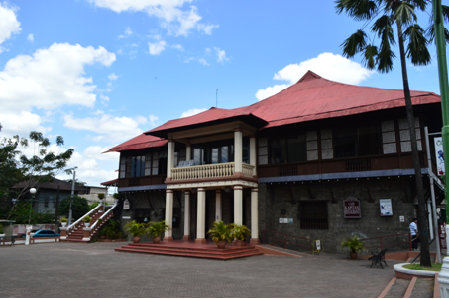 The first shoe lasts which Kapitan Moy imported from Barcelona were too pointed so they were remodeled. At that time, slippers and wooden clogs were already being made in his silong (ground floor used for storage and garage in old houses; living quarters were on the second floor). Converting this into a small shoe factory Kapitan Moy employed fishermen, farmers and women during the non-harvest season. During the planting season they would till soil, then while the harvest was growing they would make shoes. When Kapitan Moy died, he left Marikina a legacy, a source of livelihood for its people. Thus shoes were made in the silong (basements) of the houses or in kubos (huts) near the living quarters.