Prions are novel infectious agents
differing from all other known pathogenic agents


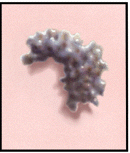
Prions are simple proteins that are much smaller than viruses. They are unique since they lack a genome. All other known infectious agents contain genetic material.


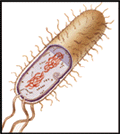
Bacteria are often surrounded by a strong protective cell wall and replicate through simple cell division.

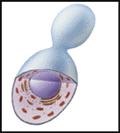
Fungi may cause infections of the mouth, throat, lungs, and skin.

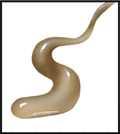
Parasites thrive on their host, often causing longlasting chronic infections.

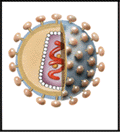
Viruses are small packages of genetic material that can only replicate inside a cell.


These pages are based on material from the 1997 Physiology or Medicine Nobel Poster.
Credits and references for the poster


Last modified June 16, 2000
© Copyright The Nobel Foundation

The Official Web Site of The Nobel Foundation  


Hosted by www.Geocities.ws

1