A.What are the differences among the 6 BLAST program?
The differences of 6 BLAST program are query sequences and sequence databases.
| 1.blastn | Compares a nucleotide query sequence against a nucleotide sequence database. |
| 2.blastp | Compares an amino acid query sequence against a protein sequence database. |
| 3.blastx | Compares a nucleotide query sequence translated in all reading frames against a protein sequence database. |
| 4.tblastn | Compares a protein query sequence against a nucleotide sequence database dynamically translated in all reading frames. |
| 5.tblastx | Compares the six-frame translations of a nucleotide query sequence against the six-frame translations of a nucleotide sequence database. |
| 6.PSI-BLAST | Compares an amino acid query sequence against a protein sequence database like blastp but it is 2 round blast and more sensitive.It is useful for finding very distantly related proteins. |
B. Use your sequence to do 3 from 6 BLAST (blastn, blastp, blastx, tblastn, tblastx, PSI-BLAST) and discuss “What’s the strength and weakness of BLAST you selected?”
This is a first page of BLAST.
Here I used blastn, blastp and blastx with my sequences.
Steps in running BLAST
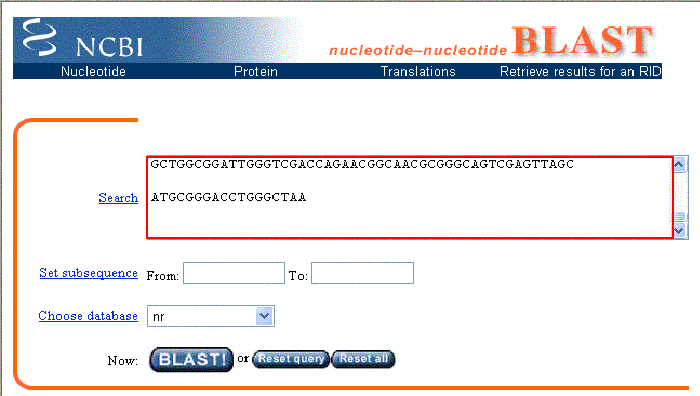
1.blastn: Put nucleotide sequence in FASTA
or NCBI Accession numbers (GIs) in search field> click "BLAST!".
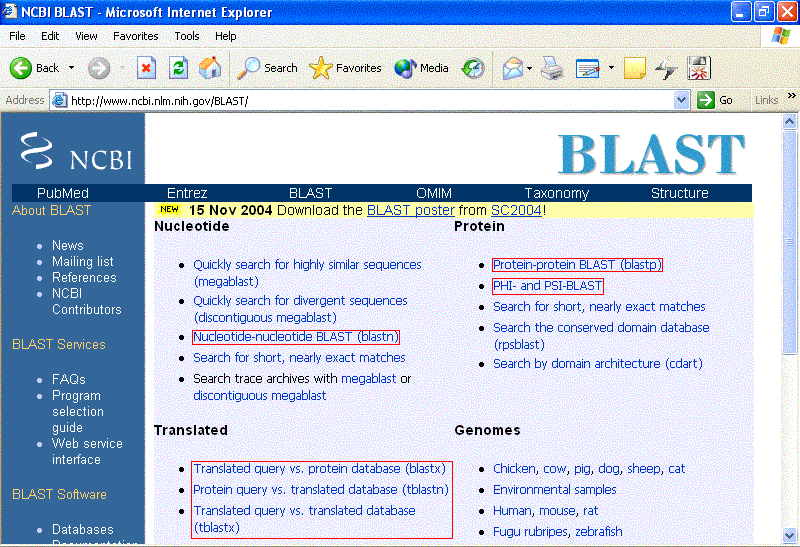
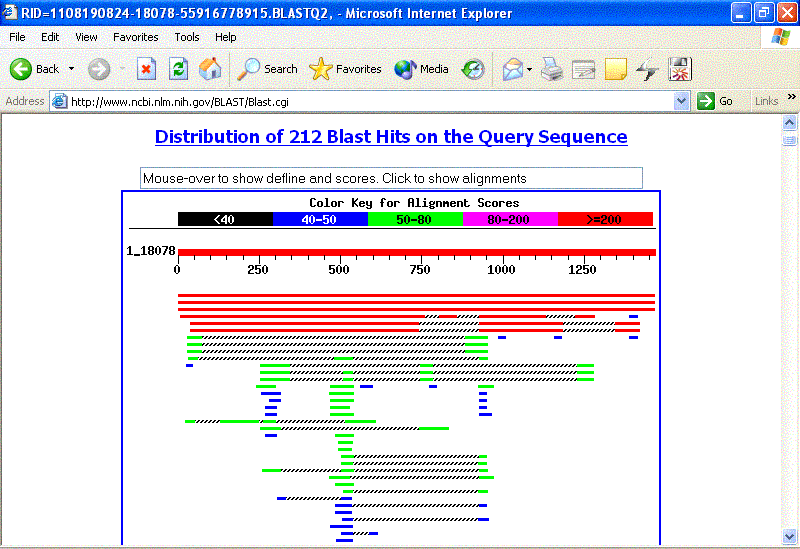
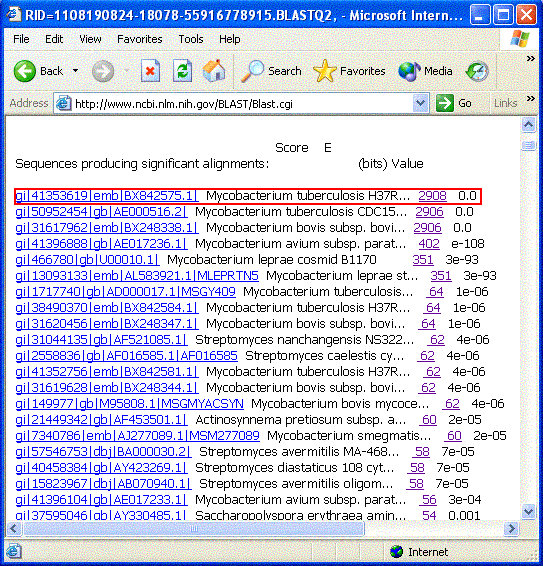
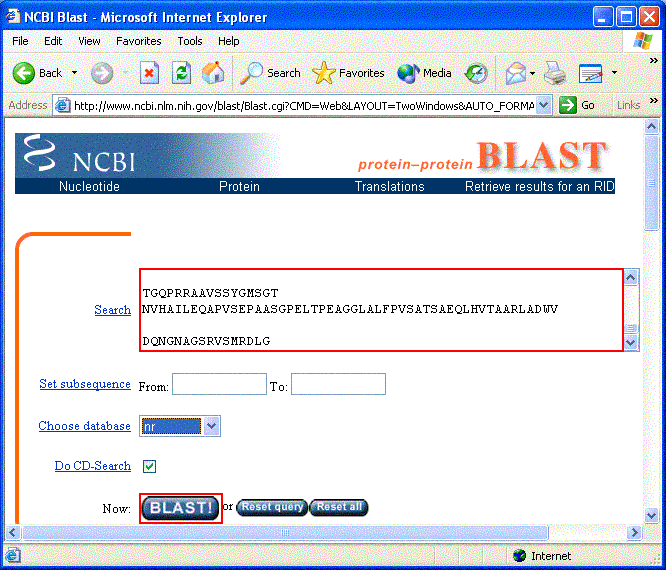
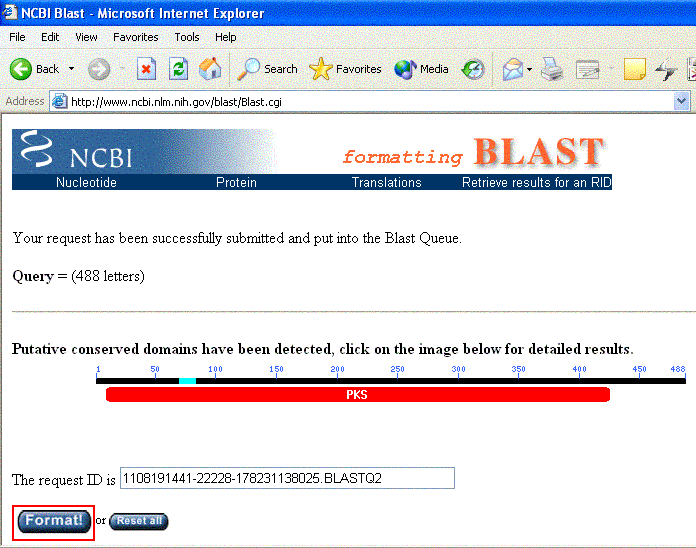
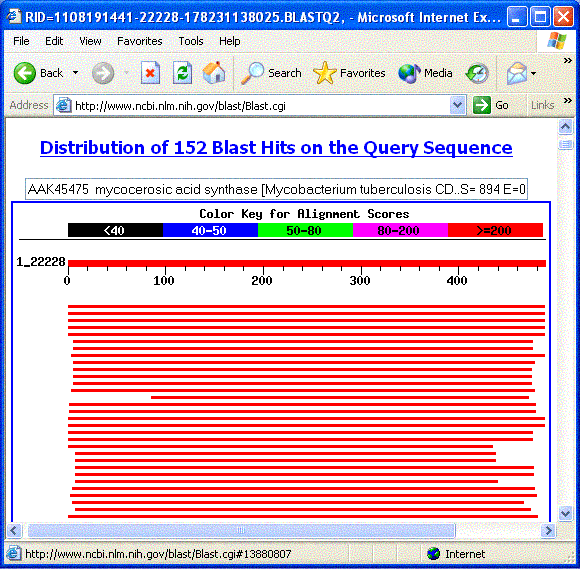
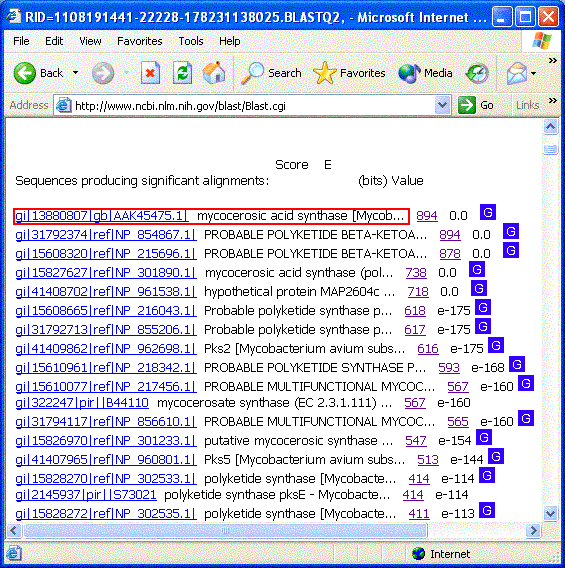
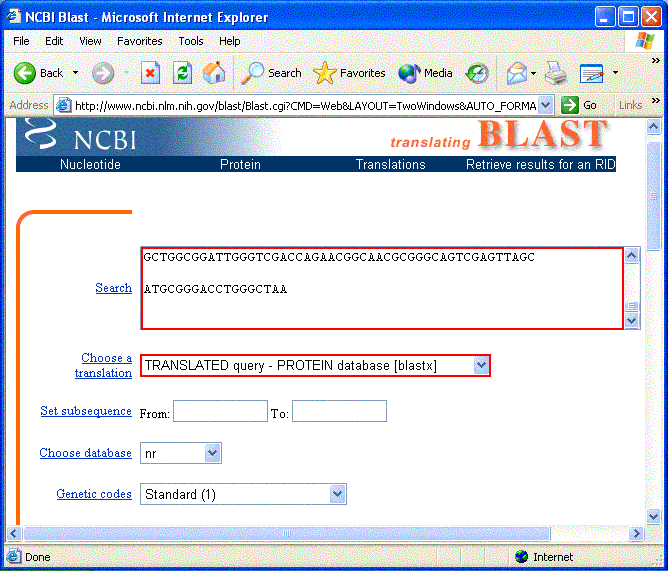
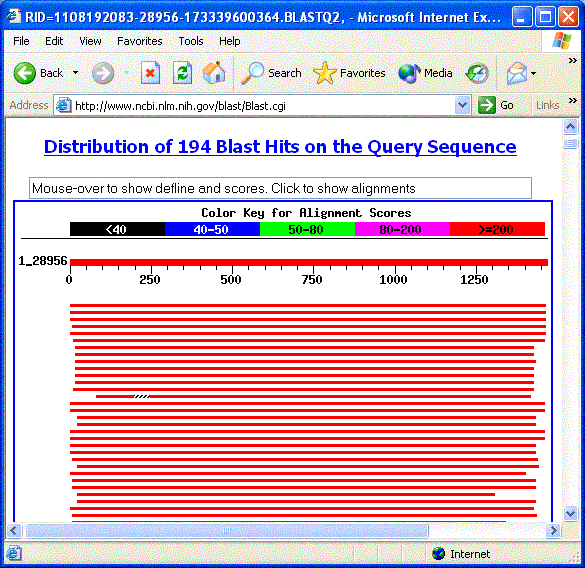
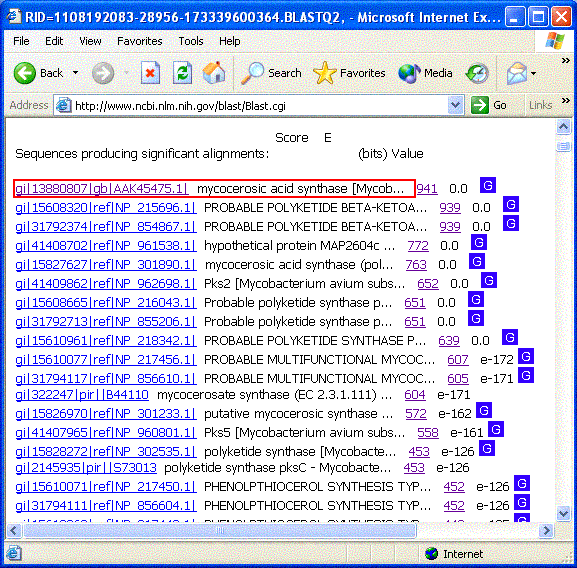
Table : strength and weakness of 3 BLAST programs
Program |
Strength |
Weakness |
blastn |
more sensitive, adjustable word size, can find alignments to related nucleotide sequences from other organisms | not the best method for finding homologous protein coding regions in other organisms because the greater information available in amino acid sequence |
| blastp | can predict function by detecting conserve domain, more trustable and more useful information | less sensitive, less data on protein database when compared to nucleotide |
| blastx | useful when the reading frame of the query sequence is unknown or it contains errors that may lead to frame shifts or other coding errors. More sensitive than nucleotide blast since the comparison is performed at the protein level. |
less faithful than blastp because results derived from reading frame prediction and some may not exist in natural |
From the results as shown in pictures above, the first hits of each BLAST are
1.blastn : gi|41353619|emb|BX842575.1| Mycobacterium tuberculosis H37Rv complete genome; segment 4/13 Length = 349306
Score = 2908 bits (1467), Expect = 0.0
Identities = 1467/1467 (100%)
2.blastp : gi|13880807|gb|AAK45475.1| mycocerosic acid synthase [Mycobacterium tuberculosis CDC1551], gi|15840624|ref|NP_335661.1| mycocerosic acid synthase [Mycobacterium tuberculosis CDC1551] Length = 2101
Score = 894 bits (2311), Expect = 0.0
Identities = 473/488 (96%), Positives = 474/488 (97%)
3.blastx : gi|13880807|gb|AAK45475.1| mycocerosic acid synthase [Mycobacterium tuberculosis CDC1551], gi|15840624|ref|NP_335661.1| mycocerosic acid synthase [Mycobacterium tuberculosis CDC1551] Length = 2101
Score = 941 bits (2431), Expect = 0.0
Identities = 474/488 (97%), Positives = 474/488 (97%)
Frame = +1
D. Summarize the result you received from the 3 BLAST programs you selected.
1.blastn gave most number of blast hits (212), follow by blastx (194) and blastp gave less blast hits (152).
2.The first hits of blastp and blastx is the same but it is different from blastn.
3.blastn gave highest similarity scores and identities percent (2908 bits and 100% respectively).
