Assignment
3
Who
are the ancestors of the dinosaurs?
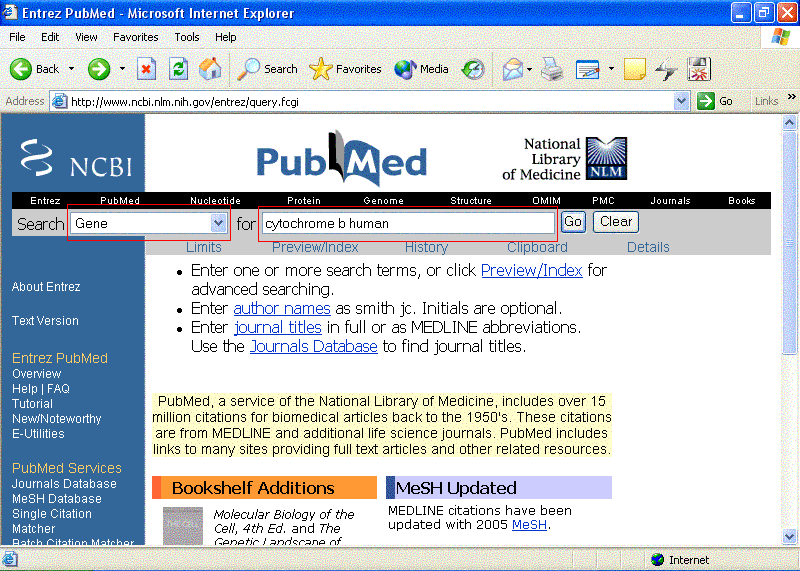
First step that we have to do is getting cytochrome b sequence of all species,
by go to NCBI homepage and use function search “Gene” and put keywords “cytochrome
b and species name” for example “cytochrome b human” in search box.
Lists of species in this study
1.Human
/ Homo sapiens
2.Dog / Canis familiaris
3.Rabbit / Oryctolagus cuniculus
4.Rhinoceros / Rhinoceros unicornis
5.Dugong / Dugong dugon
6.Mouse / Mus musculus
7.Whale / Balaena mysticetus (bowhead whale)
8.Bovine / Bos Taurus
9.Sicklebill / Epimachus meyeri (brown sicklebill)
10.Chicken / Gallus gallus
11.Magpie / Anseranas semipalmata
12.Frog / Rana nigromaculata (black-spotted frog)
The
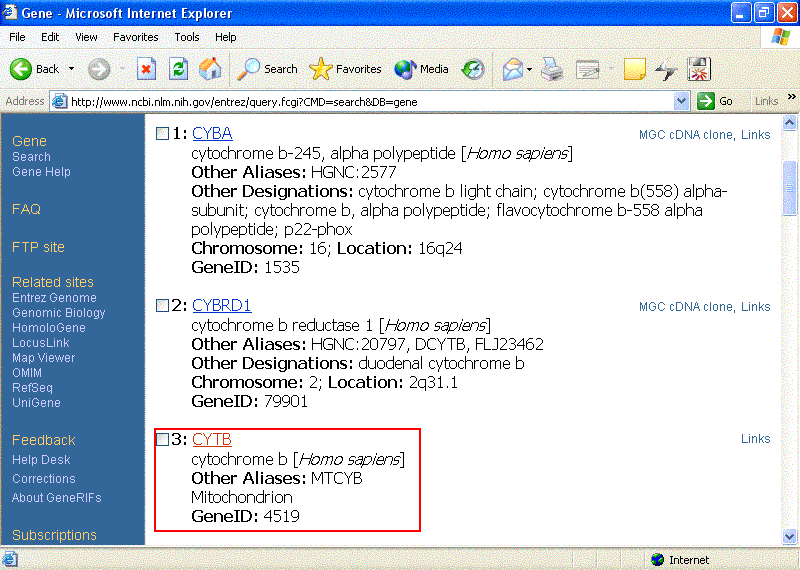
results of searching
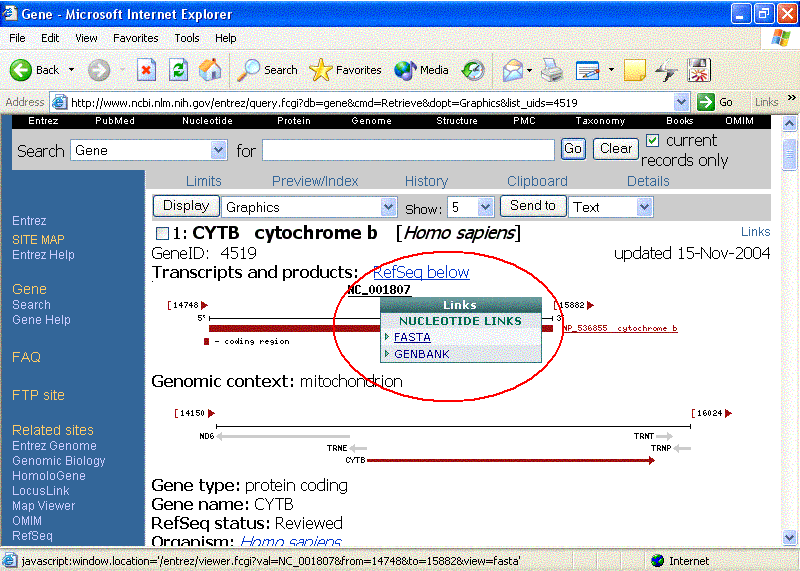
Getting
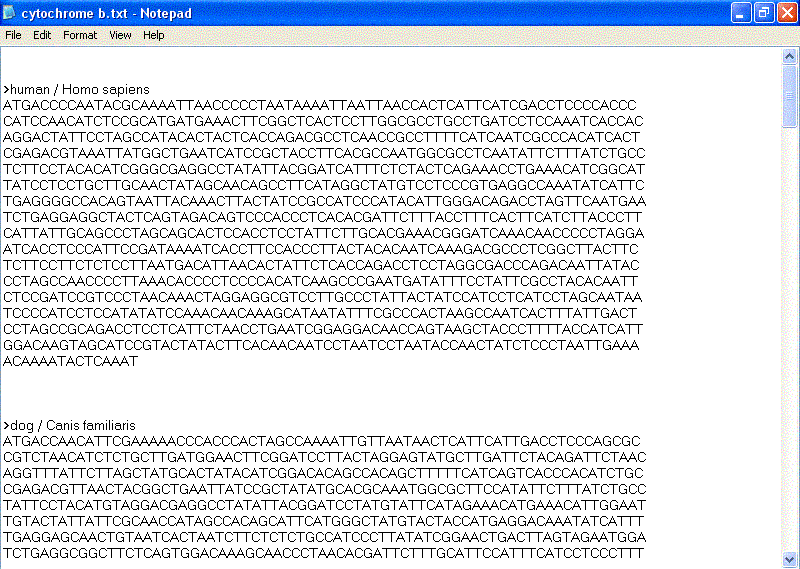
sequence in FASTA format
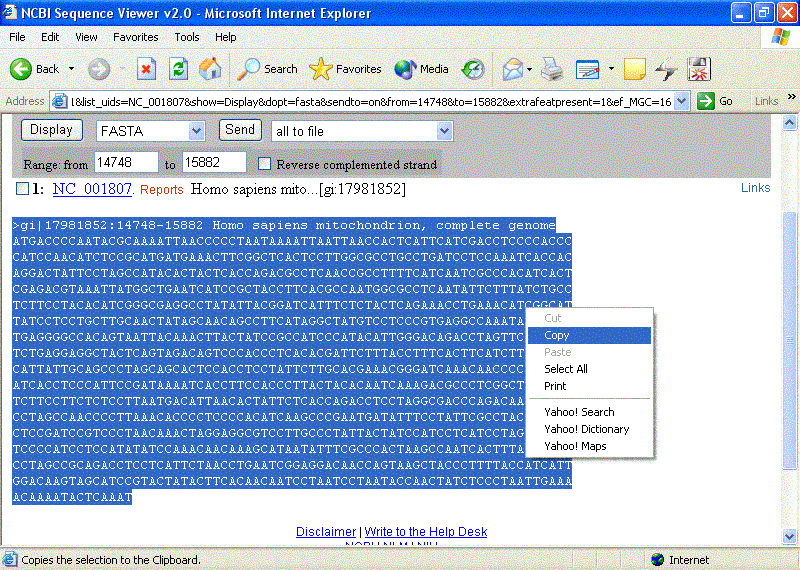
Copy
Cytochrome B sequence
Paste
every sequence to Notepad, save in same file, for example "cytochrome b.txt"
By
this way, we can get almost all species except for "sicklebill" which
is searched by using function "Nucleotide" instead of “Gene” in NCBI.
After we get all cytochrome b sequence, we can start phylogenetic tree construction.
The necessary bioinformatics tools in this study are ClustalX, BioEdit, Phylip
and Treeview32.
Steps
in Phylogenetic Tree Construction
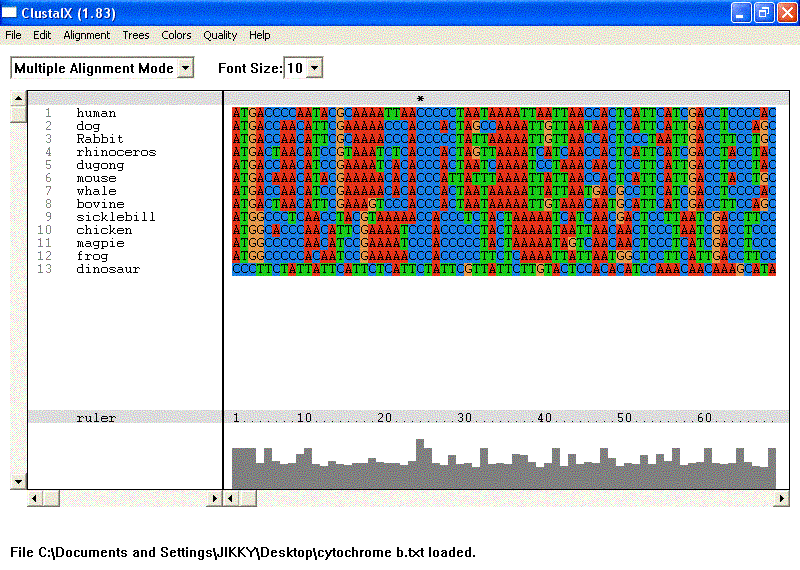
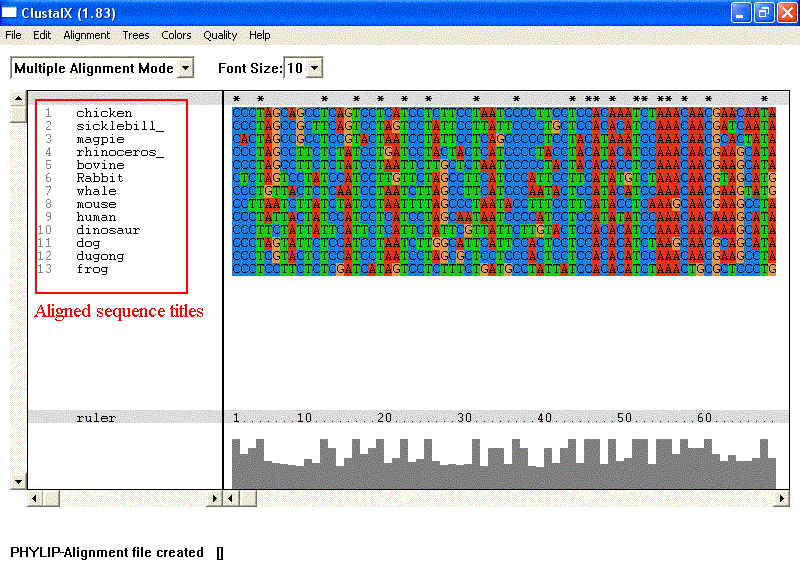
1.Align all sequences in ClustalX
: File > Load Sequences > Open file “cytochrome b.txt”
the result is in picture below
:
Edit > Select All Sequences
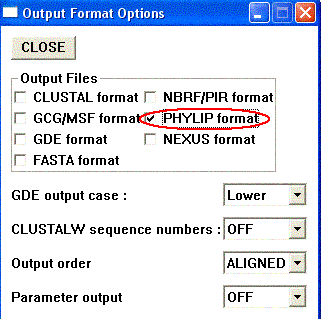
: Alignment > Out put Format Options > Select PHYLIP format > Close
:
Alignment > Do complete Alignment
the result is in picture below
From
alignment result, we can get the position of dinosaur sequence that might come
close to other species that is at position about 880 bp to 1010 bp of other
sequences.
2. Edit sequences by using BioEdit
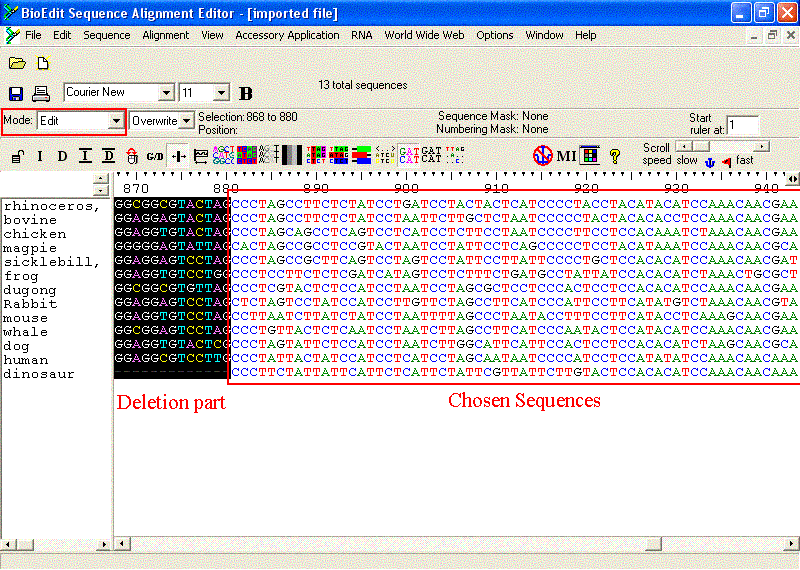
Because of different length of sequences, we have to choose position that
nucleotides exist in all sequences, so we choose sequence at about position
880 bp to 1010 bp.
: Open BioEdit >Mode >Edit > Delete irrelevant sequences
After
edit sequences, save file into FASTA, for example " cytochrome b edit.fas".
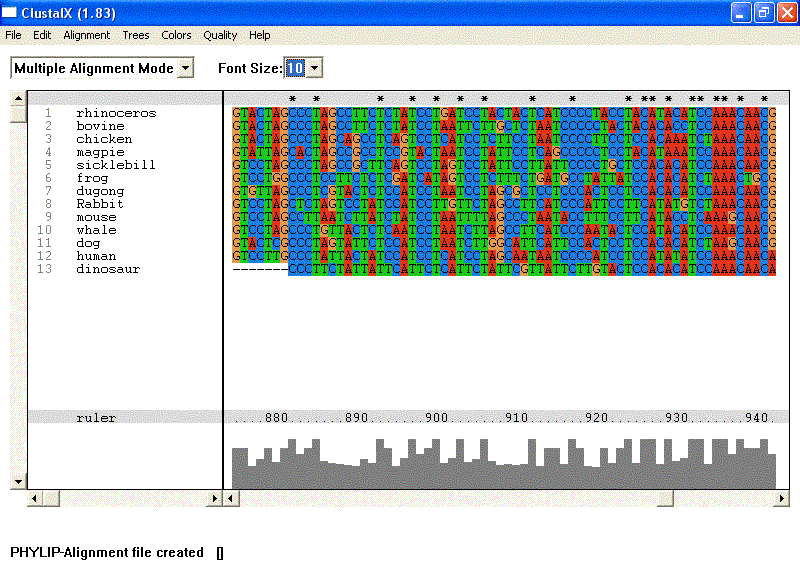
Align all sequences again by ClustalX, get result as picture below.
From
alignment result, we will get new order of species which 1st specie is Chicken
and last (13th) is Frog. The number of species is important for picking the
outgroup in PHYLIP.
3.
Prepare file for PHYLIP analysation
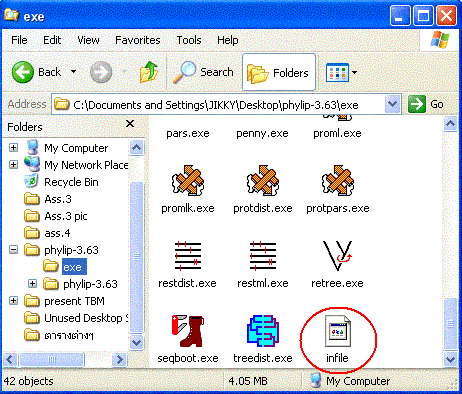
By rename file “cytochrome b edit.phy” to “infile”. Then move “infile” to folder
“exe” in PHYLIP
4.
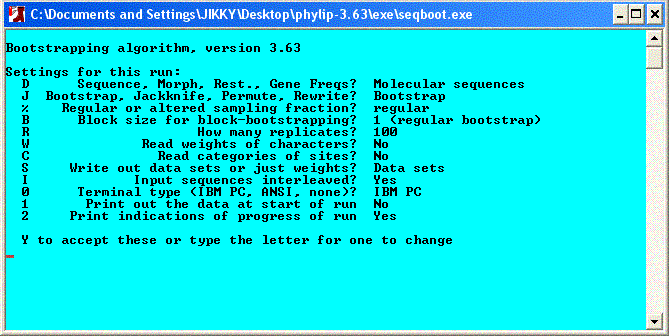
PHYLIP : Seqboot
: double click on icon "seqboot.exe" in exe folder of PHYLIP
: Press y > enter > Random number seed > 777 > enter. Then wait
until this window disappear.
Seqboot
window
5.
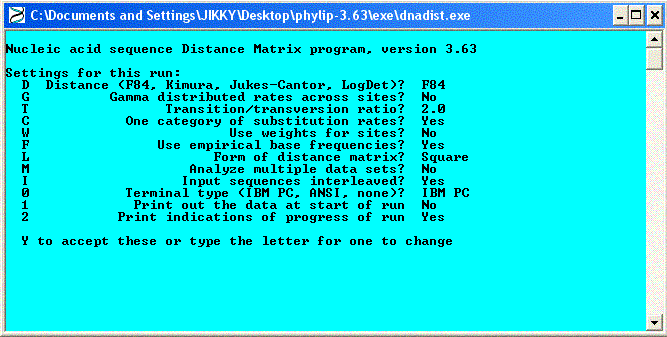
PHYLIP : Dnadist
: delete or move “infile” to other place
: rename “outfile” to “infile”
: double click on icon “dnadist.exe”
dnadist
window
:
change Distance from F84 to Kimura 2-parameter by press D > enter
: change Form matrix from Square to Lower-triangular by press L > enter
: set mutiple data sets by press M > enter > D (to choose data set) >
enter > 100 (as set in last step) > enter > Y > enter. Then wait
until this window disappear.
6.
PHYLIP : Neighbor
: delete or move “infile” to other place
: rename “outfile” to “infile”
: double click on icon “neighbor.exe”
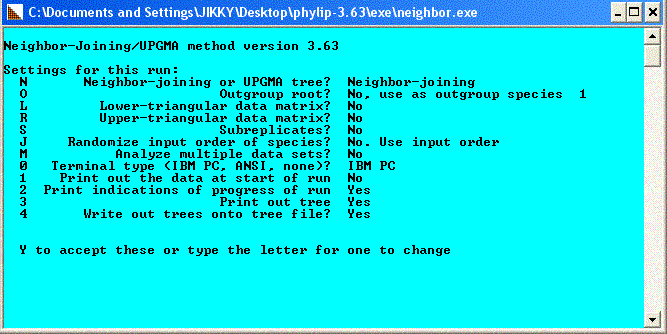
Neighbor
window
:
Set outgroup from 1 to 13 by press O > 13 >enter (in this study, I set
Frog as outgroup because there are 2 main species group which are mammalian
and avian, so frog is most different specie. The number of Frog specie is 13
as the result from ClustalX.)
: Set Lower-triangular data matrix by Press L > enter
: Set mutiple data sets by press M > 100 > enter > Random number seed
> 777 > enter > Y > enter .Then wait until this window disappear.
7.
PHYLIP : Consense
: delete or move “infile” to other place
: rename “outfile” to “infile” and “outtree” to “intree”
: double click on icon “consense.exe”
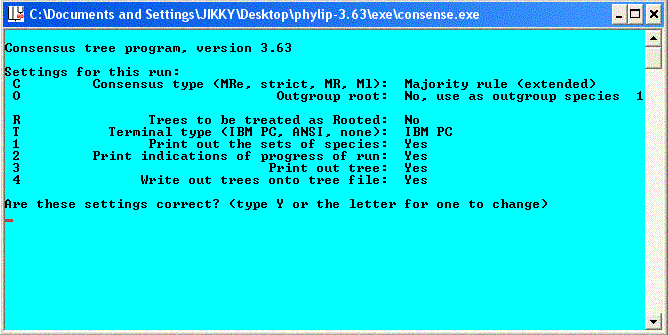
consense
window
:
Set outgroup from 1 to 13 by press O > 13 > enter
: Set root tree by press R > enter > Y > enter. Then wait until this
window disappear.
8.
Get Tree
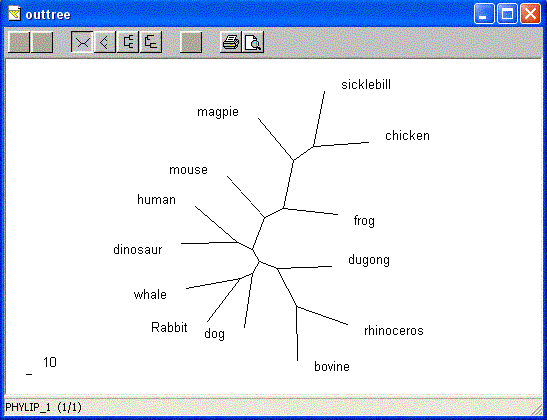
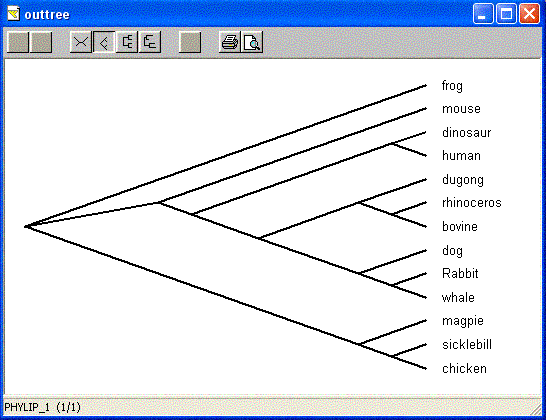
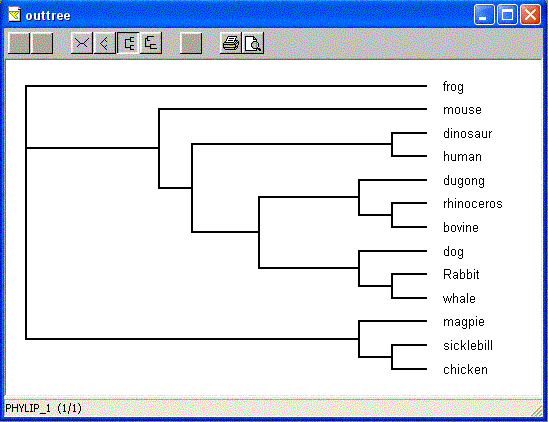
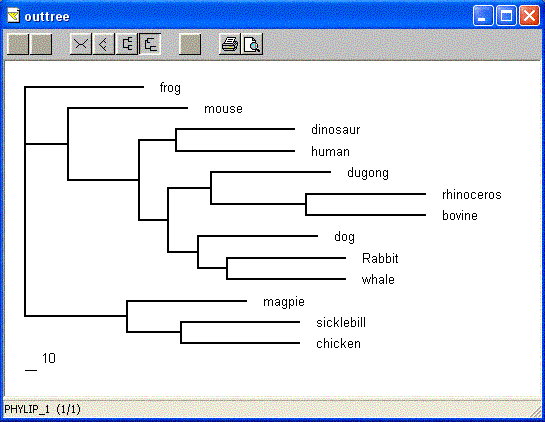
: Open file “outtree” in TreeView32, get 4 types of tree
1.Unrooted tree
2.Slanted cladogram
3.Rectangular cladogram
4.Phylogram
Unrooted
tree
Slanted
cladogram
Rectangular
cladogram
Phylogram
From phylogram, there are 3 main branches
1.Amphibian (frog)
2.Mammalian (mouse, dinosaur, human, dugong, rhinoceros, bovine, dog, rabbit
and whale)
3.Avian (magpie, chicken and sicklebill)
In mammalian group, we can differentiate into 4 subgroups
1.Mouse
2.Dinosaur, Human
3.Dugong, Rhinoceros and Bovine
4.Dog, Rabbit and Whale
so from all results of phylogenetic analysis, we can conclude that
1.Human and Dinosaur have same ancestors
2.The most related specie to dinosaur is human.
3.The most different specie from dinosaur is Avian (sicklebill or chicken).
However, the results of this study may not be the exact one because we did
only with short sequences of cytochrome b (only 133 bp).
So if we want to get better tree, we have to do with longer sequences and
get more information from Dinosaur.
1
2
3