Welcome to Vigan!
Vigan is one of Philippines' most beautiful cities,
as it showcases the Spanish heritage of the country.
Vigan city is located in the northern part of the
Philippines and it's historical center, which is called
the heritage village, is listed on the UNESCO world
heritage list since 2 December 1999 for it's unique
spanish colonial history in Asia and the very well
preserved spanish monumental buildings which where build
in the 18th century. .
With this website we like to give our viewers an
impression of the spanish heritage village in Vigan city
completed with other touristic information about Vigan
city which might be very usefull for those viewers who
are also intending to visit the Philippines and planning
a trip to Vigan City in the future.
People who will visit Vigan City will find a very modern
and clean city with lots of restaurants, hotels and
shops and many touristic sight to be seen. The climate
in Vigan is ideal in the winter season with temperatures
from 20 to 25 degrees celcius and if you like it more
warm the the summer season might be the best.
The easy to use menu left above will help our visitors
to find the desired information about Vigan City or the
Heritage Village in one click and we hope that the
information found on this site is interesting enough for
you to link to it in case you have a website.
For any question or suggestions to us you can use our
contact page.
HISTORY
Due to silting of the Mestizo River, Vigan City is no longer
an island and no longer separated from the mainland.
The city is unique in the Philippines because it is one of
many extensive surviving Philippine historic cities,
dating back to the 16th century.
Vigan was a coastal trading post long before the Spaniards arrived;
Chinese traders sailing from the South China Sea came to Isla de Vigan (Island of Vigan)
via the Mestizo River that surrounded it.
On board their ships were seafaring merchants who came to trade goods
from other Asian kingdoms in exchange for gold, beeswax,
and other mountain products brought by the indigenous peoples from the
Cordilleras region.
In the book The Philippine Island (Vol. III, p. 276, Blair and Robertson)
two letters from Governor General Guido de Lavezaris to King Philip II of Spain mention:
"It seemed best to send Captain Juan de Salcedo with 70 or 80 soldiers to
explore the coast of Los Ilocanos on the shores of the river called Bigan."
The Spaniards marched north from Manila on May 20, 1572 and arrived in Vigan on June 12, 1572.
Thus, after the successful expedition and the exploration of the North,
Juan de Salcedo founded "Villa Fernandina de Vigan" in honor of King Philip II’s son, Prince Ferdinand,
who died at the age of four. From Vigan, Salcedo rounded the tip of
Luzón and proceeded to pacify Camarines, Albay, and Catanduanes. As a reward for his services to the King of Spain,
Salcedo was awarded the old province of Ilocos,
which consisted of the modern provinces of Ilocos Norte, Ilocos Sur, Abra, La Unión and part of Mountain Province as his hacienda (estate),
and was accorded the title of "Justicia Mayor de esta Provincia de Ylocos" (Province Mayor of Ilocos).
In 1574, Salcedo returned to the capital of his encomienda (trusteeship), Vigan,
bringing with him his soldiers and some Augustinian missionaries to pioneer the evangelization of the Ilocos region.
He established a Spanish city for the purpose of controlling the neighboring country.
Governor General Gómez Pérez Dasmariñas, in his account of encomienda dated in Manila on May 31, 1591, states:
"The town of Vigan called Villa Fernandina consisted of Spanish settlers; a priest; a Justice Alcalde Mayor (Governor);
and a Deputy. The King collects 800 tributes (equivalent to 3,200 subjects)."
During this period, Vigan was composed of 19 barrios (districts).
Between 1645 to 1660, Vigan was divided into 21 "Cabezas de Barrio" (Town Mayors) as mentioned in the
Libro de Casamiento (Book of Marriage); from the records of the parish house of Vigan found in its archives.
eparated from the indigenous population, the Chinese migrants were residents in a neighbourhood called El Pariancillo, los Sangleyes del parian (The Sangleyes of the Parian);
and the Spanish settlers were residents in a town called Los Españoles de la Villa (The Town Spaniards).
During the Philippine Revolution, revolutionary forces under Manuel Tinio,
supported by the Ilocano rebels, attacked and defeated the Spanish colonial forces and captured the city in the Siege of Vigan.
During the Philippine-American War, American forces led by Commander McCracken and Lt. Col. James Parker occupied the town in Nov. 1899.
During World War II, Japanese Imperial Army planes bombed Vigan on December 1941 and Japanese troops
occupied the town in 1942. In 1945, combined U.S. and Philippine Commonwealth ground troops,
aided by Ilocano resistance fighters, defeated the Japanese Imperial forces and liberated Vigan.
In the 2010 movie by Bonda Fajardo Iliw,[5] Colonel Takahashi and Fr. Joseph Klecamf protected "Vigan" from being burned by the Japanese Army or attacked by the U.S. Army.
1999 Vigan City was listed by UNESCO as the best preserved example of Spanish colonial towns in Asia.
Its architecture is the conglomeration of cultural elements from the Philippines, China, and Spain, making it unique in the world.
And on December 7, 2014. Vigan was crowned as one of the New7Wonders Cities making the city as a Global Memory of the whole world.
FESTIVALS
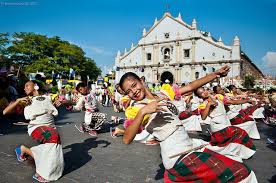
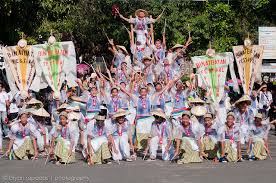
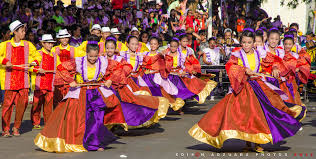
VIGAN CITY FIESTA / LONGGANISA FETIVAL:
The Biguenos celebrate Longganisa Festival every January 22 in accordance to the city-hood of Vigan.
With a colorful street dancing competition along the Calle Crisologo, this festival features one of city's products,
the very well-known Vigan Longganisa. On the 25th, Vigan celebrates its town fiesta in honor to its patron saint, Saint Paul.
VIVA VIGAN! 'BINATBATAN' FESTIVAL OF THE ARTS:
Every first week of May, Vigan plays host to visitors for this festival featuring painting and product exhibits, a Calesa parade,
and other cultural activities.
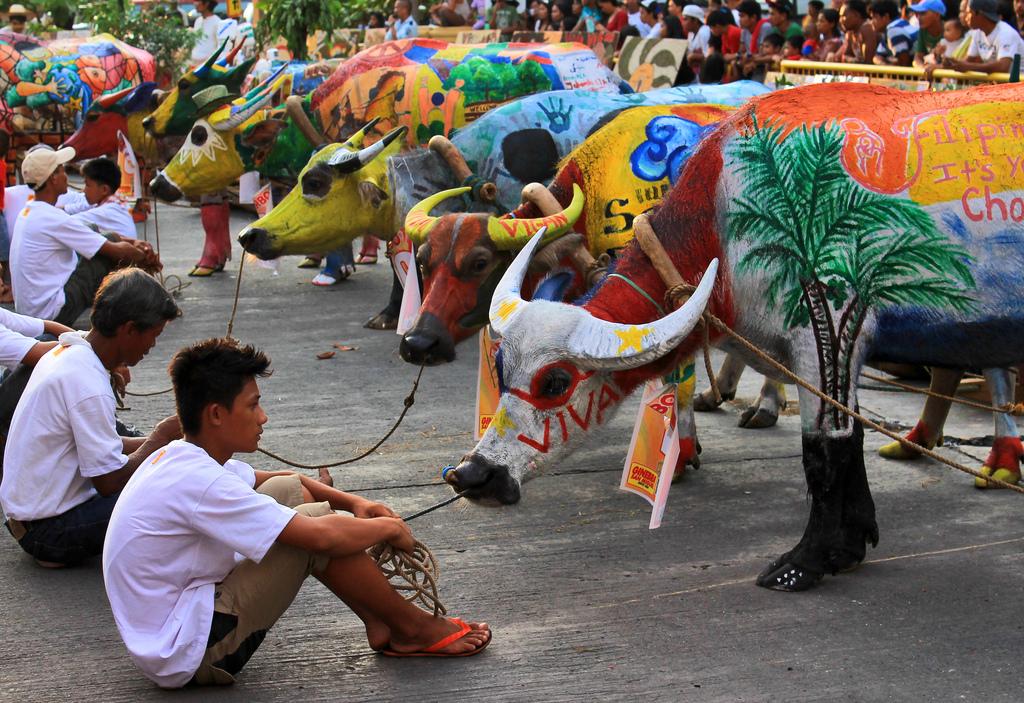
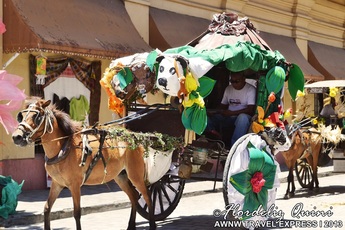
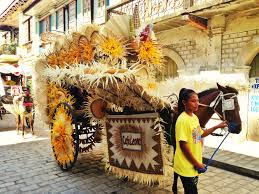
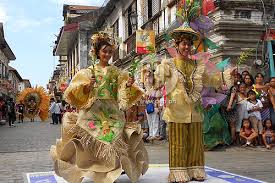
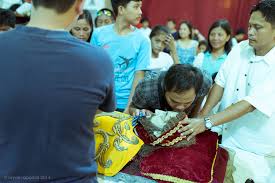
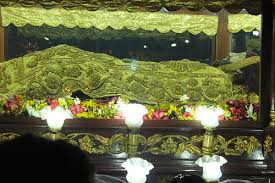
SEMANA SANTA:
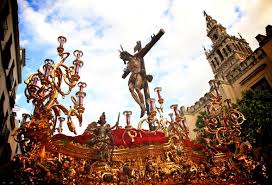
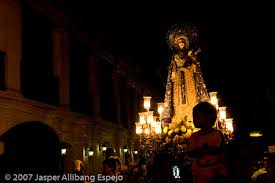
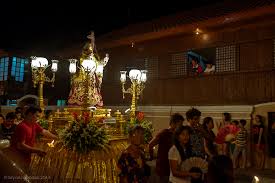
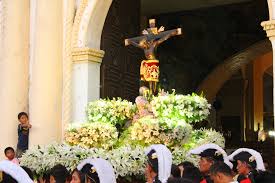
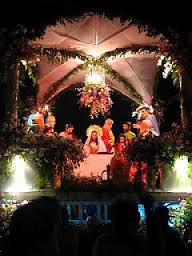
St. Paul’s Metropolitan Cathedral is the venue of religious rites during the Holy Week.
The Good Friday procession features decorated carrozas bearing life-size statues of Spanish vintage.
On Easter Sunday, the dawn celebration depicting the Resurrection of Christ, called "Sabet", is a scene to behold.
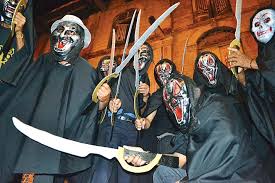
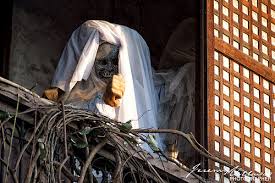
RANIAG FESTIVAL:
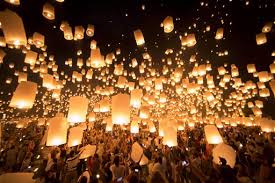
A Halloween celebration wherein there are colorful and lighted floats paraded around the city.



ETYMOLOGY
The area of Vigan was originally a settlement of traders coming from the Fujian Province, China.
At the time of Spanish colonisation, the Chinese settlers, whose language
was Southern Fujianese (Min Nan, often referred to as "Hokkien" by most Filipinos),
referred to the area as "Bee Gan" (Chinese: 美岸; pinyin: Měi'àn), which means "Beautiful Shore."
Since the Spanish conquistadors interchanged V and the B to refer to the B sound,
they spelled the Hokkien Chinese name "Bee Gan" as "Vigan", which is the name used to this day.
Vigan's Chinese heritage is still evident from the numerous elite Chinese creole families who come from the area,
many of whom adopted Hispanic family names. Others, such as the Sy-Quia family,
have retained Chinese-derived surnames, though most, if not all,
of the Christian Chinese creole families fully Hispanicised themselves culturally.
The most commonly known source of the city's name is from the Biga'a plant,
which once grew abundantly along the banks of the Meztiso River,
from which captain Juan de Salcedo derived the city's name (after a misunderstanding with the locals, thinking he was asking the name of the plants).
OTHER NAMES
The city's full name at the time of its Spanish foundation was "Villa Fernandina", or "Town of Ferdinand",
in honor of Prince Ferdinand, the firstborn son of King Philip II of Spain.
As the city grew, and the seat of the Archdiocese of Nueva Segovia transferred to Vigan, it was later renamed "Ciudad Fernandina de Vigan" ("Ferdinand's City of Vigan").
With regards,
Webmaster VIGAN.PH