The Dodge Viper was nothing less than a bombshell dropped by the then-Chrysler Corporation on the North American International Auto Show in Detroit in 1989. Fans demanded that Dodge build the brutish, V10-powered neo-Cobra. Chrysler happily complied and the Viper roadster appeared in 1992. 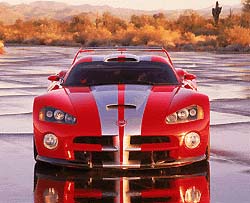
Since then, the company has refined the Viper, but only slightly. A few basic amenities like roll-up windows were added. (Originally, the Viper had a removable soft-top with side curtains, like a 1950s British roadster.) The retro-style side exhaust was replaced with a more practical rear exhaust, but the pipes still run through the doorsills singeing the legs of the unwary. A coupe version was introduced that recalls the Cobra Daytona coupe.
But time is catching up with even the outrageous Viper, and so is its primary natural enemy, the Chevrolet Corvette. The once-fat-and-happy Corvette was revitalized with the appearance of the current C5 iteration, and that car offers almost as much bang as the Viper for a lot fewer bucks. It may not rocket through the quarter-mile quite as quickly as the Viper, but the Corvette's speed is much more accessible so customers can drive it rapidly with little fear of wrapping their toy around an oak. 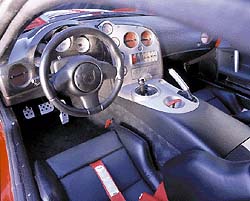
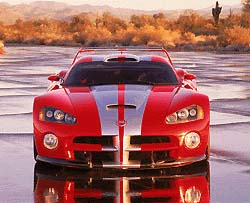
DaimlerChrysler's product designers say they are committed to the Viper. They have vowed to raise the stakes with future models. Dodge plans to update the Viper in 2004 and has provided a preview of things to come with its Viper GTS/R concept car. DaimlerChrysler's designers say some of the cues from the GTS/R will be integrated into the next-generation Viper roadster.
The GTS/R should not be confused with the GTS-R, a race version of the current Viper that has been available since 1996. The race Viper has enjoyed considerable success on the race track, particularly in Europe, beating Porsche and Corvette in sports car racing. 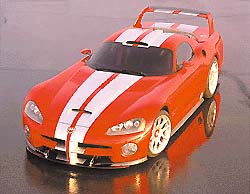
The concept GTS/R is inspired by the race car, and features many styling cues that hearken to the track. Most visible is the high rear wing, which is augmented by an underbody diffuser at the rear and a race-spec air splitter mounted low on the front air dam. In fact, the car's styling was assisted by Reynard, the dominant race car constructor in CART Champ Car racing, to maximize downforce and minimize drag.
The Viper concept applies the longer-lower-wider maxim to good effect. The roof pillars are chopped an inch and a half in the best hot-rod fashion, for a lower roof, and the whole car rides two inches lower. At the same time, the wheelbase is stretched three inches and the track is widened two inches, giving the car a more imposing footprint. 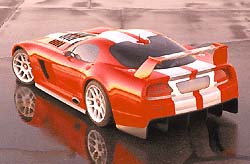
The result is a car that looks even faster and more aggressive than the current Viper, as difficult as that may seem. The grille features a more pronounced version of Dodge's "crosshair" design and that is topped by a revised, fiercer-looking Viper badge. The hood contains an air scoop on the front and large slats at the rear. Like the rest of the bodywork, the hood is made of ultra-lightweight carbon fiber. The GTS/R's roof includes a large air intake worthy of any competitor at Le Mans.
Where the rear window displays the exotic powerplant in many Italian super cars, the GTS/R's backlight shows off a race-spec fuel cell. The Viper's famous 8.0-liter V10 engine rides under its hood. The GTS/R uses a lightly modified version of the current car's engine, tuned to crank out 500 horsepower and 500 foot-pounds of torque. Like all serious race cars, the Viper GTS/R's engine has a dry sump oil system to ensure reliable lubrication under high lateral g loads. The hotter motor powers the Viper GTS/R from a standstill to 60 MPH in 3.8 seconds, topping out over 200 mph.
The company says there is no truth to rumors that say Dodge may plug in a souped-up version of the company's 4.7-liter overhead cam V8 in the next Viper. The Viper will always be a V10, the company says. Could the rumor be half-right? Could the company be developing a new V10 based on the ohc V8? DaimlerChrysler isn't commenting on that one, so we'll have to wait and see.