This page is a translated archive of the original Académie des jeux oubliés, created on July 1, 2026, from the French original at salondesjeux.fr.
|
This page is a translated archive of the original Académie des jeux oubliés, created on July 1, 2026, from the French original at salondesjeux.fr.
|
Extract
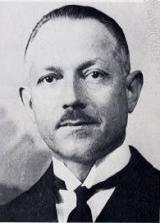
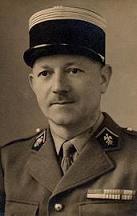
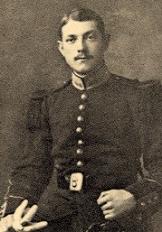
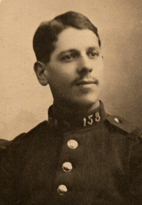
from his service record and campaigns : - Lt- Colonel BOUTET Jacques, born on 09 February 1890 in Tulle, son of Jean-Baptiste BOUTET and his wife Jeanne GROS - Enlisted
as a volunteer for 4 years at Angoulême on 09/10/1911,
recruitment class of 1910, no. 1313
- Second Lieutenant in the 19th Rgt of Dragoons from 12/10/1913 - Lieutenant, 19th Rgt of Dragoons, 25/09/1914 - Instructor of American Army Officers at Saumur from 13/09/1917 - French Mission to the American Army at Chaumont from 06/05/1918 - Liaison officer with the 6th American C.A. [Army Corps], 15/09/1918 After the war, Lieutenant BOUTET served with the Army of the Levant from November 1919 until 1923 - Promoted to Captain on 25/06/1925, he served in the 29th Rgt of Dragoons at Provins - Admitted to the ESG (2 March 1928) and awarded his staff diploma - Then served on Cavalry staffs and with the 3rd Btn of Dragoons at Lunéville - Promoted to Squadron Commander (Major) on 25/07/1936, he was posted to the 8th Dragoons at Lunéville At the outbreak of war, on 27/08/1939, he was assigned to the EM [Staff] of the 4th Army - On 01/07/1940, he joined the EM [Staff] of the 13th Military Division at Clermont-Ferrand - Promoted to Lt-Colonel on 13/06/1940, he was appointed Deputy Chief of EM [Staff] of the 13th Military Division on 10/06/1942 Kept on active duty He was arrested by the Germans during the raid on the EM [Staff headquarters] of Clermont-Ferrand Sentenced to death and executed by the Germans Died for France on 10 May 1944 (Death certificate no. 502314/EG/E2, 1st Bureau of 24/08/1948 of the Ministry of War Veterans) DECORATIONS : Croix de Guerre 14-18 - mentioned in Rgt orders Croix
de Guerre TOE - mentioned in Army and Brigade orders Legion of Honour, 31/12/1926 Croix de Guerre 39-45 - mentioned in Army orders Medal
of the Resistance with rosette Nomination for the Croix de la Libération : « A martyr of the Resistance, a senior officer of proven patriotism. A leader of great worth who, amid the worst dangers, succeeded in gathering and organizing very numerous elements of the resistance in Auvergne. Through his clear-sightedness and great selflessness, he brought about the union of all, thereby preparing the assembly of several thousand men for the decisive battles. Denounced for his activity, both anti-German and anti-government, he was arrested before he could enjoy his success. Tortured by the Gestapo, he gave up no secrets. He was shot by the Germans in May 1944. » Opinion of the ORA delegate : « After a military career ranking among the most accomplished, he continued the fight against the Occupier within the ranks of the O.R.A., gathering and organizing the active forces of the Massif Central Region for victory over National Socialist ideology. He pursued his ideal in the service of his Country to the supreme sacrifice. Having died for France, he deserves to rest in the Military Plot of the cemetery of Sens, among the heroes who died on the field of honour. »
Joigny, 30 November 1993 Commandant MACAISNE Departmental Delegate, O.R.A.
Abbreviations : O.R.A. : Organisation de la Résistance de l'Armée [Army Resistance Organisation] ; ESM : Ecole Spéciale Militaire [Special Military School] ; ESG : Ecole Supérieure de Guerre [War College] ; EM : Etat-Major [Staff] ; T.O.E. : Théâtres d'Opérations Extérieures [Overseas Theatres of Operations]. References :
1.
Extracts from the address by Commandant Mascaine, O.R.A. departmental delegate, in tribute to Lieutenant-Colonel Jacques Boutet, at the cemetery of the town of Sens.
1.1.
Saint-Cyr, the War of 1914-18 Jacques Boutet entered Saint-Cyr in October 1911 and, having chosen the cavalry, he was posted on graduating in 1913 to the 19th Dragoons. It was with this unit that the young second lieutenant took part in the first operations of the war. A citation describes him thus: « A courageous and devoted officer who, at the start of the campaign, led several reconnaissance missions with energy and composure. » For him, for more than 37 months, it would be the hard life of the front with its hardships and its sacrifices. In 1917 the war changed character. The young American army came to take part in the struggle and replenish our ranks. In September, Lieutenant Boutet was chosen, for his outstanding qualities and his command of the English language, to serve as a cavalry instructor at Saumur for the American officers. He succeeded so well there that he was posted as liaison officer to the American 6th Army Corps, with which he finished the war.
1.2.
The Levant At the end of 1919, he left for the Levant. In February 1923, a citation in Army orders added a palm to his Croix de Guerre des TOE: « In the Levant since November 1919, he distinguished himself both in the ranks and on the staff by his fine military qualities. In Cilicia, during the operations of the winter of 1921-22 he particularly distinguished himself as squadron commander, notably during the fighting at Tarsus (January-February 1921). He has just shown his full worth as chief of staff to the commander of operations conducted west of Aleppo (Syria) against the Tchètès bands (September to November 1922). He carried out his duties in the most brilliant manner and, moreover, carried out, heedless of danger, frequent missions made difficult by the presence throughout the country of numerous armed bands. » In July 1923, another citation rewarded his bravery in the fighting in the Djebel region (Syria), from 10 June to 12 July.
1.3.
Legion of Honour, War College, the run-up to
the Second World War After a four-year posting in the Levant, he was assigned to the 29th Dragoons at Provins. It was in 1925 that he was made captain, and he received the Cross of the Legion of Honour in 1926.
But it was through study - which gives depth to reflection and ease in synthesis - that the captain forged his character : admitted to the War College, he graduated with a staff diploma in 1930.
In 1936 he was promoted to squadron commander in the 8th Dragoons after having served two years on the staff of the 2nd Cavalry Division, at Lunéville. He was there in the front row to observe what was happening on the other side of the Rhine: the rise of Nazism and its shows of force. France, as always, ignoring the warnings, dreamed of peace and gave in to complacency. She would awaken into the nightmare of June 1940.
1.4.
The Second World War, the O.R.A., J. Boutet regional chief for Auvergne,
his actions Commandant Boutet, posted at the start of the campaign to the staff of the 4th Army, was transferred on 1 July 1940 to the staff of the 13th military region at Clermont-Ferrand. He was one of those who did not despair of France's destiny. Around him gathered leaders, men, who kept up hope. He was the organizer, the driving force of a movement that would consume him entirely. His integrity, his elevated sense of duty, drew all energies to him. For everyone, he was the example! Promoted to lieutenant-colonel in June 1941, he was appointed deputy chief of staff of the Clermont-Ferrand military region, which was one of the nuclei of the army's resistance.
The O.R.A., an offshoot of the army, in keeping with the permanence of its mission, was preparing in the shadows to resume the fight. Its organization covered the whole of France. Our ideal (it is Commandant Mascaine speaking), exclusively national and patriotic, free of any political ideology as of any ambition personal, can be summed up thus: the greatness and prosperity of our country come, in our hearts, before our opinions and our preferences.
Our first chief, General Frère, was our flag. It was he who invested Lieutenant-Colonel Boutet with his command of the O.R.A. for the Massif Central.
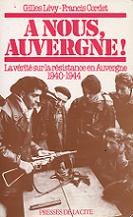
Lieutenant-Colonel Boutet would not fail in his mission. It is not possible to relate even succinctly in an address, the many aspects of his activity. The history of the O.R.A., an essential work for anyone wishing to understand the resistance, which we owe to Colonel de Dainville (Lavauzelle editions) shows us what this regional chief accomplished: « ...he built an organization in depth: a departmental command structure, communications, arms caches, teams for eliminating enemy agents, liaison with the resistance organizations (F.T.P. included), financing of crossings into Spain ... » Thus he became, for the whole region, the catalyst of all the forces arrayed against the occupier. Another book, by Gilles Levy and Michel Cordet, entitled : « A nous Auvergne » (Presse de la Cité) shows us through its many references to his name the scale of his action. But it is the enemy himself who sheds light on the results achieved by the regional chief. Indeed, the German report on the operations in France in March 1944, cites: « the region of Clermont-Ferrand as the best organized, headed by a steering committee, with genuine staff offices. »
1.5.
His arrest by the Germans, imprisonment, execution As you can well imagine, the O.R.A. was a prime target of the Gestapo and the Abwehr, who fully gauged its power and effectiveness. Thus on 1 October 1943, the Germans surrounded the staff headquarters buildings. Everyone urged Lieutenant-Colonel Boutet to escape - he could have - but he was determined to destroy all the compromising papers and it was in the fire that the enemy saw the evidence it sought go up in smoke.
Then came the ordeal! He did not deny the facts weighing against him, on the contrary, he took full responsibility for everything; he impressed his torturers with his strength of character and greatness of soul.
Sentenced to death on 10 March 1944, he was shot on 10 May 1944.
1.6.
Nomination for the Croix de la Libération, his last letter to
his mother There followed a reading of the text of his nomination for the Croix de la Libération, at posthumous rank (see above), and that of his last letter to his mother (see at the top of this page) (Following this request, the Medal of the Resistance with rosette was awarded to him)
1.7.
Tribute to Lieutenant-Colonel Jacques Boutet, the Military Plot of the cemetery
of Sens, a street in Sens, a stadium in Clermont-Ferrand A palm was then laid on the grave of Lieutenant-Colonel Boutet and a minute of silence was observed.(grave of the Boutet family)
At the request of his younger brother Georges Boutet and of Commandant Mascaine, he has rested since 1993 in the Military Plot of the cemetery of Sens at the foot of the French flag.
A street in Sens has been named rue du lieutenant-colonel Boutet.
A stadium in Clermont-Ferrand also bears his name.
2.
(a work by Gilles Lévy and Francis Cordet published by Presses de la Cité, 1981) The following paragraphs are extracts from this well-documented book on the Resistance in Auvergne. Demobilization,
entry into the Resistance of Lt-Colonel Jacques
Boutet (p. 46): Disarmed, almost entirely demobilized on 1 December 1942, had the metropolitan French army definitively disappeared? In any case, given the apathy of most of the military, the future looked bleak indeed. However, two officers, the lieutenant-colonels Jacques Boutet and Jean Garcie continued the fight, rallied willing volunteers and succeeded in keeping equipment out of the reach of the investigations of Commandant Berninghaus.
Birth
of the O.M.A (Organisation Militaire d'Action) or O.R.A.
(p. 47) : At the regional level, command of the O.R.A. was held by Lieutenant-Colonel Jacques Boutet, assisted by Commandant Henri Madeline. The Puy de Dôme fell under Lieutenant-Colonel Jean Garcie. In agreement with Lieutenant-Colonel Jacques Boutet, Doctor Guy Fric took charge of the military organization of the « Mouvement de Résistance des Prisonniers de guerre » (*) founded by F. Mitterand. Recruitment was carried out solely among escaped prisoners.
The attack
on rue Monlosier of 8 March 1944, execution
of Lt-Colonel Jacques Boutet (p. 155)
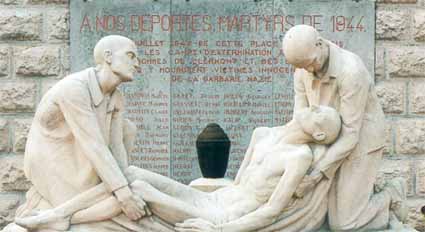
: Report of the principal liaison staff no. 588: « In the town of Clermont-Ferrand, in reprisal for an attack on a marching company on 8 March, in the course of which 37 soldiers were wounded, some severely, 183 people were arrested. Accelerated application of military justice against 50 enemies of the Reich and immediate execution of the judgment. » The military tribunal sitting in Lyon rushed through the sentences. Condemned on 11 March 1944, Lieutenant-Colonel Jacques Boutet was executed on 10 May.
3.
The following quotations are taken without modification (except for the added headings) from this very fine site: (but do visit the site, it's better) Recruitment
of Alsatian students into resistance organizations : The ORA, standing for Organisation Résistance de l'Armée, was represented at the regional level by Lieutenant-Colonel Jacques Boutet, assisted by Lieutenant-Colonel Jean Carcie and Commandant Madelin. In agreement with the ORA Doctor Fric took charge of directing the military organization of the Mouvement de la Résistance des Prisonniers de Guerre (*) of François Mitterrand. The law students François Marzolff and Henri Weibacher placed themselves at the service of the ORA. Arrest
of Lt-Colonel Jacques Boutet
: During the summer of 1943 the Gestapo mounted simultaneous actions against Mithridate and the ORA. In July Hugo Geissler had succeeded in arresting at Vichy two agents of Mithridate, who were to go and set up a new cell at Rennes and who were carrying documents, weapons and radio equipment. This had enabled him to accumulate information, which led in the month of October to more than fifteen arrests, including notably those of the two regional chiefs: André Aalberg and Paul Gaubin. Aalberg, who tried to flee, was gravely wounded and died at the Hôtel-Dieu, without being able to be interrogated by the Gestapo. At the same time, Geissler was developing operations against the ORA. In that same month of October, he raided premises of the 13th military region, at Clermont-Ferrand, Royat and Romagnat, seized a number of archives and arrested 32 people, including 16 officers, among whom were the regional chief, Lieutenant-Colonel Jacques Boutet and his deputy Commandant Henri Madelin. It is more than certain that agents in the service of the Gestapo had been infiltrated into the two networks. However, there were Alsace-Lorraine students among the people arrested during these different operations: Ernest Unguerrer in Mithridate, François Marzolff and Henri Weilbacher in the ORA Execution
of Lt-Colonel Jacques Boutet
: 8 March 1944: Grenades on rue Montlosier - The firing squads : 3 students shot That
same 8 March 1944, at practically the hour of the arrests at
the Hôtel Dieu, three grenades were thrown on rue Montlosier,
near the place de la poterne, at
a detachment of German soldiers, killing 1 and wounding 4
severely. Immediately, there were raids in the cafés around
the place de Jaude and the railway station, particularly frequented
by Alsace-Lorrainers, which were followed the next day by
arrests at home, as was the case with the Professor of Law Claude Thomas.
The second consequence of this attack was that the German authorities
gave the order to their Military Justice, sitting
in Lyon, to accelerate the judgments in the files of « 50
enemies of the Reich » and to ensure their immediate application.
Thus, there were condemned to death for espionage and executed
: Execution
of his torturer Mathieu (a resistance fighter turned
collaborator who became an active member of the Gestapo) 17 NOVEMBER 1944 - 12 DECEMBER 1944 THE MATHIEU TRIAL - JUDGMENT - EXECUTION Thus Charles Caudron (Commandant Bengali) of the Mithridate network reported that Geissler, head of the Vichy Gestapo, had himself been stunned by the violence and the cruelty of the interrogation that Mathieu had inflicted on Lieutenant-Colonel Jacques Boutet of the O.R.A. and had said « I have rarely seen a man, calling himself an officer, set upon a French officer so relentlessly. » The closing argument was delivered by Commissioner Chaudoye, who called for the death penalty, declaring that this punishment was too lenient for Mathieu. Loud cheers and applause underscored this conclusion. « Happy to have served France » : François Marzolf : Law student. Member of the network O.R.A. Arrested on 21 September 1943. Condemned to death for espionage. Shot on 10 May 1944. On the walls of the prison of the 92nd, an inscription was found which he had signed with Lieutenant Colonel Jacques BOUTET, Regional Chief of the O.R.A. executed the same day: « Happy to have served France ».
(*) Note : in this citation, it is mentioned « Mouvement de la Résistance des Prisonniers de Guerre de François Mitterrand », it should more likely be the "Rassemblement National des Prisonniers de Guerre de François Mitterrand et Maurice Pinot » (Please use the « back » arrow of your internet browser to return to the text)
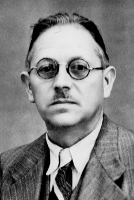
«
  Jean-Baptiste Jules BOUTET
Born in Limoges, son of a stonemason born at Le Palais-sur-Vienne and descendant of a long line of papermakers from Saint-Léonard-de-Noblat. With his wife Jeanne Gros, he had 5 children : one daughter (Louise) and four sons (Jacques, Paul, Henri and Georges)
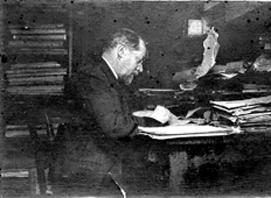
Jules Boutet was an inspector of indirect taxes. He can be seen at work in this photo dating from 1906. Paul BOUTET
Paul
Boutet, my grandfather, for his part worked actively for
his family by marrying my grandmother, Louise Verdier, and by having
the only descendants of the Boutets, two daughters and a son.
Thanks to Paul Boutet, his father Jules now has ten descendants.
Thank you for your visit,
Philippe LALANNE (great-nephew of Jacques and Henri Boutet)
Information about this page Published online on 11 November 2004 On
a completely different note, you can also visit other pages on :
|