|
|
||
|
|
||
|
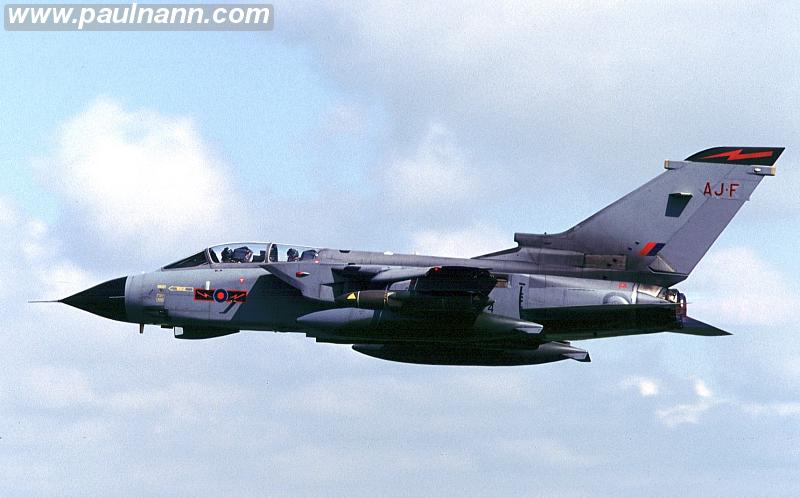
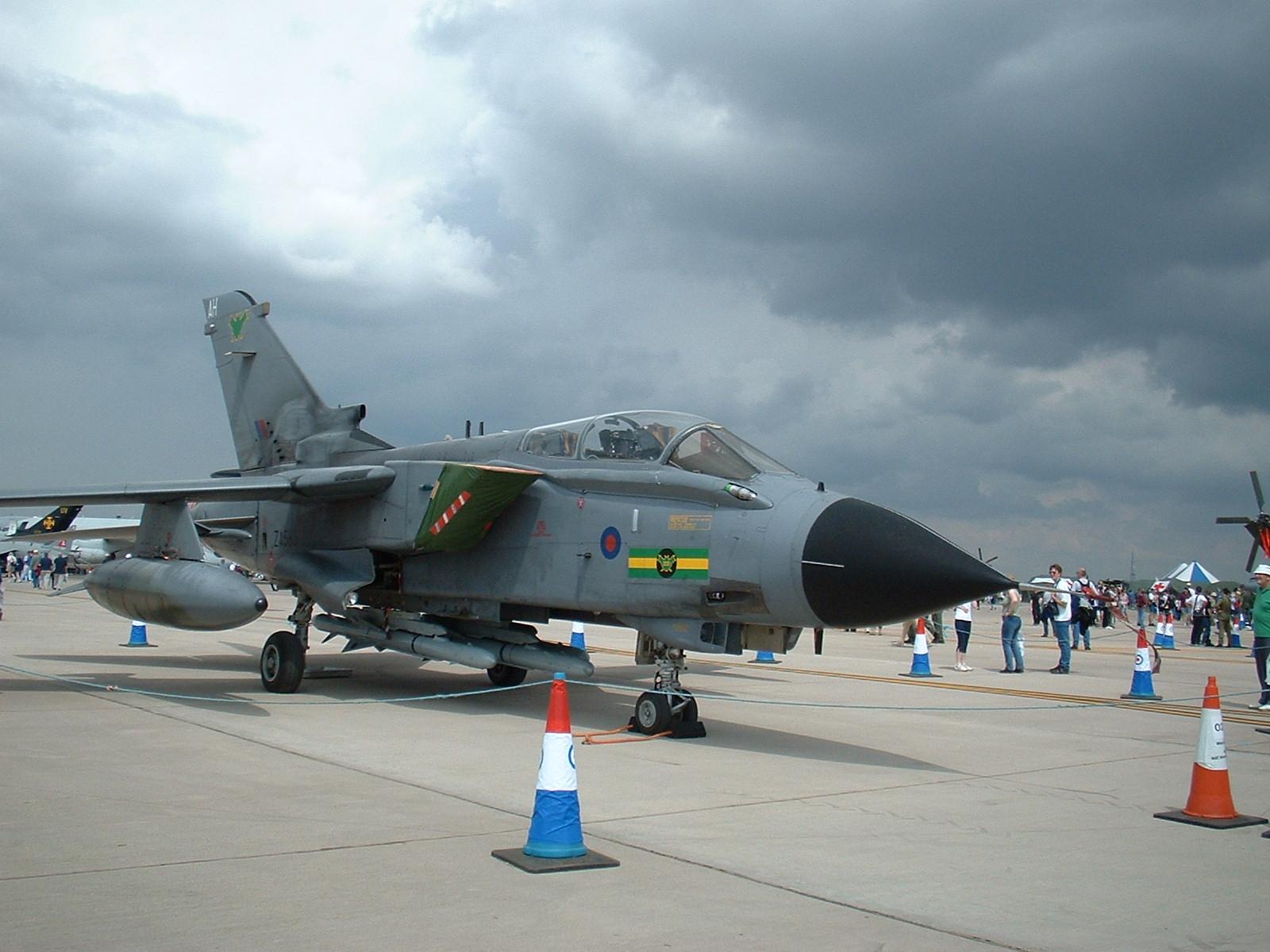
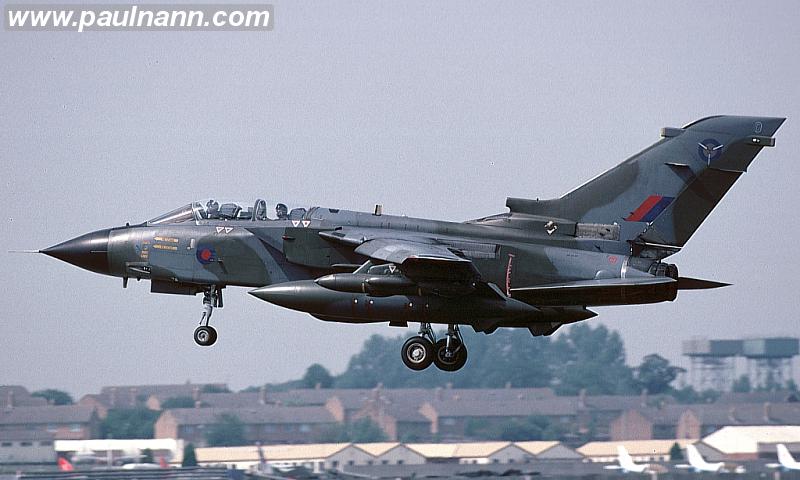
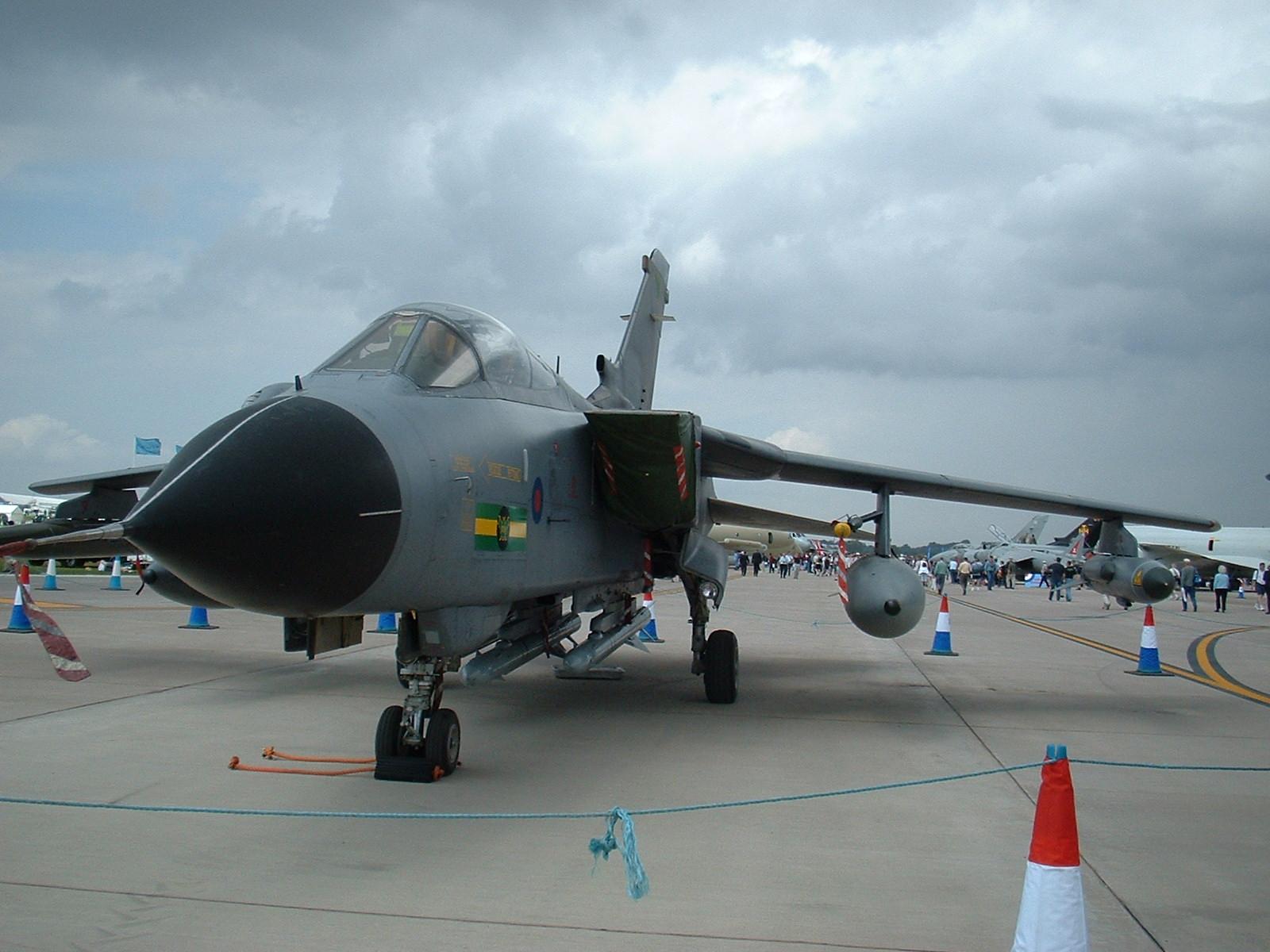
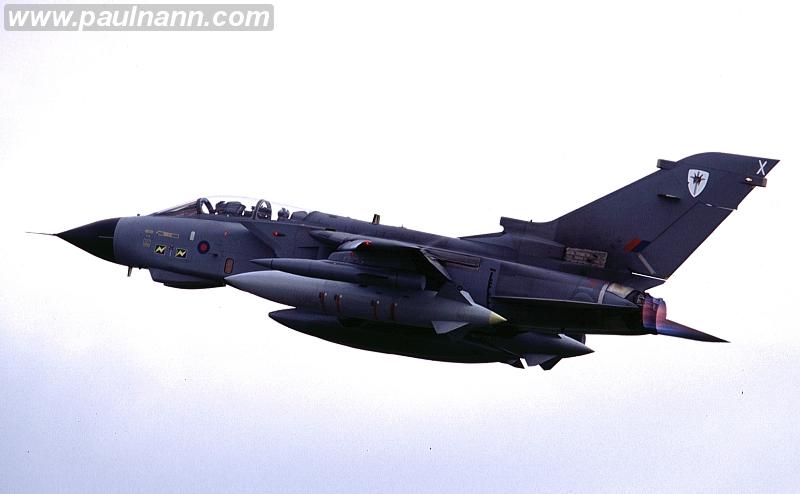
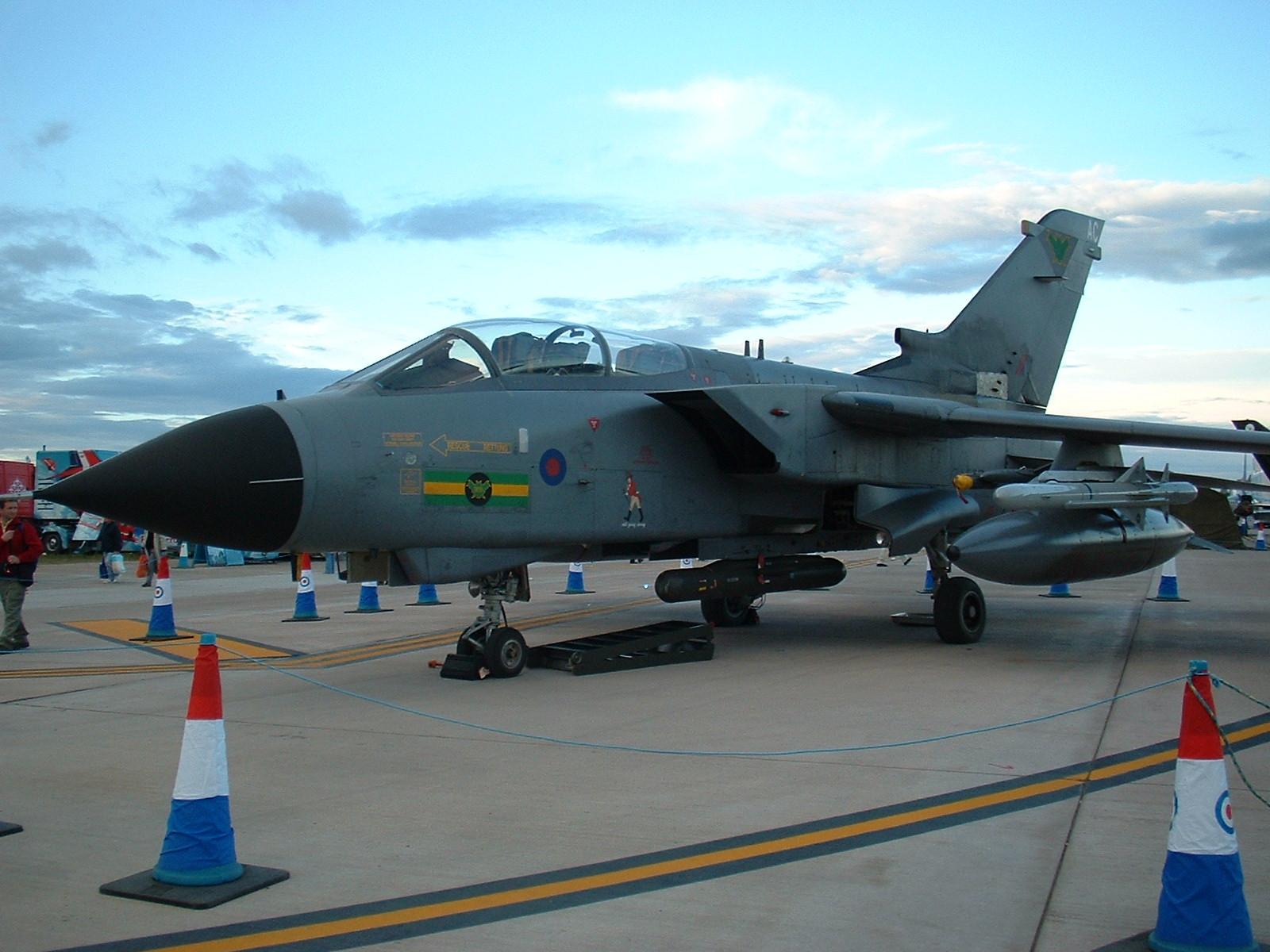
The Panavia Tornado is by far the most successful international aircraft project ever. It was well researched, well planned, well organised & well built. It began life as the MRCA (Multi-Role Combat Aircraft), a joint project between British Aerospace of the UK, Messerschmitt-Bölkow-Blohm of the then Federal German Republic, & Aeritalia of Italy. These three companies formed Panavia GmbH. There were four customers, all with different requirements. The RAF required a two-seat long-range low-altitude precision strike aircraft, with a short-range anti-tank capability. The Luftwaffe also required a strike aircraft, but it had to be capable of taking off from short or damaged runways. The Marinefleiger required a low-altitude anti-ship aircraft with a reconnaissance capability. Finally, Italy's AMI (Air Force) required an aircraft similar to the Luftwaffe's, but only single-seat. It was decided that rather than produce two versions of the Tornado (single-seat & two-seat), only a two-seat version would be produced, as it would save money, & would cause little inconvenience to the AMI. Another international organisation was formed named Turbo-Union. It consisted of Rolls-Royce of the UK, MTU of West Germany, & Fiat of Italy. A Rolls-Royce engine was selected (the R.B.199) to be produced by the three companies. The R.B.199 is compact, but powerful. It includes VG (Variable Geometry) exhaust nozzles, & is capable of re-heat (afterburning). The Tornado has many features designed to make it more compact, increase its efficiency, & make it an extremely advanced aircraft meeting all but a few of its detailed design specifications. It can carry almost all weapons in the European NATO armoury, has thrust-reversers for landing on short airstrips, has swing-wings with internal fuel tanks (so-called 'wet-wings'), & has advanced avionics. The Tornado Gr.1 was deployed in West Germany in the Cold War with RAF Germany, & was described as 'the most important aircraft in the NATO armoury, along with the F-16'. It was used extensively in the Gulf War, & performed admirably, asserting the Tornado as one of the world's most formidable strike aircraft. It is faster than any other aircraft at low-level, & because of its 'swing-wings', it performs well at high altitudes as well. The Tornado has also been involved in successful precision strikes against Iraq & Serbia recently, & has caused fewer civilian deaths than any of its American counterparts. Work on the airframe was shared according roughly to the number of orders made by each country. This meant that 42.5% of construction went to BAe, 42.5% to MBB, & 15% to Aeritalia. The RAF placed orders for 229 Gr.Mk 1s, the Luftwaffe ordered 212, the Marineflieger ordered 112, & the AMI ordered 100. The RAF also ordered 173 Tornado ADVs, bringing the UK total up to over 400 aircraft. |
||
|
|
||
|
Country of Origin: United Kingdom, Germany & Italy Type: Multi-role combat aircraft, including Anti-Shipping, Interdiction & Strike roles Powerplant: Two 7292kg (16,075lbs) Turbo-Union RB.199-34R Mk.103 turbofans Performance: Max. speed above 11,000m (36,090ft) 2337km/h (1,452mph); service ceiling 15,240m (50,000ft); combat radius with weapon load 1,390km (864 miles) Weights: Empty 14,091kg (31,065lbs); max. take-off weight 27,216kg (60,000lbs) Dimensions: Wingspan 13.91m (45ft 7in) spread & 8.6m (28ft 2.5in) swept; length 16.72m (54ft 10in); height 5.95m (19ft 6.25in); wing area 26.60m2 (286.3ft2) Armaments: Two 27mm IWKA-Mauser cannon with 180 rpg, seven external hardpoints with provision for up to 9,000kg (19,840lbs) of stores, including nuclear weapons & JP233 runway denial weapons, ALARM, AAMs, ASMs, Anti-Shipping Missiles conventional & guided bombs, CBUs, ECM pods & drop tanks Electronics: ARI.23246 Sky Shadow deception jammer, Texas Instruments terrain-following radar Operators: UK (RAF), Germany (Luftwaffe & Marineflieger), Italy (AMI) & Saudi Arabia (RSAF) History: Initiation of project 1967; first flight 14/8/1974; service delivery (to trials unit) 1981; squadron service in UK & Germany 1982, took part in Gulf War 1991 Sub-Types: Tornado GR.1, Tornado GR.4, Tornado T.3 |
||
|
[Back to Strike & Attack] [Home] [Jet Net UK Warzone] [Jet Net UK Photo] [Contact Jet Net UK] |
||