The dream of
a larger church
It did not take long for the fathers and for the faithful to realise
that the temple was too small to accommodate the considerable number of people
who flocked to our church especially on Sundays, feastdays, and special
occasions.
In a printed Supplement of the "Ruzarju Mqaddes" (Holy
Roasry) number 7 of 1909, we read that new roads were laid in the neighbourhood
of the church, and that the area was built and inhabited in no time.
Anyone could note that the more the church was frequented, the more it grew
smaller, and it was necessary to enlarge it in a big way .
It is worthwhile noting that Sliema grew larger in no small way, and
the buildings around the Strand developed more rapidly than in other
areas. In the first ten years of this century, the population in Sliema
increased by more than 2,600; by some 25% more than it was in the 19th century.
Fr Hyacinth Grech Ellul, the Vicar Superior of the Dominican community
at Sliema, thought of easing the situation. He called for funds intending
to enlarge the existing church, or simply building a larger one. Fr
Hyacinth embarked on a door to door collection in Sliema; his first round is
recorded as that on Sunday 9 June 1912 .
After a five-year effort to fund-raise, Fr Hyacinth felt that the
stress of responsibility was too much of a burden to carry. Moreover, the
Sliema Dominican community was undecided whether to enlarge the existing church
or build a completely new and larger one. The Vicar Superior left the
final decision to the provincial who convened his Council on Thursday 23
January 1913 at the Rabat Priory. Fr Grech Ellul put forward two building
plans: one relating to the enlargement of the church, the other showing a new
temple and a convent adjoining the church which the Marquis had erected.
The Council decided on the new church . Fr Grech Ellul then
set up what he termed a "Committee of Directors" to care for the
building and fund-raising activities. Besides Fr Hyacinth, its other
members were Fr Dominic Azzopardi O.P., Ignatius Abela, Alfred Lupi, Edward L.
Galea, Alphonse M. Caruana, Carmel Agius, Joseph Lupi, Carmel Azzopardi, and
John Cassar who gladly assumed the mentioned responsibilities. On 22
August 1917 at 10.00 a.m., the committee met in Fr Hyacinth’s private
room. The reverend gentleman declared that, for five years, he had toiled
very hard to raise funds for the new church. He added that, with the help
of the Executive Council of Government, and by means of monies collected, he
had acquired more than half the land needed for the building of the church, and
had already succeeded to have this area cleared of all rubble with the valuable
and voluntary help of the "Royal Engineers". Yet, there
was much more to be done and, as the project demanded great sums of money, the
work involved could not be shouldered by one man. Fr Grech Ellul
expressed his confidence and trust in the committee’s experienced members, and
stated that he was sure of their support to carry out what he and his religious
brethren had long wished to achieve. All
present agreed that the officials on the committee were to be Fr Grech Ellul as
president; Fr Dominic Azzopardi, secretary; Joseph Lupi, treasurer; John
Cassar, assistant treasurer while Alphonse M. Caruana was to act as
director of works.
It was also decided to thank the Colonel of the "Royal
Engineers" for the work done by his labourers, and to request his help for
further cleaning of the building site.
At the committee meeting of 9 September 1917, we notice the mention of
architect Benjamin Cordwell who offered his free professional advice for the
building of the new church and convent. Cordwell was invited to sit on
the committee as a co-opted member, and his presence is recorded at the sitting
of 30 September.
Six months later, on 7 April 1918, Cordwell put forward an
architectural plan for the proposed church and convent to be constructed, and
this met with the approval of all concerned. The Provincial Council also
confirmed the plan, and this was communicated to the committee at the sitting
of 12 May.
In order to build up the necessary funds for the building of the
church, Fr Hyacinth informed the committee, at the meeting of 15 August 1918,
that the block of flats in St Anthony Lane, bought in April of the preceding
year, had been sold to Mr Carm Agius for 900 pounds sterling; that part of the
lodgings needed for the construction of the church was obviously kept.
The funds were further accumulated by having fairs organised on a regular
basis, and through specific appeals for donations. It is worthwhile to
mention Rossini’s opera "The Barber of Seville" held at the Royal
Opera House in Valletta as a fund-raising event.
Although money-collecting was a slow process, the committee was not
discouraged. At the sitting of 20 July 1921, the members decided that the
foundation stone of the new church was to be laid on 15 August of that year:
the feast of the Assumption of Our Lady. The Dominican Auxiliary
Bishop Mgr Angelo Portelli was to officiate at the ceremony; the two sponsors
were to be the President of the Courts of Justice Mr Justice M. Refalo and
Marquis Scicluna . The church was to be dedicated to Our Lady of the
Rosary of Pompei.
A letter of 10 August 1922, written by Benjamin Cordwell to the Chief
Engineer of the "Malta Command", shows that the work on the new
church was started on Monday 7 August of that same year ; as authorised by the
building permit R.E. 1471/153G which Fr Hyacinth Grech had secured.
Unfortunately, the work on the building had to be stopped due to the
large expenses involved, and the lack of funds. Yet, the Dominican
community still pondered of having a larger church. They believed that
the Sanctuary which the Marquis had built was too small to see to the spiritual
needs of all who frequented the place.
Although the idea of a larger temple was far from abandoned, it was
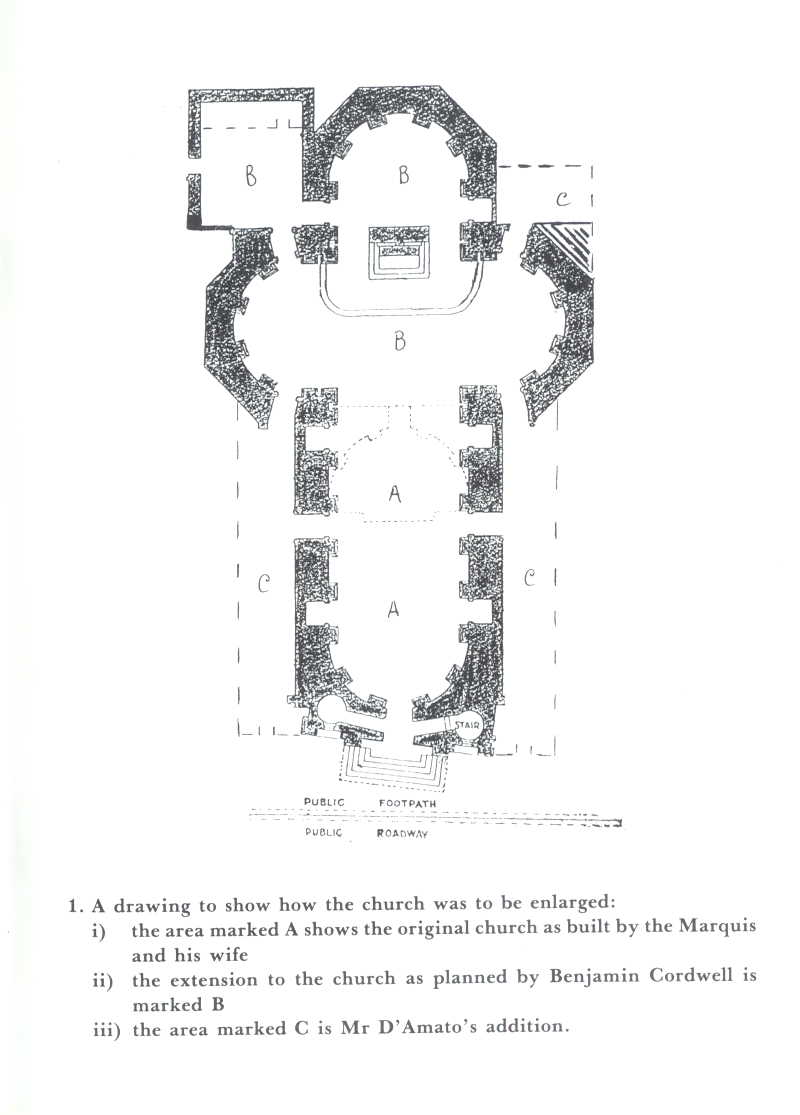
only on 2 May 1938 that the matter was again given due attention. The
Dominican Provincial Fr Cajetan Xerri sought permission from the diocesan
Bishop Dom Maurus Caruana O.S.B. to have the Sanctuary Basilica of Jesus of
Nazareth enlarged as shown on the plan he was enclosing with
the request. The official permission was
granted on 30 July of that year.
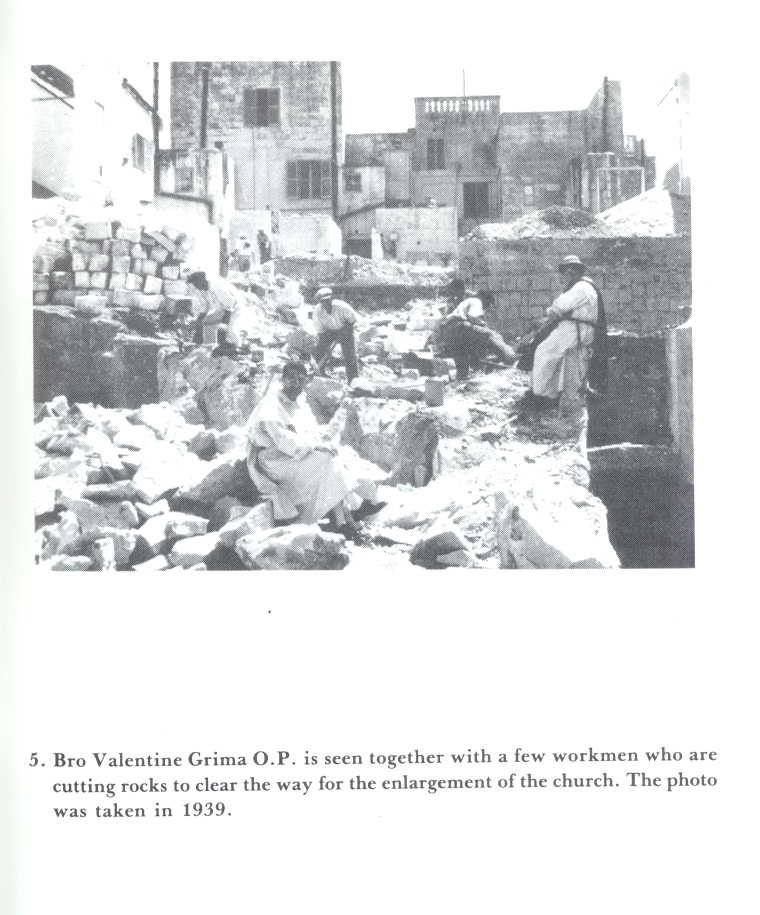
The Vicar Superior of the community, Fr Peter Paul Bajada O.P. appealed
for funds after the commencement of rock-cutting, and the building of some ten
feet of stone around the church . The building works, based on the design
of Cordwell, were going on at a remarkable rate when the Englishman was called
by the "Military Command" on other Services’ projects, and so he
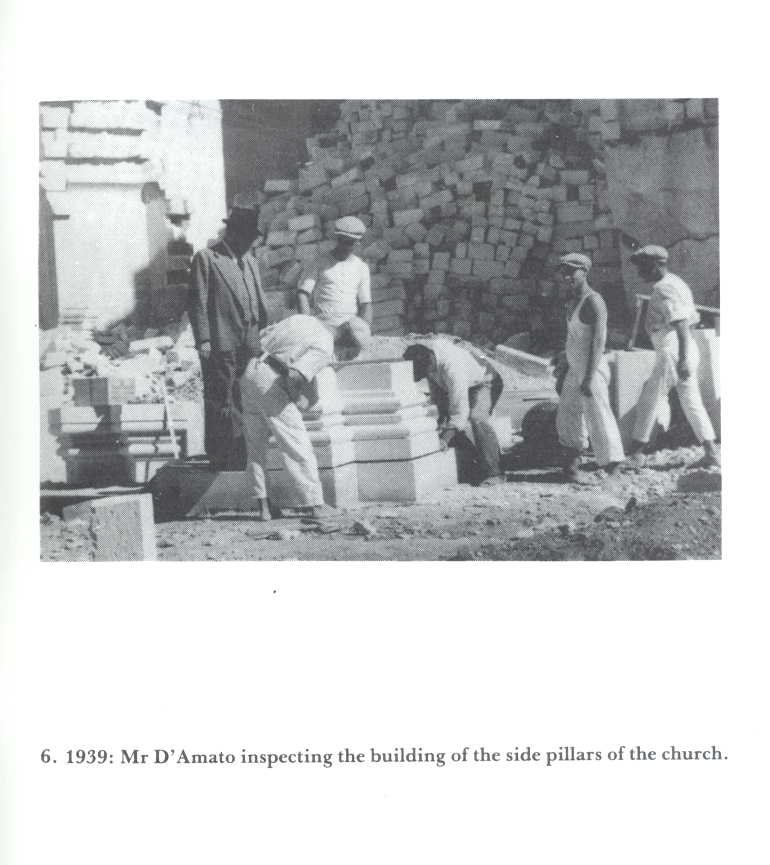
could not go on with the construction of the church. The Dominicans had
to turn to architect Mr Louis Borg and to Mr Joseph D’Amato to take care of the
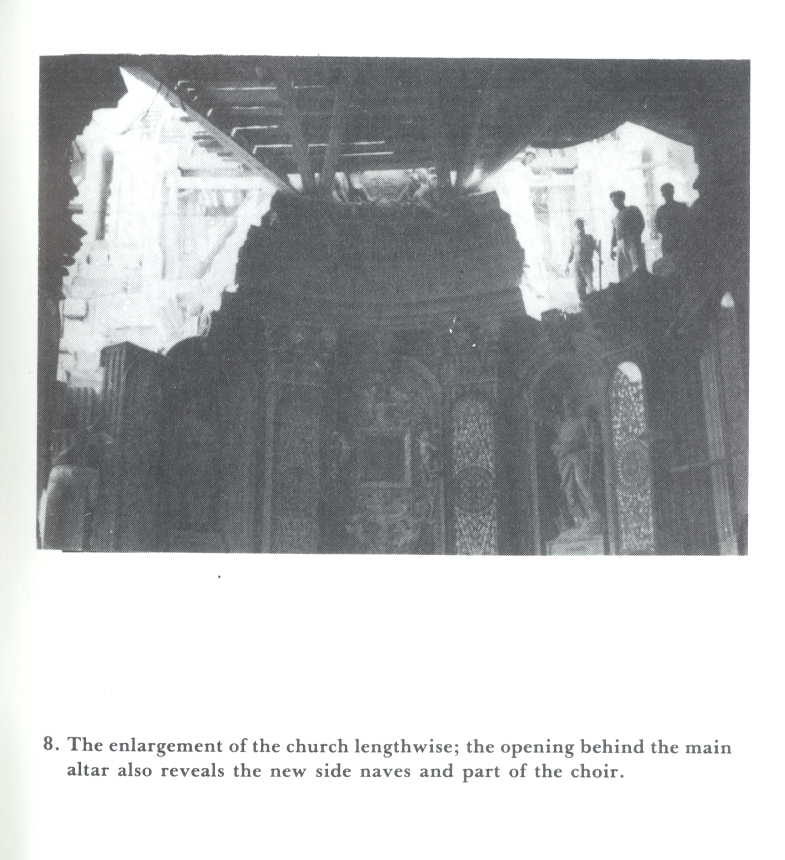
enlargement of the church. Borg and D’Amato effected some changes to the
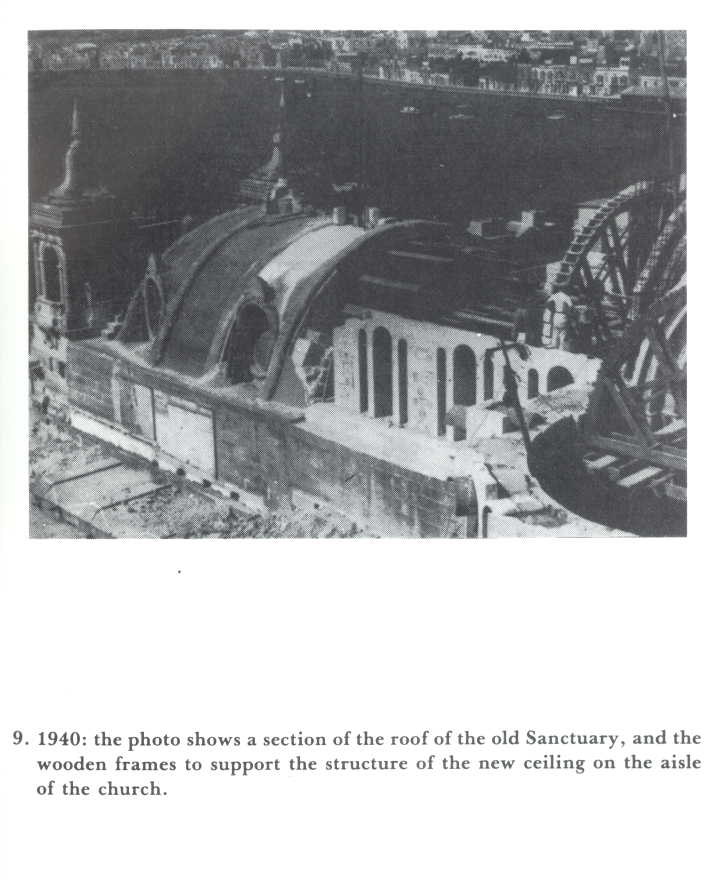
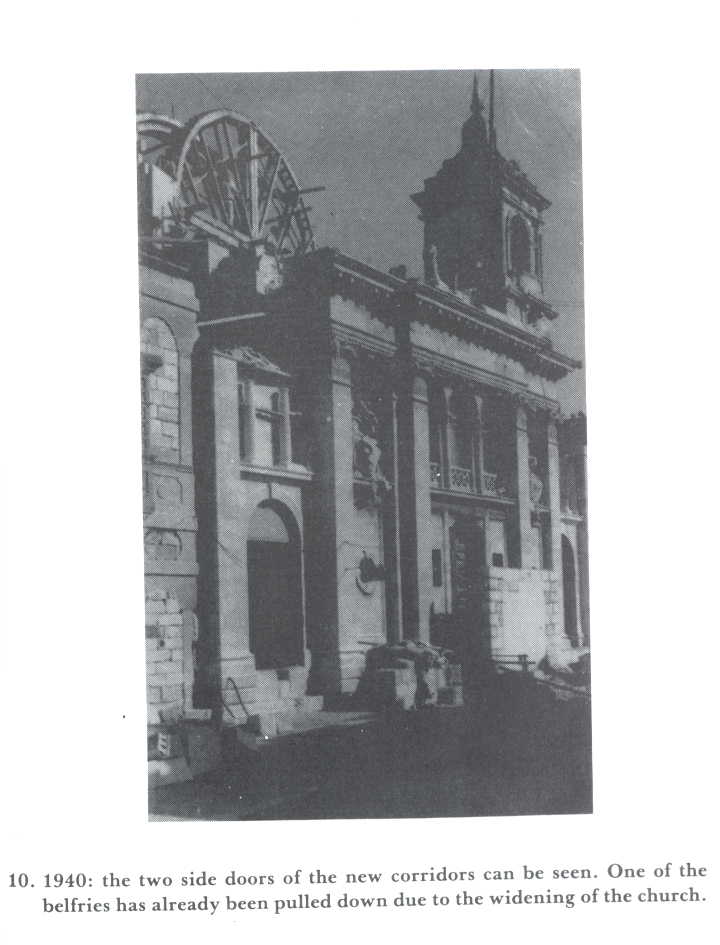
Cordwell plans in order to enlarge further the building. Mr Joseph
D’Amato thought of having a higher ceiling for the church and a cupola, not
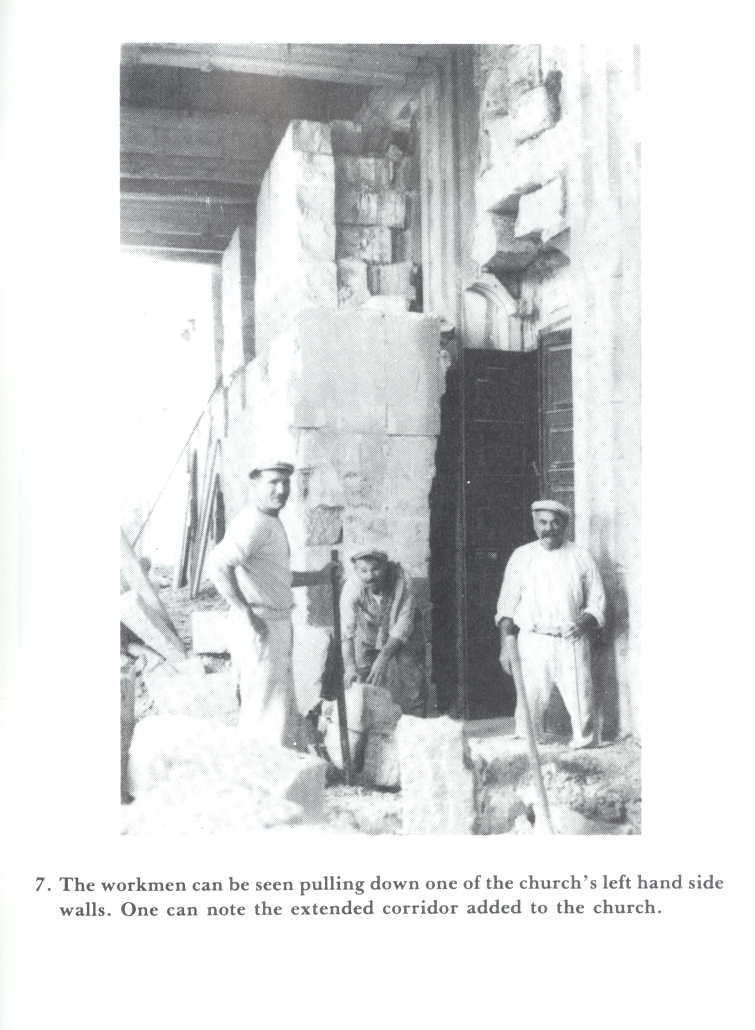
only to make the place look nicer but also to allow in more light; two
corridors on the sides of the church with doors leading to the main road were
planned to provide the church with three entrances.
Mr D’Amato’s re-designed plan was approved in
December 1938, and the works could thus be commenced.