A Fannish Resource Site
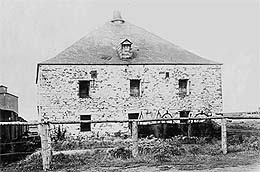
The Walton boyhood home in Thunder Bay.
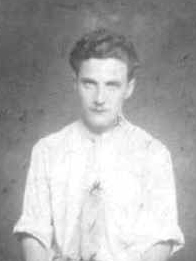
Walton was born in 1914 in Thunder Bay, Ontario, Canada. While a boy, his family moved to the United States and Walton became a U.S. citizen. He received a bachelor�s degree in radio engineering from Washington University. In January 1942, he enlisted in the U.S. Navy. Despite seeing combat throughout the Pacific, Walton managed to continue submitting stories to the pulps which were still being published. Following the war, Walton settled first in Moscow, Idaho, where he founded a writing group which would eventually become the �Moscow Moffia.� By 1950, Walton was living in Madison, Wisconsin. In 1956, Walton moved to Waltham, Massachusetts, his last known address.
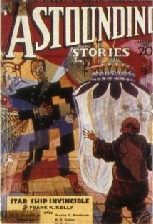
Walton's earliest works, from "The Green Death" to "Raiders from Beyond Antarres" (1938) were derivative space operas, similar to, but lesser in quality than, the works of E.E. "Doc" Smith, Edmond Hamilton and Ray Cummings. All of his works, with one exception, were science fiction. The only time he strayed from the genre was the publication in Unknown in 1939 of the story �Rats in the Belfry.� Although Campbell loved the stories and it received excellent comments, Walton is known to have viewed it as the worst thing he had ever written.
In The Founders of the Future, science fiction historian Robert Rede claimed that Walton was killed in a car accident in early 1957 and that his last four stories were published posthumously. Rede points to police records from Waltham, Massachusetts, where Walton was living at the time. However, Moskowitz claims that he spoke to Walton in 1962. According to Moskowitz's story, Walton turned his back on writing science fiction to take a job working for the government, first on the Dyna-Soar project and later on Mercury.
Unfortunately, and surprisingly, none of Walton's short stories have been anthologized in the past twenty years. The science fiction field is in danger of losing its memory of one of the greatest authors who ever allowed himself to look towards the future. With luck, a publisher will collect some of Walton's greatest stories and rescue him from the oblivion toward which he appears headed.
Coming Soon: A list of the winners of the Walton Award for prolific consistency.