Jennifer's Home Page





|
Jennifer's Home Page
|
|
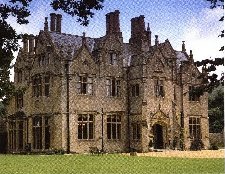
The Hyde Residential and Nursing Home. A wonderful place to work. I started there late 1999 and love my job as Activities Co-ordinator. The place is set in rolling hills and farmland and I have the most picturesque journey to and from work along the coast road.
The Hyde had been the home of the Gundry family since 1810. The family are probably the most well known family in the Bridport area, having founded the famous Rope and Net works in Bridport in the 17th century. Soon after acquisition, the family extended the house substantially and it is to be noted in Hutching' History of Dorset, volume 2, page 208, that "Joseph Gundry, Esq. of The Hyde is the largest owner of the soil of this parish in 1864. His mansion house adjoins the village on the west." It is interesting to note that in the same volume of Hutchings he indicates that during the reign of Henry VIII, "John Hyde held....a capital messuage and 60 acres of the land in Walditch of Katherine Queen of England by knights service". It is believed that this is the origin of the name The Hyde. Unfortunately little remains of the original house as a fire in 1927 destroyed the original Tudor section apart from the office area at the lower ground floor level which is still in existence. In 1853 the front section of the house was added and in approximately 1930 the rear of the property was reconstructed following the fire. The substantial coach house and stables at the rear of the property were constructed in 1884 and a Real Tennis Court erected in 1885. The last owners Grandfather was a particular friend of the Prince of Wales at the turn of the century, and a further wing was planned to the property to house the Prince on visits to The Hyde. The plans included a Billiards Room with Coach house underneath, and the Prince was particularly interested in playing Real Tennis in the magnificent court already constructed. Unfortunately, J. Gundry was killed in a riding accident and his plans were never fulfilled. He did however, leave his mark upon the property by covering the walls of the Dining Room in Russian leather with embossed gold leaf, which is understood to have originated from a Russian Monastery and was purchased in London at the end of the 19th Century. |