articles
6) I continue to struggle with keeping spar finish on the rails, which burns off in the sun in a few weeks. I'm not sure how to improve this.
7) I have the original sails, and they are all that I use. They are not pretty, but they are still functional. Since this is a hobby for me and not a show, I am happy with them.
8) I resurfaced
the exterior with green
pigmented fiberglass and it looks great. Some wax helps to keep the
salt from discoloring it.
I repaint the botton every year and have to
scrape and spray it at least once a season to keep the wildlife off
it. Some better antifouling paint may help, but Long Island Sound is
pretty fertile with NYC sewage running into it every day.
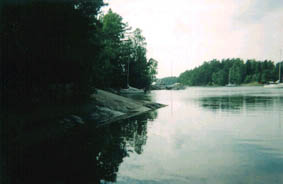
This
picture has nothing to do
with Ted's boat, but there is an Alacrity in it if you look very very
closely...it's right in the middle. (editor)
9) I have replaced the oak on my motor holder, but a synthetic material would be a better choice for someone with more time. I also use a light motor now, instead of the heavy Chrysler that the boat came with. I think the original set up was intended to work with one of those British Army motors with the pipe like shaft. Such a motor would stow easily in the cockpit seats. I have to stow mine in the cabin when I moor or leave it attached.
10) My rudder loosened around the layers of mahogany. I have temporarily refastened some bolts with heavy stainless steel bolts and washers. I highly recommend doing this for all the bolts, as even what I have done has dramatically increased its purchase. A friend here also has a made an entirely new rudder for his Alacrity when his broke in a collision. Maybe he used an old mahogany coffee table for the material. I also need to reassure the rudder holder wood and bronze ("gun metal").
11) I trimmed the base of the (rotting) cockpit door with diagonal sweeps. Now it has some more strength in the corners and there is ventilation in the cabin.
12) And I've done
about 2000 other things
to it in five years, most of which I do not even remember.
by Ted Walls
Since the struts inside the keels are iron, they rusted. Eventually the fiberglass in the front of the keels expanded with the freezing water and gave way.
I repaired this initially by drilling a holes through the keel to drain it, letting it dry and then tightening bolts with big washers around the rupture points. Then I filled the small remaining gaps with epoxy and fiberglassed around the whole front of the keel.
I also fiberglassed over the tops of the keels, making the boat impervious to any leakage into the keel. I also replaced the oak runners, special ordering the bronze screws from Jamestown distributors in Rhode Island. This held up for two years, but the structural strength was inadequate when I had a rough launch from my trailer.
It took on some water through a small hole in my fiberglassing near the toilet. At this point, a marina took it and basically did the same thing but with a lot more epoxy and fiberglass. I expect at some point the other keel will need the same, and I certainly plan no worldwide cruises in it. To completely deal with the problem, I would need to remove the keels and rebuild the iron struts.
2) I removed all of the interior wood and replaced much of it with high grade marine plywood, finishing it in walnut and then installed brass hardware throughout. This was surprisingly easy to do, especially since the boat is kind of like a toy house. I also restored the cushions with duct tape, but these will need replacement soon.
3) I had my travellor bar rewelded with silver when one side gave way in heavy wind. I use the original chock and ropes from the 1960s. The cotton rope is pretty strong still.
4) I installed a bilge pump on a crossboard that I put in under the cockpit in the access from the cabin. The battery sits near it in a waterproof tray. I run the drain into the cockpit or the toilet. Some water gets in from the scupper bases. Other water gets in from the covers on the stow areas under the cockpit seats.
5) I replaced the windows with tinted plexiglass. I riveted them right onto the fiberglass with a thread of marine sealant behind them. This was a brute force approach, but it worked.


