 |
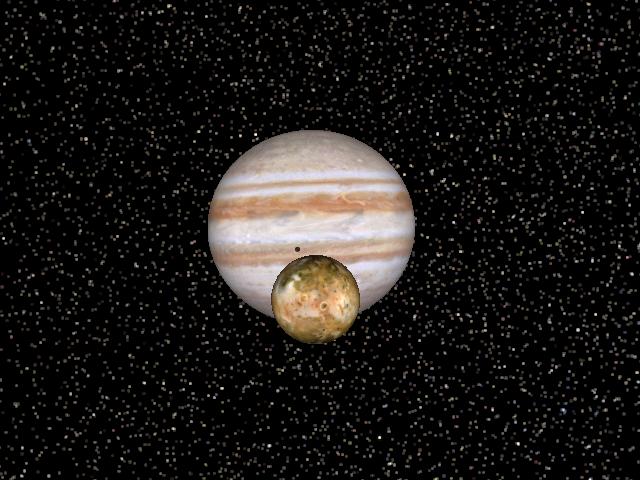 |
| Jupiter's most Volcanically active moon, and the most Volcanically active object in the solar system, Io, casts it's shadow on it's parent planet - Also the largest planet in the Solar System - Gas Giant Jupiter. |
| The Heavens are Telling Obs Deck 10 |
| Space Simulation and orbital mechanics programme "Celestia" from www.shatters.net/celestia |
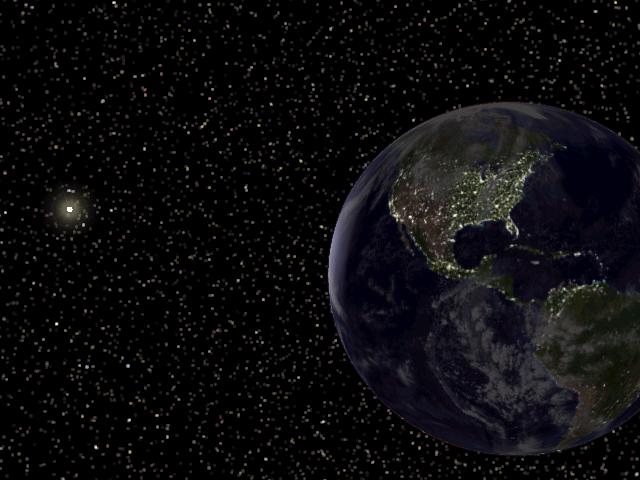 |
| Planet Earth. Late sunset still reflecting off the ocean hundreds of miles west of the American Coast whyle the lights of civilization make North America glow quite promenently on the night side of the planet. |
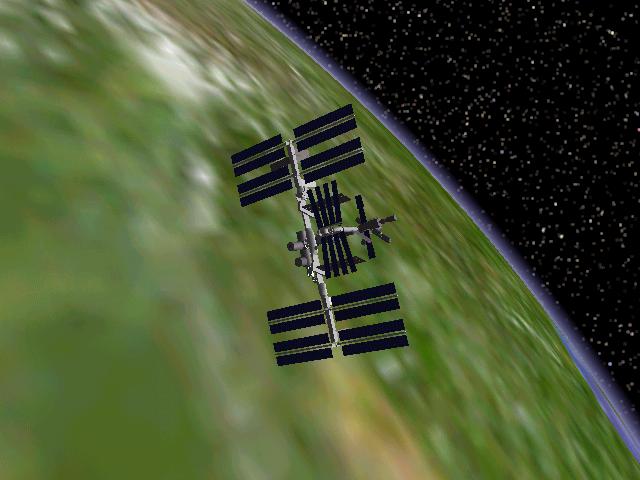 |
| The International Space Station in orbit around Earth, Low Earth Orbit, shown here above China. The orbit which the Space Station is in takes under 4 hours to circle the globe, and because of the orbit inclination takes the station over Australia, Asia, America and Europe. |
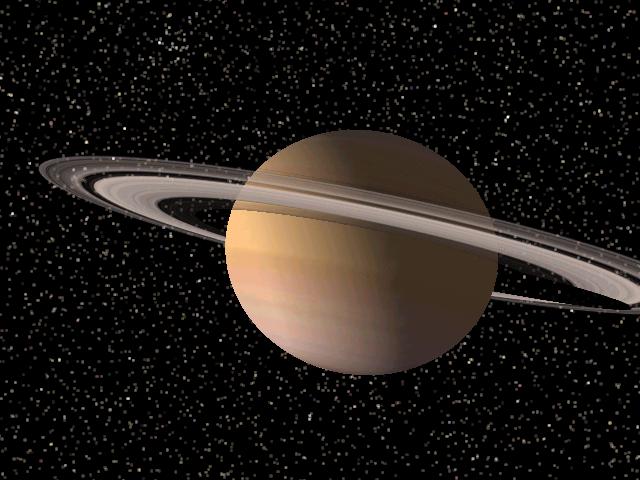 |
| Probably Popular Cultures most identifiable planet. Ringed Saturn. From this angle, one can see the actual planet of Saturn casting it's shadow on it's rings. Saturn, like Jupiter, is a Gas Giant planet, it's atmosphere consisting mostly of Hydrogen gas which makes up near 100% of it's mass. |
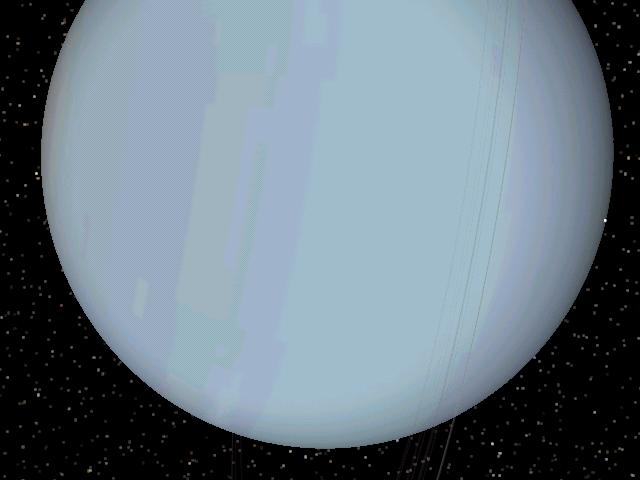 |
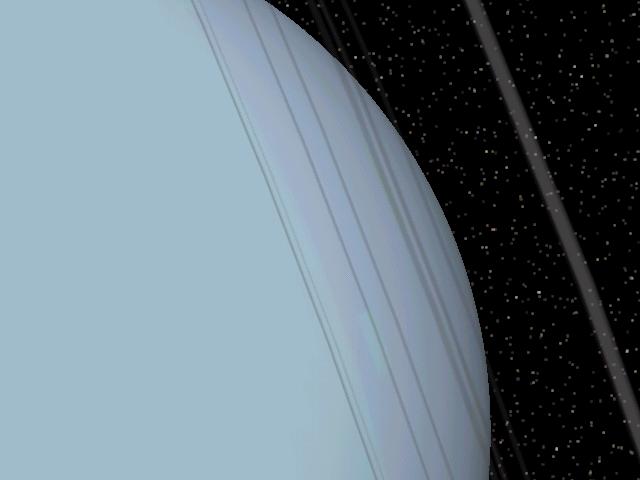
| The Planet Uranus, like most large Gas Giants, has a barely descernable ring system (Of which Saturn is the most famed example) Uranus is also famous for having the most inclined geograpical poles at 98 degrees off solar north. The planet quite literally spins on it's side along with it's rings and moons. |
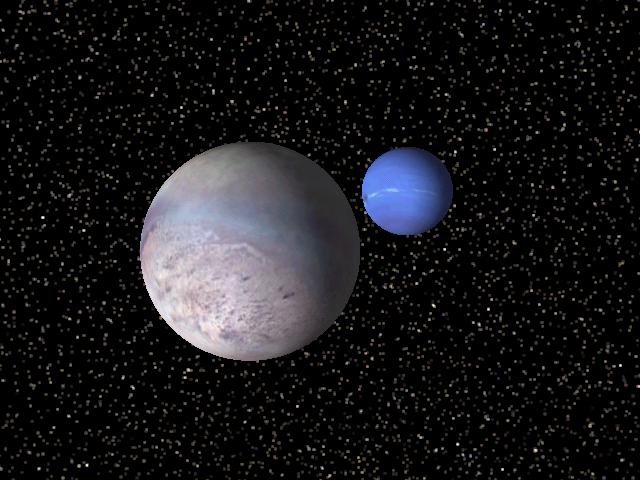 |
| Blue 'Ice Giant' Neptune, with largest moon Triton in the foreground. Triton is one of only 2 moons in the solar system known to have an atmosphere. It is also known to have volcanism. Frozen Nitrogen boils under the surface and bursts out of geysers on the moon's surface at temperatures around -230C. Warm compared to average surface temperatures of -260C. |
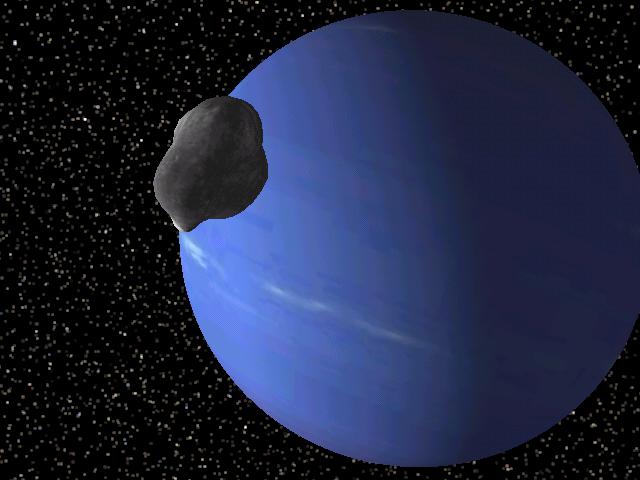 |
| One of the smaller, Closer moons of Neptune. From here we can see the deep blue colouring of the majority of the planet and also the white sirrus clouds high in Neptune's Atmosphere. Windspeeds of over 2000 Miles per hour were recorded on Neptune by Voyager 2 during it's 1989 flypast. |
| Fictional Planet, Immortalized in the Starwars Prequels, City-Planet Coruscant, Capital of the Star Wars Galactic Republic (And later Empire) as it might appear from orbit on a clear day. |
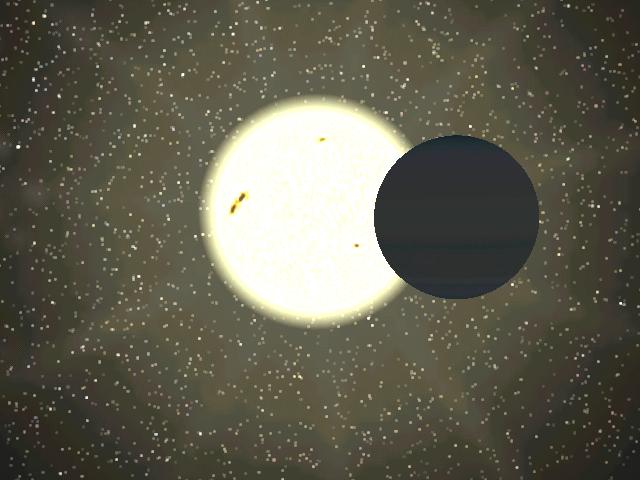 |
| The planet of the star 51 Pegasus was the first discovered orbiting a star other than our own sun. The planet itself is a Gas Giant planet, larger than Jupiter, and orbits extremely close to it's parent star - Less than one fifth the equivelent distance between our Sun and Mercury. That a Gas Giant could exist so close to a star has forced astronomers to seriously revise their theories of planet formation. |
| For a small video/Avi of Celestia in action, CLICK HERE! |
| For a small video/Avi of Celestia in action, CLICK HERE! |