 |
| What Wildlife is Affected? |
|
 |
 |
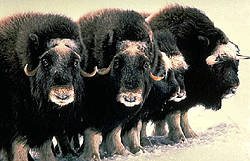
| The Dept. of Interior predicts that there will be a 25-50% decrease in the population of the musk oxen. During the winter months the musk oxen try to preserve most of their energy and travel in small herds. They spend most of their time around the rivers of the Tundra, which will be disrupted by the pulling of this water to construct ice roads for the extraction of the oil. This could be fatal to the oxen because they may have to travel farther distances and using up their reserved energy. |
| Musk Oxen |
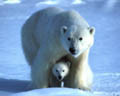
| The Polar Bears will be largely affected in the reproductive patterns. The polar bears construct their dens on the coastal plain, and the survival of the polar bears depends on their reproduction rates which are extremely low. The polar bears dens are extremely sensitive to the noise, vibration, and human activity associated with seismic oil exploration. These disturbances could cause a maternal polar bear to abandon her cubs which will cause a decrease in the polar bear populations. The abandonment is fatal to the cubs because they are too young to survive the harsh temperatures of the coastal plain and find food for themselves. |
| Polar Bears |
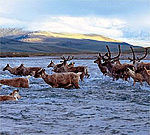
| Porcupine River Caribou |
| Oil Exploration will directly affect the caribou herds of the Porcupine River. The herds have been traveling to this area for centuries in order to birth, nurse and raise the calves. The maternal caribou find abundant food sources to prepare for the nursing of their calves. This area is ideal for the calves because there are little predators to put them in danger, allowing them to develop their survival skills. If this area is disturbed, the caribou will have to find ways to cross the pipelines, iceroads, drilling pads and any other facilities needed for oil exploration. |
| Musk Oxen Porcupine River Caribou Polar Bears |