
Scorpions
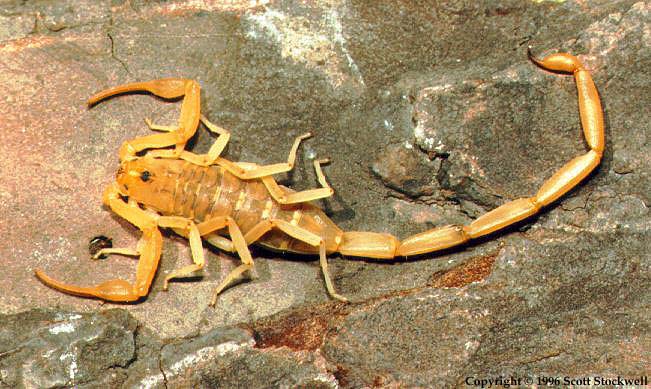
Male Scorpion found in Arizona
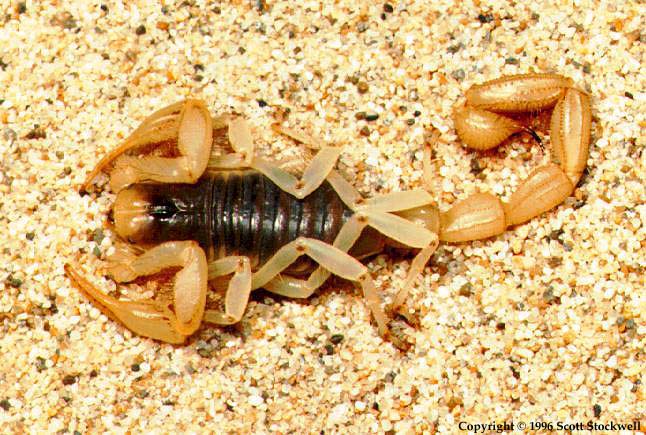
Scorpion located in central Arizona
Scorpions belong to a phylum of joint-legged animals with external skeletons called arthropods. This is the largest group in the animal kingdom with well over a million and a half species. There are more than 30 species in the southern and wastern states. Most of which have a pair of poison glands near the tip of the tail. Scorpions eat spiders and insects.
Partial digestion takes place outside the body when digestive enzymes are poured into prey while the prey is held in the animal's pincers. They usually prey on other arthropods. Scorpions are the oldest known arthropods that live on land. They may have even been the first land animals. Scorpion fossils, very similar to today's scorpions, are found in beds of rock over 400 million years old. Scorpions have six to twelve eyes depending on the species. Scorpions are born alive and are carried on their mothers backs for a short period of time.
Not many scorpions are dangerous to humans and rarely attack unless disturbed. There is only one scorpion in the United States that is sometimes fatal to humans. The Centruroides sculpturatus (Striped Scorpion) is a yellow to yellow brown scorpion with two black stripes on its back. The sting from most scorpions result in swelling but serums are available to relieve the most severe symptoms.

Animal Life