 |
|
|
|
|
|
|
|
|
|
|
|
|
|
|
|
 |
|
|
|
 |
|
|
|
|
|
Pb/U dating...What is it? To any ordinary person, they say they don't know, but they really learned about it many years ago in elementary school. It's nothing more than fossils being formed.
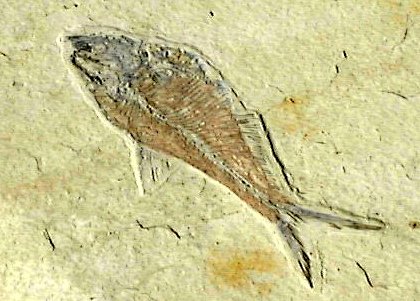
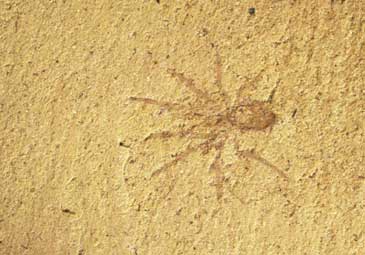
Fossils can be composed of actual human or animal remains, such as bones, teeth etc., but can also be made of foot, or leaf prints. |
|
|
|
 |
|
|
|
|
|
How can age be determined through an impression or fossil since you do not have the actual artifact? Easy. Well, sort of. The most common way of determining the age is by measuring the Lead-Uranium ratio in the fossil bearing rocks. Very slowly, uranium turns into lead, and it has a half-life of millions of years. Because of this, you can get a fairly accurate date by measuring the ratio of the two elements.
Fifty percent of Uranium-238 changes into Lead-206 in approximately 4.5 billion years, so if half of the Uranium has been changed into Lead-206, an artifact is approximately 4.5 billion years old. |
|
|
|
 |
|
|
|
In some cases, it is not possible to determine the age of a fossil. In that case, paleontologists can find the age by measuring the Lead-Uranium ratio in another object in the same earth layer. By finding the age of anotherobject, we can conclude that the fossil and the object were from the same time period since they are on the same earth layer. |
|
|
|