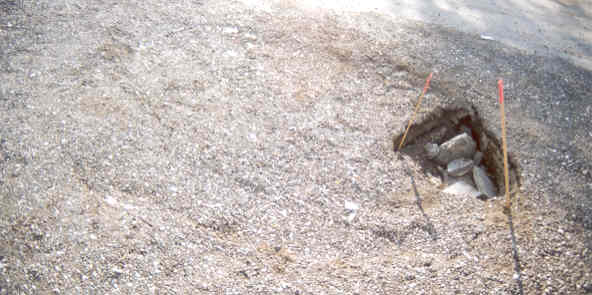
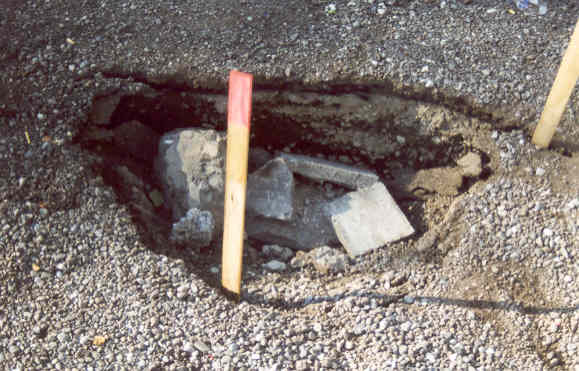
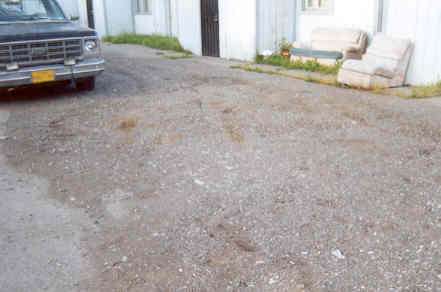
| This frost heave is one I call E10. I added some fill before getting my camera. Notice the rim of the subsidence. It was ~ 4' feet deep. |
| Frost Heave Subsidence |
 |
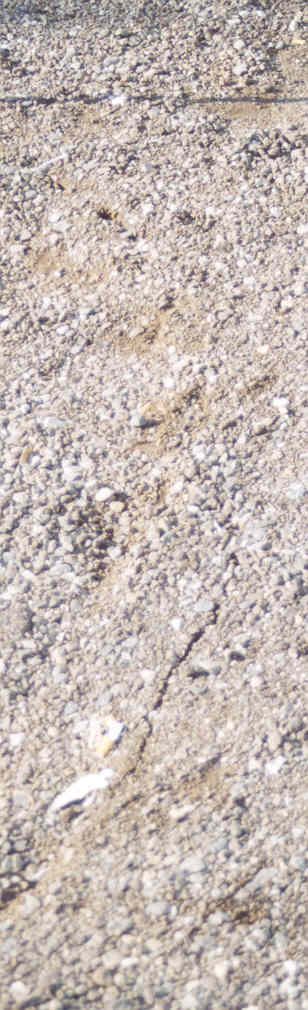 |
| The characteristic conical-fissure is faintly visible around its rim. |
 |
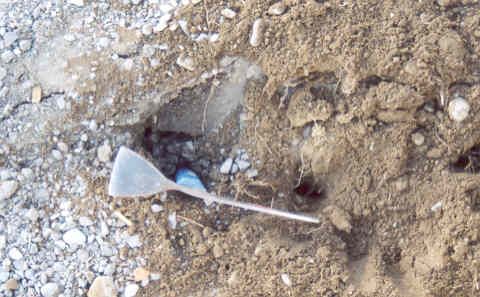 |
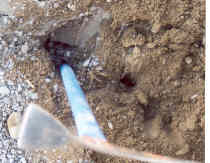
| An ice-ax can be a helpful diagnostic tool. |
 |
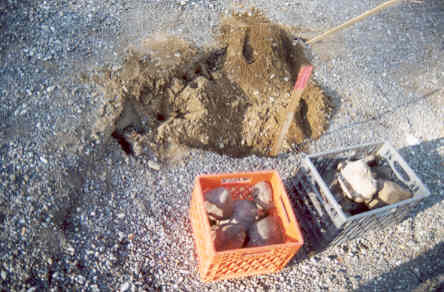 |
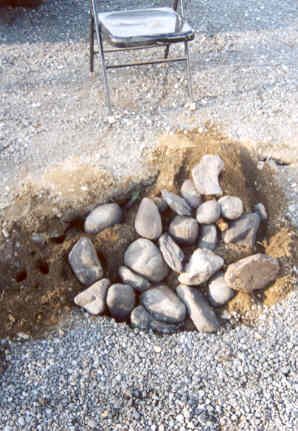
| I just kept dumping in rocks and clean fill. |
 |
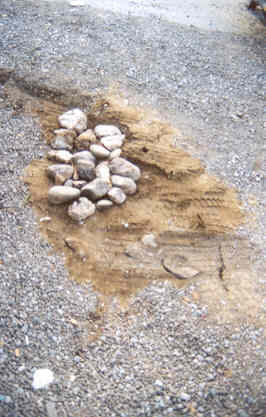 |
| Compacting the soil is appropriate if possible. I drove my truck all over this. |
 |
| Before |
| After |
| Case E14 #1. |
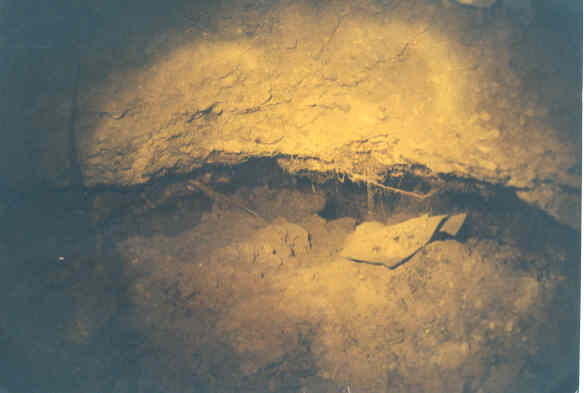 |
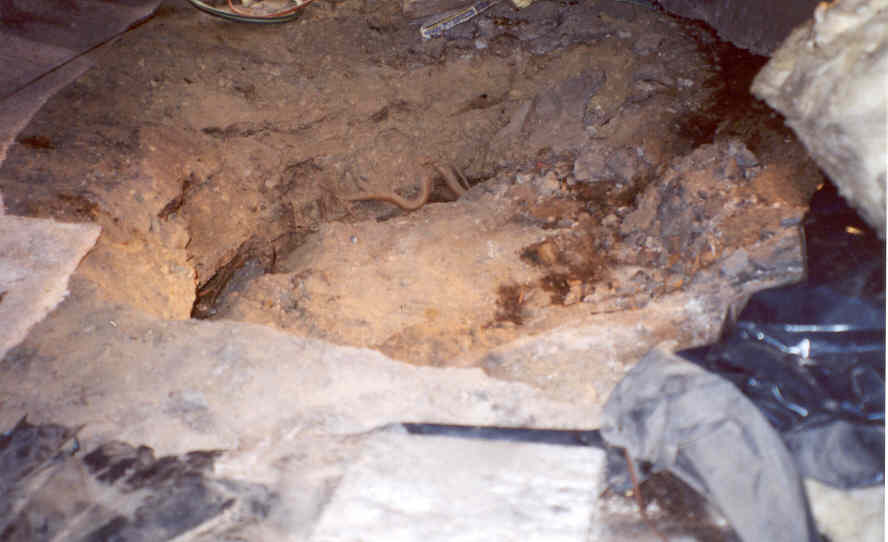
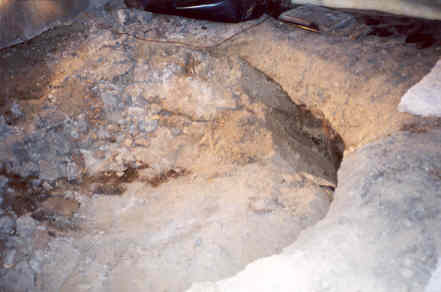
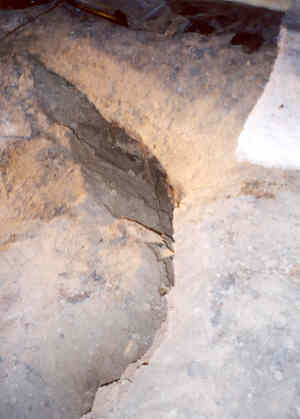
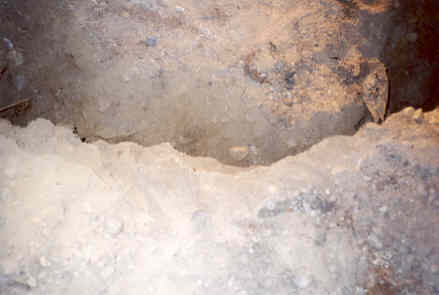
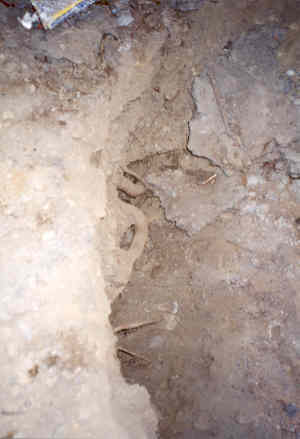
| Below are scenes from my first encounter (which really spooked me). |
 |
 |
 |
 |
 |
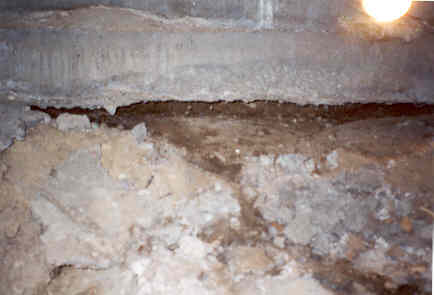 |
| This soil, light and fluffy in appearance, receeded a full foot from beneath the foundation. |
| View beneath our "sinking" arctic entryway. |
| Teltale "hourglass" or ant-hill like indentations suggested a fissure was probably also undermining the street out front. The city used a Dynapac brand soil compactor when they upgraded all our local streets and storm drains. Those vibrations could be felt blocks away and probably exaccerbated this situation. |
| After these photos were taken, my landlord sent Rob Linderman to jack up the house and pour a new slab to support our original foundation. Thank you Rob! I'd recommend him highly whenever major reconstruction becomes necessary. |
| I envision a dry sand injecton tool for filling these conical fissures. . .with compressed air propelling sand from a hopper through an injector lance. . . for filling the underground air pockets with sand. |
| A tree just outside the adjacent foundation was just about dead. Here we see its roots. |
| My house has cinder-block walls. |
| Blocks of cement were placed below the jack. At first they kept vanishing into the the soft dirt below==forced by the jack. Finally things firmed up. The house came up to level. Trenches, rebar, and forms preceeded the cement truck. |
| Advertisement Area (Scroll down for my photos) |