ALTERNATE HISTORY
War of the French Intervention, 1861-???
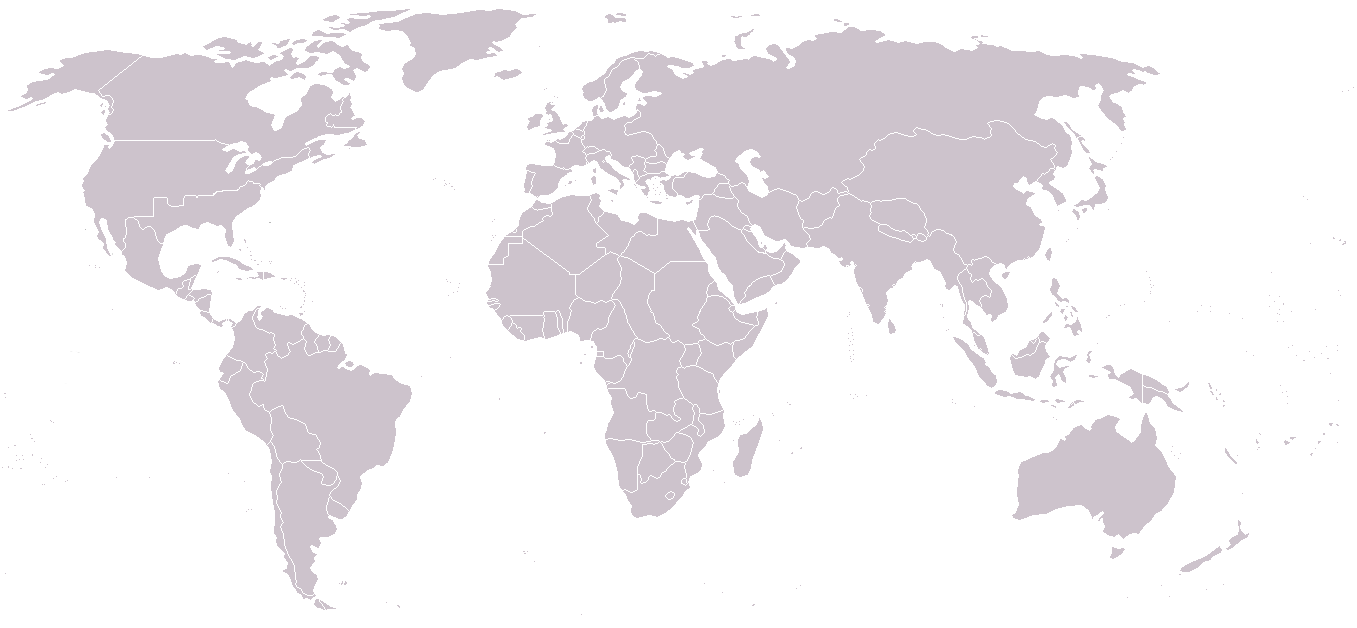
The War of the French Intervention (for lack of a better name) begins essentially with the history of the American Civil War. In fact, the history of the War of French Intervention is the same as the American Civil War until the point of departure.
Napoleon III of France, intrigued by the offer of cotton from the Confederate States of America, breaks his agreement with the United Kingdom and began to send French troops to fight for the Confederacy. The United Kingdom, angry with France for this violation of treaty, retaliates by signing a treaty with the United States. The Royal Navy begins to augment the U.S. Naval Blockade around the ports of the Confederacy, and all ships being built for the Confederacy in the UK are turned over to the United States Navy. Prussia, eager to shame France (think of the Franco-Prussian War, but about twenty years earlier) begins to invade France with the assistance of British soldiers. Queen Victoria declares that the Duchy of Normandy was part of the United Kingdom (William I the Conqueror and his descendants remained Dukes of Normandy until the Hundred Years War (I think)) and invades France from the north.
The War continues with French troops assisting the Confederacy and French Naval ships periodically pushing USN/RN ships away from ports to break the blockade, and the USN/RN ships returning to push the French out and restore the blockade. The USN continues its systematic capture of coastal forts, ports, and cities (the same principle that they used in the Civil War), and Normandy is consolidated under British control (albeit resentfully). The Russian Empire (which historically supported the Union and tried to convince Britain and France to intervene on the side of the Union) declares war on the Confederacy.
Ironically enough, the French Prince Royal, who would have been styled Philip VII of France if he ever assumed the throne, fought for the Union Army during the War. He later returned to the UK (as his family had been banished from France by the Bonapartist government), but is remembered among US citizens as one of the "good French" as among the French as "traitor." (Philip was very loyal to France, but did not see the Bonapartists as the legitimate government of France and so did not see anything wrong with supporting the United States.) Still, most of that was forgotten later on, as you will see...
Because I haven't chosen a date for the POD, I can't give you a list of battles yet. Sorry! I am thinking, however, than 1864 would be a good time to set the POD. This is just when the Confederate "ambassador" to the UK was ordered by Davis to go to Paris - it was pretty much obvious that Her Majesty's Government was not going to recognize the South. Even the areas that stood the most to gain from a independent South (the Lancashire? cotton mills) firmly stood with the North.
The Treaty of Havana (part of Spanish Cuba) was the end of the war. A stalemate between the US (with UK naval assistance) and the CSA/French alliance in North America, as well as a stalemate between the Prussians and the French in Europe (the UK had taken Normandy) resulted in the Treaty of Havana.
The Treaty of Havana gave the Confederacy independence, inserted an amendment into the United States Constitution prohibiting secession, gave Mexico to the French (Maximilian), and gave the Mexican states of Sonora, and Baja California to the United States. The United States also was given Arizona (the Confederacy had claimed it as separate from New Mexico), West Virginia, and Missouri. The Treaty resulted in an alliance between the following world powers: the UK, the United States, and the Prussian Empire (soon proclaimed the German Empire after the Franco-Prussian War in the 1880s, which became known as World War I), and an alliance between the CSA, France, and Japan.
Of interest to some might be the fact that the United States started slowly moving government institutions to Philadelphia. I need to do some research and choose buildings to house Congress and the President. It is possible that the government will build new buildings for Congress and the President.
This started at the same time and for the same reasons as what was called in our timeline the Franco-Prussian War. Unlike the original War, however, this one takes place on at least three continents (Europe, North America, and Africa).
The Confederacy loses most of Virginia to the United States - there isn't a lot of land between the Potomac River and Richmond, and Robert E. Lee isn't here to save the Army of Northern Virginia. In our timeline, Lee died in 1870 from complications of pneumonia after suffering a stroke - he did, after all, suffer from heart problems. For the same reasons (proximity to an enemy) that the United States moved its capital to Philadelphia, the Confederacy moved its capital to New Orleans. Richmond didn't fall, but the border was within ten miles and that is not necessarily a very safe location. The Confederacy also loses Kentucky.
The Confederacy easily took most of what historically was the German colonies in Africa - Germany has, quite frankly, never really had a large colonial empire and never could retain what it had, and in this timeline could not take part of Africa for itself. I might have to make a few changes, as there is a new colonial power in town. The US might decide that it wants to have a piece of Africa as well.
The United Kingdom takes Normandy from France - this is a long and bloody battle that permanently ensures French animosity against the British.
The CSS Austin was in Havana harbor guarding CS interests - the USS Maine was offshore to do the same for US interests. In August 1898, the Spanish ordered the Austin to leave the harbor and take station at the same location as the Maine. The CS Captain refused - his orders were to remain in Havana harbor. The Spanish must escort the Austin out of the harbor, and (by accident? it remains a mystery) the Austin suffered an explosion and sank. A majority of the sailors were rescued by the USS Maine, who was then fired upon by the Spanish vessel. The Confederate government declared war on Spain. In order to prevent war with the United States, the Spanish gave Puerto Rico to the US as compensation for the firing on the Maine.
The Confederates easily beat the Spanish (even though Teddy Roosevelt and the Rough Riders didn't participate). The Treaty of Washington gave Cuba and the Philippines to the CS - the US was already negotiating for Guam, Equatorial Guinea, and Spanish Morocco.
The French make agreements with the Bolshevik party in exile - the Russians are allied to the US/UK/Germany from the War of the French Intervention/American Civil War, and this means that any French invasion of Germany would have to fight against a German Army with almost infinite room to maneuver (all of Germany and Russia: that's a lot of land) and a large amount of resources. The French agree to support a Bolshevik revolution in Russia in return for Bolshevik alliance with France, pinning Germany in the middle. The French also fight and win a war against the Italians, which serves to make the Italians mad, anti-French, and pro-US/UK/Germany. The Treaty of Monaco, which ends the war, gives slight territorial gains to France, but the changes are few. The main purpose for the war was to prove French supremacy and to demonstrate to the US-UK-German alliance that France was not to be messed with.
However, the Russian Okhrana secret service gets wind of the Franco-Bolshevik plans, and - with German help - apprehends all of the major Bolshevik leaders. Vladimir I. Lenin lives out the rest of his live in a Tsarist Siberian labor camp.
In an effort to stop Confederate claims for Kentucky and occupied Virginia, the states of Kentucky and North Virginia (capital Alexandria, right across the river from Washington) were formed by the United States. Puerto Rico, Guam, Equatorial Guinea, and (formerly Spanish) United States Morocco, became commonwealths. The Confederacy made Cuba a state and created the Military District of the Philippines - Emilio Aguinaldosp? was leading a rather active guerilla warfare campaign (with US arms and money) against the Confederates.
As there was now a large buffer zone in between the Confederacy and Washington, the government began to use the city for more than just ceremonial functions. The main center of power, however, was in Philadelphia.
France's Napoleonic Empire (under Napoleon IV) fell to the French 3rd Republic (which was actually a constitutional monarchy under Philippe VIII) in 1911. Claims that Philippe VIII (son of Philippe VII, who had fought for the Union in the War of the French Intervention/American Civil War) was a traitor because of his father's actions were rebutted by the claim that Philippe VII was fighting against the Bonapartists, and his constitutional reign began. Political disorder in Austria-Hungary allowed the German Empire to realize the concept of Großdeutschland (this was before Hitler turned the word into a Nazi term - this version just meant Great or Large Germany, in contrast with Kleindeutschland, which means Lesser or Small Germany). Großdeutschland basically meant the annexation of the Austro-Hungarian Empire into Germany, while Kleindeutschland meant a Germany sans Austro-Hungary.
The 1913 annexation of Austro-Hungary was used as a casus belli by the Confederacy, who claimed that a stronger Germany would endanger the French, who, despite their new constitutional monarchy, remained CS allies (although the King retained some Union sympathies inherited from his father). This war would prove disastrous for the Confederates - the Confederate trenches were overrun by United States forces using tanks. The Tank was invented in the UK by the Landships Committee, headed by First Lord of the Admiralty Winston Churchill. Not only did the United States have tanks, as the war dragged on past 1917 the United States forces introduced the Browning Automatic Rifle (Mr. John Browning, the inventor, was a Utah native! Not that anyone else cares...). The United States forces also used the Springfield rifle (invented in 1903). The Confederates used the latest rifle built by Tredegar and the infamous French Chauchat rifle.
An armistice was finally signed - status quo ante bellum, but with severe reparations. The French, who attempted to drive the British out of Normandy (which was by now very Britannic - most Frenchmen had left and many British settlers had entered Normandy), had been driven back by British and German soldiers and had to pay war reparations to both Britain and Germany.
In 1916, Russia took advantage of the Ottoman Empire's relative weakness to invade the Ottoman Empire. Although no territory was taken, the Russians do establish an independent Kurdistan to serve as a vassal state. The prestige from this Russian victory helps cement the Tsarist regime in Russia. However, the Russian people soon demand representation, and a "democratic" Duma is set up. Constitutional Monarchy has, in name, come to Russia, but democrats will have to wait for actual reform.
The Greeks take advantage of their enemy's weakness in 1919 to capture "historic Greek territory" - namely, Constantinople and all of the Aegean coast. The Ottoman Empire falls under the strain of two lost wars in three years, and the Hereditary Republic of Turkey is set up, but without the leadership of Atat�rk it is nothing but the Ottoman Empire in a new form, as the Sultan became the Hereditary President. Greece, now powerful in comparison, establishes a Fertile Crescent vassal state consisting of (approximately) modern-day Israel/Palestine, Lebanon, Syria, Iraq, Jordan, and Kuwait. Greece now allies with the US, the UK, Germany, and Russia.
In 1920, Tsar Nicholas II abdicated for himself and his son in favor of his brother Michael in the face of popular opinion. The Duma refused to accept Michael as Tsar and forced Michael to abdicate in favor of Cyril.
After the CS/French defeat in the War of the Annexation, both sides stepped back and looked at the situation. Neither side really wanted another war, but the Treaty of Calais had created economic hardship for both the Confederacy and France. The collapse of the French and Confederate economies resulted in a Great Depression, although the US, UK, and German economies were strong enough to somewhat (but not entirely by any means) mitigate the results.
Democratic processes continued in both the CSA and France. Japan was secretly again brought into the alliance - named the League of Richmond - and secret rearming continued. Without informing her other Allies, Germany began rearming after reports from Abwehr agents in France. (In our timeline, the Abwehr was founded in 1921 by the Weimar Republic - all Nazi connotations should be avoided, as the Nazi Party was never formed, thank goodness.) Thus we learn of the first German panzers.
While Germany was rearming (still a scary thought - Hitler does still exist as a Sergeant), Russia was contemplating reinforcing the Pacific area - the Okhrana - the Tsarist secret police (remember - a much stronger Tsarist government without the strains of a war with Germany to the west means that there is no Bolshevik revolution) has discovered a plot by the Japanese Empire (historical enemies - think of the Russo-Japanese war) to invade the Primorsky Krai area as well as most of the Republic of China (no PRC either - ha!).
The situation stands as thus:
The CSA and France jointly launch attacks on Kentucky and Normandy, respectively. On the North American front, the CSA drives through Kentucky to the Ohio River, and then goes through Ohio to Lake Erie. The United States must now use the Canadian railroads for transport - a logistical nightmare. Still, the US Army has awakened and begins to invade towards Richmond, which still has emotional significance for the CSA.
Of possible greater significance is the French invasion of Great Britain itself. Prime Minister Chamberlain (always a great wartime leader!) signs a treaty with the US President (I haven't come up with a list of US Presidents yet) giving Canada to the US as long as the United States continues the process of Responsible Government. The United States then, in accordance with the Treaty of Liverpool, sends a new Governor-General to represent the President. This new Governor-General takes up residence at Rideau Hall. Somewhat understandably, this upsets the United Empire Loyalists, but very little is changed in Canadian life. There is no complete revamp of Parliament, and the Red Ensign remains the official flag. One small change - the people of Canada (collectively) get one electoral vote for the Presidential elections.
London falls to the French as the Germans continue to repulse French attacks. The war along the German Front is a rough stalemate, but it seems like the Germans will gain the upper hand. The UK Parliament flees to Edinburgh, and the Royal Family leaves on a British destroyer. The Parliament orders the Royal Navy not to enter French service, but to instead seek safe harbor in the United States. Chamberlain leaves office and is replaced by Winston Churchill.
When it seems likely that Edinburgh will fall, Churchill and the Parliament evacuate to the United States, where (somewhat ironically) they are allowed to convene in the US Capitol in Washington D.C. The US Congress is remaining in Philadelphia. Later, the Parliament meets in Federal Hall in New York City - another irony of sorts.
Neville Chamberlain is taken by the French, and immediately is proclaimed Prime Minister - new (French-controlled) elections for Parliament are held, where all candidates must be approved by the military command in London. A new Puppet Parliament is formed and Edward VIII is restored to the throne. There are now two competing governments - the Parliament, Prime Minister, and King George VI in the United States (Georgists) and the Parliament, Prime Minister, and King Edward VIII in London, French Britain (Edwardians).
A signing of another armistice with the CSA (status quo ante bellum) allows the US to focus on Japan and France. A three-way cease-fire is soon signed between France, Germany, and the US (Germany remains at war with the CSA), and the first atomic bomb is detonated in Hanford, Washington in 1946. US bombers flying from bases in the Republic of China soon drop atomic weapons on Hiroshima, Nagasaki, Kokura, and Tokyo before the remnants of the Japanese government surrenders.
Edward VIII appoints new Governors-General for all of the colonies and dominions. The US Navy refuses to allow the Edwardian Governor-General to enter the newly renamed Commonwealth of Canada, using the Treaty of Liverpool as justification. The Australians refuse to recognize the Edwardian Governor-General and instead petition King George VI to send a new Governor-General. All other colonies accept the new Governors.
Obviously more to come on the Great War
The French are prejudiced towards the English and against the Welsh, Irish, and Scottish that consist of the rest of Great Britain. The Irish, who didn't get the Irish Free State, originally hoped that the French would grant them some autonomy. No such luck. The Irish, Welsh, and Scottish then turned to the Allies: the United States, Germany, Australia, and the British Empire-in-exile. The Allied plan was for a 1947 counter-invasion. The Allies used an Irish insurrection as a casus belli and counterinvaded in western Ireland. With full support of the populace (French collaborators returned to the loyal fold after the French placed the English over the Irish), Dublin is liberated and King George VI returns to Ireland as King, since he was legally also King of Ireland.
The Allies then counterinvade Wales. A majority of Wales is liberated, but small French pockets remained. The counter-invasion of England itself doesn't go so well at first. The Allies get bogged down in street-to-street fighting in London itself. Scotland revolts against the French and the Allies liberate it.
At the time of the ceasefire (Treaty of Montevideo), the Allies have liberated Ireland, Scotland, most of Wales, and a large majority of England. The Edwardists still retain a small section, including the majority of London. Please realize that this "ceasefire" was, in fact, a recognition of the stalemate in the UK and total US dominance in the CSA. While the United States allowed the CSA to retain independence and conduct an independent foreign policy, the army was limited to a small size and the government was riddled with pro-US sympathizers.
The US are now in an arms race with the French. The first French A-bomb is detonated in 1948. The CSA requests nuclear weapons secrets from the French (their previous "ally") and the French refuse. Somewhat scared by the tendency of the French to give ther President and King very strong executive powers, the CSA breaks off the alliance. The USA cautiously allows the CSA into their Alliance (the North Atlantic Defense Organization), but keeps a close eye on its southern neighbor.
The NADO begins to build and store nuclear weapons in North Dakota, and the French begin to do the same in Algeria. The arms race continues at a relatively slow pace until the French, led by King Henri VI, begin to stockpile more nuclear weapons. NADO detonates the first thermonuclear weapon (H-bomb) in February of 1949, followed by the French in November of that year. The United States begins to trust the Confederacy a little more, and grants an increase in military size. The economy of both the United States and France begins to grow. A referendum in Edwardist Britain results in reunification, and both the United States and France agree to abide by the results of the referendum. Edward, however, does not agree with this idea (he likes Buckingham Palace, you see), and the United States gets involved in the British War, a Vietnam-type war with no real end in sight. The French themselves are trapped in Vietnam, with the insurgents trying to proclaim the Republic of Vietnam with US and Japanese support. Japan, like in our timeline, has now become a loyal ally of the United States with a large economy.
Germany, somewhat embarrassed with the dismal performance of the United States in the British War, sends an assasination team from the Abwehr to deal with Edward, who is assassinated in Buckingham Palace by a cook under German pay. The throne of Edwardian Britain reverts to the current head of the House of Windsor, George VI of the United Kingdom, uniting the two kingdoms and restoring one United Kingdom.
In 1951, a border dispute between Hapsburg Mexico and the CSA results in the Mexican-Confederate War. The Confederacy lands troops in Veracruz and Tampico, and, in 1952, captured Mexico City. Maximilian II, just a young boy at the time, was not deposed, but retained as a constitutional monarch. The border was defined as acceptable to the CSA, and CS troops left Mexico. Mexico soon reverted back to French vassal and ally.
In 1955, the German Empire (under Kaiser Louis Ferdinand I - his older brother, Prince Wilhelm III, had died in the Great War) reorganized into the Federal Imperial Republic of Germany, later simply the Federal Republic of Germany. This new government retained the Monarchy, but gave areas like Hungary, Poland, Bohemia, Moravia, etc. large degrees of autonomy and a promise of independence if a referendum passed with 75% of the vote. It was widely hailed in the United States as an improvement over the already-democratic German Empire, and German-American relations improved even more.
The Spanish Republic, tired of the Basques, raised no objections to the 1962 invasion of the Basque country by the French. The Spanish had to deal with Catalan independence movements, widespread internal unrest, and a weak political government. The opposition, lead by Francisco Franco, denounced the current government as a weak, inept, corrupt regime with little or no value for the integrity of the Spanish homeland. Franco swept to power in the next election and told the French they were no longer welcome in Spain. The French ignored him. Franco blamed this on the weak governmental structure of the Spanish government and reconstructed the government in a (some would say Fascist) Spanish State, with him as dictator. This move was wildly popular, because the French were annoying most of the Spaniards. Popularity soon died down, and the French left in 1968, after they had assured long-lasting hatred by the Basques against the French.
Relative peace existed from 1977-1985. In 1975, Franco died and the Kingdom of Spain was created under Juan Carlos I. In 1981, Tsar Vladimir, again bowing to popular opinion, authorized the Duma to create the Russian Federation, a constitutional monarchy. In 1985, the French economy began to go downhill (accompanied by a great economic upswing in the United States). King Henri VIII was forced to abdicate in favor of a Government of National Unity, which exercised the authority of the King. The Palais-Royal was converted into a meeting place for the new National Assembly, the Louvre and Versailles became museums, and the �lys�e Palace became the residence of the new President of National Unity. Ex-King Henri VIII was granted use of the H�tel de Marigny, but soon was asked to leave the country. He was granted exile in Mexico, and the H�tel de Marigny became the official guest residence of France. The new French government was friendly to the United States - the Cold War was over.
France underwent a transformation in 1998 to the Federal Republic of France, patterned after Germany. This, however, did not stop Basque terrorists from flying a hijacked Air France plane into the Eiffel Tower on Bastille Day, 2002. This was followed by an Persian hijacking on a Air France plane headed for the United States, which crashed into the Arc de Triomphe in Paris. The United States, the Confederate States the United Kingdom, Spain, Germany, the Russian Federation, and all US allies sent condolences to the French and offered to help in any way. Tsarina Maria Vladimirovna came to Paris to show Russia's solidarity with the French people, and the Confederate States donated a memorial to the French government (the Wall of Unknowing Martyrs). A wealthy German businessman financed the reconstruction of the Eiffel Tower, and a petition drive in the US and the UK paid for the reconstruction of the Arc de Triomphe.
The Basque country declared independence from Spain and France (our good old friends the ETA, again!), and immediately was faced with the aftermath of the Eiffel Tower attacks. The French President, Jacques Chirac, launched an invasion of the Basque Country (with military assistance from Spain) and Persia. The Basque Country was "subdued" quickly, and by 2004 seemed relatively peaceful. Persia, however, is a lot like the Iraq War of our timeline - called "a quagmire" and "a new Vietnam" by the French press.