|
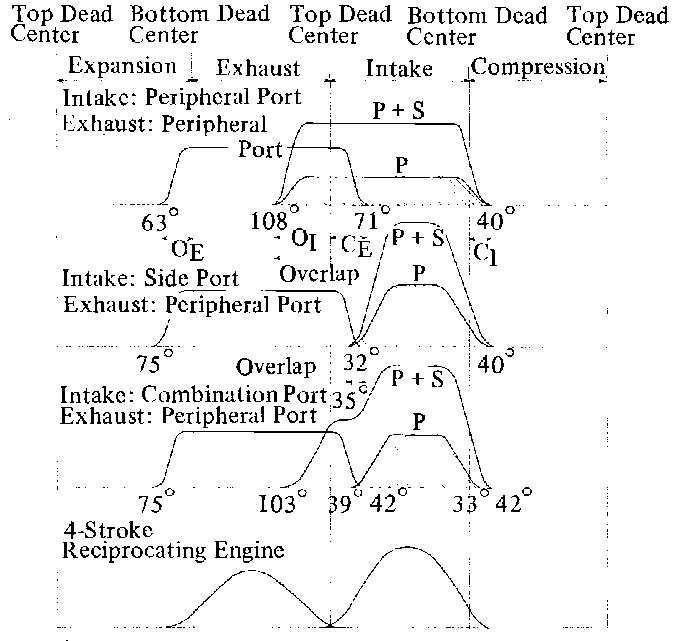
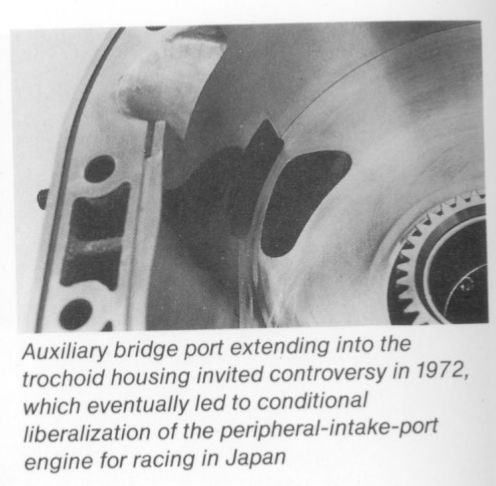
Rotary engines can utilize two styles of intake/exhaust ports. A perpheral port is an effective kind of port due to favorable flow characteristics and typically long open duration. Peripheral intake ports typically result in considerable overlap between the intake and exhaust cycles. These are suitable attributes for a high performance race engine, but are less approprate for street engines where low-rpm performance, emissions and fuel economy are key considerations. Therefore in the 60s Mazda decided to utilize side intake port engines for vehicles sold to the general public. This style of port allowed Mazda to limit the time in which the intake port was open, while maintaining sufficient port area for the intake charge to enter the engine. With the introduction of the RX-8 and the Renesis Mazda introduced side exhaust ports which allowed Mazda to virtually eliminate overlap between the intake and exhaust cycles, allowing the engine to meet stringent goverment emissions standards.
A style of engine that has been utilized in experimental engines and some race applications is the semi-peripheral port or combination port. This type of engine typically utilizes a smaller peripheral intake ports and side intake ports. The advantage of this situation is that it allows for a gain in performance when the peripheral port is open. Here is an example of how port timing and area can be manipulated with a semi-peripheral port. Source: Norby, J. P. The Wankel Engine. Chilton. Philadelphia. 1971. |
|