Visiting the battlefield--CHEATHAM HILL
Field Fortifications
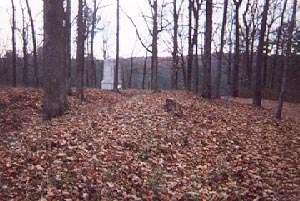
Conf. engineers and work crews started digging earthworks around Kennesaw Mountain a few days before their army fell back to Cheatham Hill on June 19. For the next week Southern soldiers improved their earthwork defenses despite constant rain.
The Southerners dug deep, throwing the dirt toward the Union side of the trenches. The earthen wall - called a parapet - was topped with a braced log, leaving an open space beneath it for soldiers to shoot through. Fighting from behind these defenses, the Confederates held a great advantage over the attacking Federals during the Battle of Kennesaw Mountain.
[Fact:] Today within the Kennesaw Mountain Battlefield Park, 11 miles of shallow ditches remain from these formidable earthworks.(nps)
The Assault Falters
Beaten Federals enrenched within 30 yards of the Conf. earthworks...
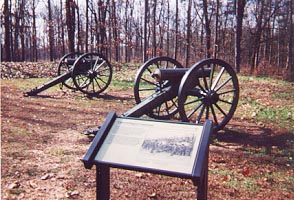 As the Union attack stalled, two surviving Fed. Colonels heavily discussed retreat. Realizing that withdrawing under heavy fire would invite more bloodshed, they decided to dig in along the brow of the hill not covered by fire from the Confederates' earthworks only 30 yards away.
While half of the Feds fired toward the earthworks, the rest furiously scooped shallow trenches with their bayonets and tin cups. After nightfall, the Feds brought up tools from the rear and built two lines of entrenchments.
For the next six days, both sides exchanged sniper fire, expecting an attack at any moment. Only a seven-hour truce to bury the dead on June 29 interrupted the tense stalemate.
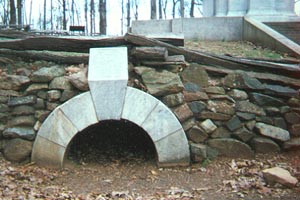 As the standoff continued, the Feds started a tunnel, intending to blow up the Southern earthworks on July 4. But during the night of July 2, the Confederates quietly slipped away, forced to retreat as Sherman's Union army outflanked them again. A small stone arch, erected in 1914, marks the tunnel entrance.(nps)
Living Relics
After the dead oak tree once standing here on Cheatham Hill was removed in 1980, a number of Civil War bullets were discovered lodged in its trunk. About a half-dozen battle-scarred trees, recognized by their distinctively deformed tops, are still growing in the Cheatham Hill vicinity. (nps)
Sources
� � � National Park Service