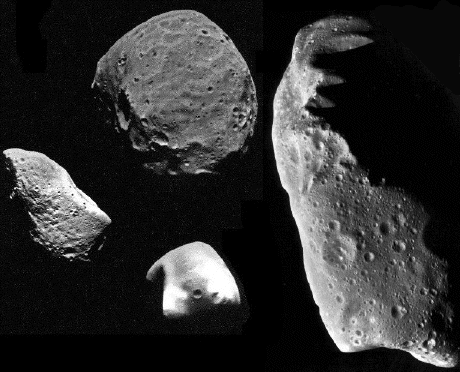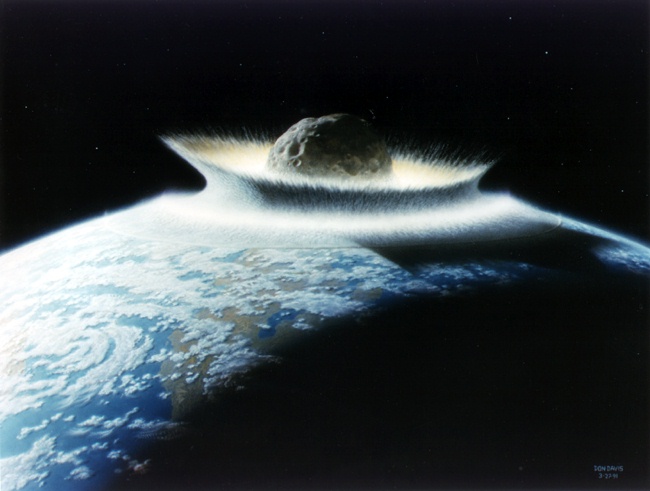
Asteroid hitting the EarthA Close EncounterAsteroid hitting the Earth


You and your team are members of an American Scientific Consulting Firm called ASCOF based here in the South East.  

You have just received a fax from an international astronomical
watchdog group called the Space Guard Foundation.


Click here to see this document.



Logo
 To whom it may concern:
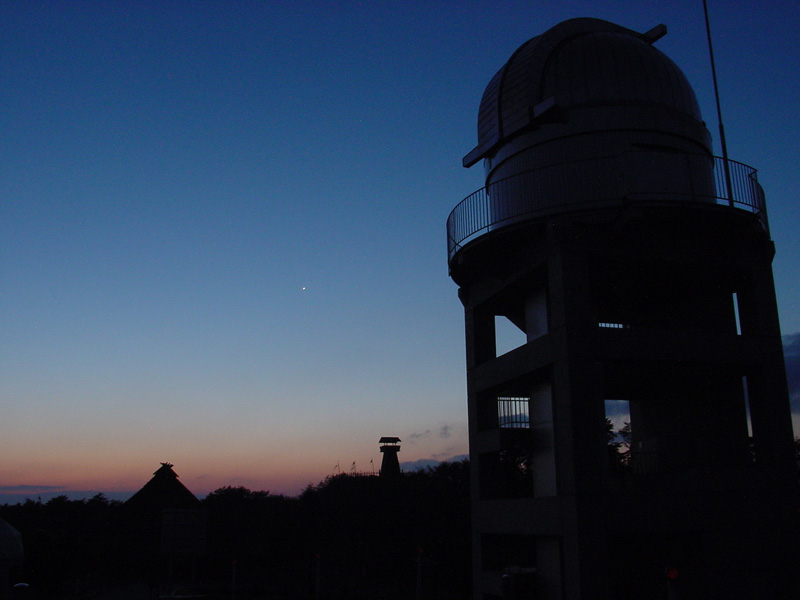
         We are requesting an independent confirmation and background information related to the immanent impact of a recently discovered NEO (Near Earth Object) with the Earth.  This impact could potentially happen within the next few months and we need a report back within 48 hours.  The first radio contact with this object happened 8 hours ago at the Asian Astronomical Research Observatory located in Taipai, Taiwan.Observatory
          Please confirm the following:

  •  The exact time and date the object will come closest to the Earth
  •   Determine the velocity, force and momentum of the asteroid
          Also please include:                                                                            
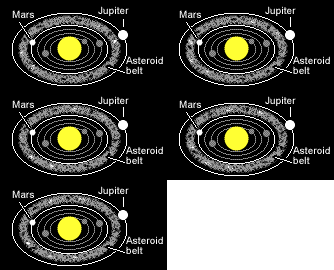
  •  Background information on asteroids in our Solar System.
  •   What does it mean that this NEO has a Torino Scale rating of 5?

The Task                Background Information on SpaceGuard                Related Links                Back to the Beginning               


The Task

You must divide up the production of a presentation for the Space Guard Foundation about this potential meeting of the Earth and a rogue asteroid, making sure to account for the following information:

You will have two days to compile this presentation and may use whatever medium will best help you convey your information, although it is highly recommended you use a power point presentation.  See the rubric for more details.


The Fax                Background Information on SpaceGuard               
Related Links                Back to the Beginning 


Related Links

Background Information on our Solar System
Orbiting asteroid
Photo Journal  - An Informative NASA Site
Nine Planets - A Comprehensive Look at our Solar Systemmm

Sites Dedicated to the Threats Imposed on the Earth by NEO's (Near Earth Objects)
Impact Hazard NASA Site
NASA's NEO Site - Wonderfully Illustrative Animations
Background on NEO's

Shoemaker/Levy Impact with Jupiter - In July of 1994, a comet collided with Jupiter and we were able to witness some of the effects.  Perhaps this event can give us a better understanding of how an impact here on Earth might play out.

A Link to the Spaceguard Site

Related Standards
Rubric

The Task
Image

Standards
I.    Inquiry
    A.    Abilities Necessary to do Scientific Inquiry
        4.  Develop descriptions, explanations, predictions, and models using evidence.   (T)
                b.   Construct and/or use models to carry out/support scientific investigations.
        6.  Recognize and analyze alternative explanations and predictions.  (R)
        7.  Communicate scientific procedures and explanations.  (T)
                a.   Use drawings, written and oral expression to communicate information.
                b.   Create drawings, diagrams, charts, tables, and graphs to communicate data.
                c.   Interpret and describe patterns of data on drawings, diagrams, charts, tables, graphs, and maps.
                d.   Create and/or use scientific models to communicate information.
        8.  Use mathematics in all aspects of scientific inquiry. (R)
III.    Earth Science
Unit of Study: Earth and Space Systems
    A.    Earth in the Solar System
        1.    The Earth is the third planet from the sun in the system that includes the moon, the sun, eight other planets and their moons, and smaller objects, such as asteroids and comets (solar system).  (R)
                a.    Describe  the features of the planets in terms of size, composition, relative distance from the sun, and ability to support life.
                c.    Describe the features and explain the origins of asteroids, comets, and meteors.
IV.    Physical Science
Unit of Study: Forces and Motion
    A.    Motions and Forces
        1.  The motion of an object can be described by its position, direction of motion, and speed and can be measured and represented on a graph. (I)
                a.    Operationally define speed, velocity, acceleration, and momentum and apply these in real world situations.
The Fax               The Task         Background Information on SpaceGuard                Related Links                Back to the Beginning


Rubric
  

25 points
20 points
15 points
10 points
Completeness of Presentation
Students show reflection of each of the points assigned in the Task and fully integrate it into a powerful presentation.
Students show confidence and deliver 80% of the content.
Students make and reasonable attempt to complete the project, sharing over 50% of the content with the class.
Student fails to complete a major component of the presentation or research
Accuracy of Content
95% accuracy of content, with no major errors
85% accuracy of content; or one major error
75% accuracy of content, or two major errors
Presentation unreliable because of misleading information.
Delivery of Content
Student shows confidence in their presentation and has the evidence to back up their ideas.
Student does a resonable job presenting material to the audience, but could have rehearsed more
Student fails to deliver either evidence or stance because of poor vocalization or lack of research.
Student fails to present material to the class
Asthetic Design
Presentation dramatically improves presentation, holding the listener's attention and driving home points.  Technology effectively used.
Presentation effectively supports presentation and uses technology
Presentation is coordinated with lesson, but fails to add much
Failed to complete presentation.

The Fax               The Task         Background Information on SpaceGuard                Related Links                Back to the Beginning


1
Hosted by www.Geocities.ws

1