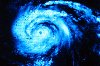
The "eye" is in the center. Although it is quiet and still in
the eye, the winds around the eye move from 75 to 200
miles an hour. Hurricanes can be as large as 300 miles
in diameter (the distance accross.)
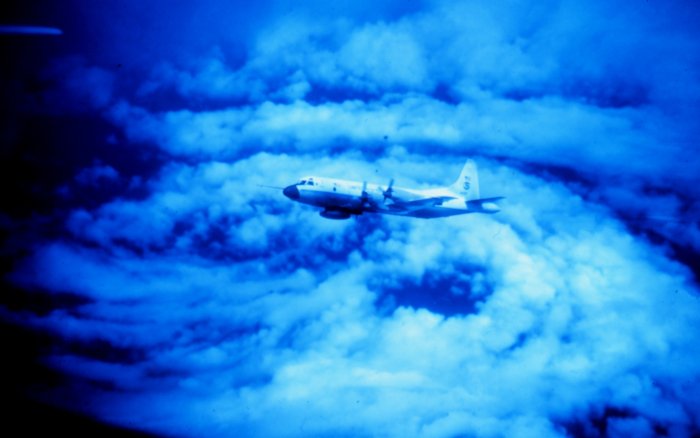
signs that a storm may be forming. It uses satelite images and airplanes to
find out about storms. Pilots called "hurricane hunters" fly their planes into the eye of the hurricane to find out more information about these storms. When a
hurricane gets strong enough, the National Hurricane Center gives it a name.
They use a new list of names each season and start with the letter A in the alphabet. The storms are named in alphabetical order.
To learn more about hurricane
hunters,
click here.
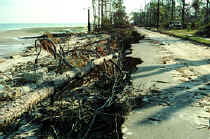
coast can be flooded and destroyed by wave action.
To learn more about hurricane science, click here.
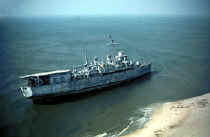
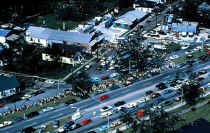
property. They can do millions of dollaras worth of damage. Even though
scientists track hurricanes and predict where they will go, sometimes people
are killed.
In 1979, Hurricane Frederic did much damage to the southern part of Alabama.
In 1995, Hurricane Opal destroyed property
along the coast and then moved into
central and northern Alabama.
To learn how scientists track hurricanes, click here.