 |
| Ulcerative Colitis |
|
| to the main page |
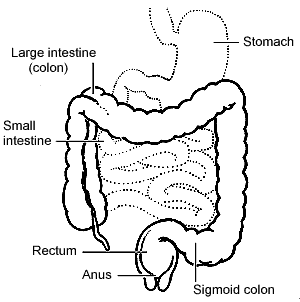
| What is Ulcerative Colitis? Ulcerative colitis is a form of inflammatory Bowel Disease (IBD). It causes Inflammation and sores (ulcers) in the top layers of the lining of the large intestine. It can affect the rectum alone, or the whole colon. However, it usually starts off in the rectum and works its way up. It can also sometimes affect the last part of the small bowel called the ileum. In the diagram below, you can see the different parts of intestine: |
 |
| Ulcerative colitis can be very hard to diagnose sometimes because without testing, it can seem just like Irritable Bowel syndrome which is not in the IBD category. What are the symptoms of Ulcerative Colitis? There are many symptoms of ulcerative Colitis but the most common ones are the following: Fatigue Weight loss Loss of appetite Dehydration Diarrhea Rectal bleeding IBD can also cause other things such as arthritis, Liver problems, osteoporosis, anemia, and Kidney stones. About half of the people get very severe Side effects with ongoing flare-ups, and others only have mild symptoms. How is Ulcerative Colitis diagnosed? There are a bunch of different ways to diagnose ulcerative colitis. Some of these are much more simple than others. Blood tests to check a CBC (complete blood count) will show anemia if there is any. If anemia is revealed, it could mean there is bleeding in the colon or rectum. Also, some people with the disease will also have high white cell counts. The more unpleasent tests are Colonoscopies, in which the doctor will insert a long rubber tube with a camera up the rectum and into the colon to check the lining for any inflammation, and barium enemas, where barium, a thick white chalky substance is run through a tube up the rectum and into the colon and X-rays are taken. |