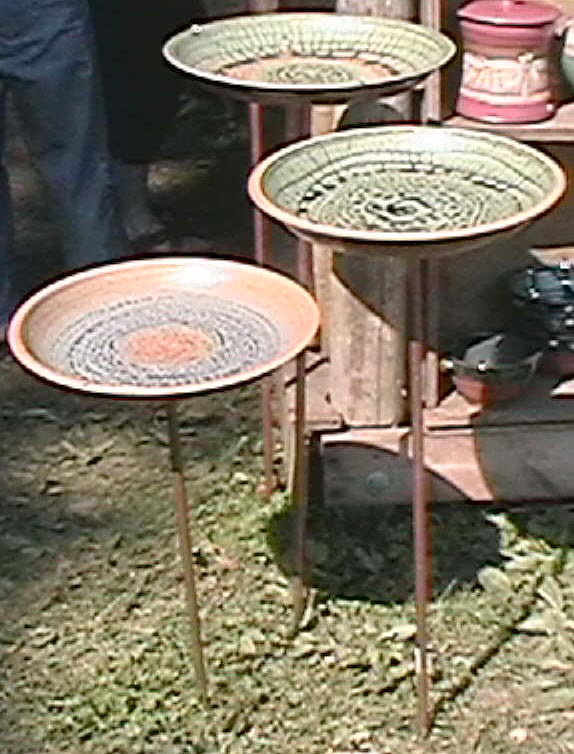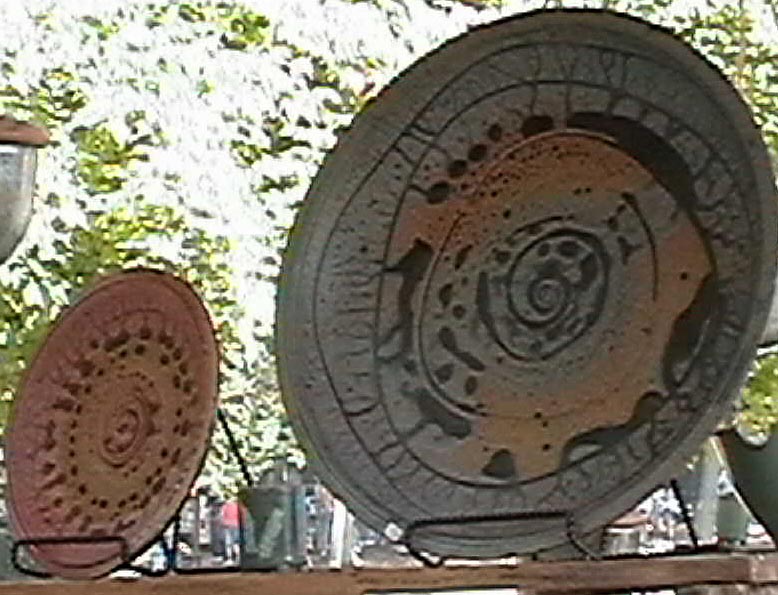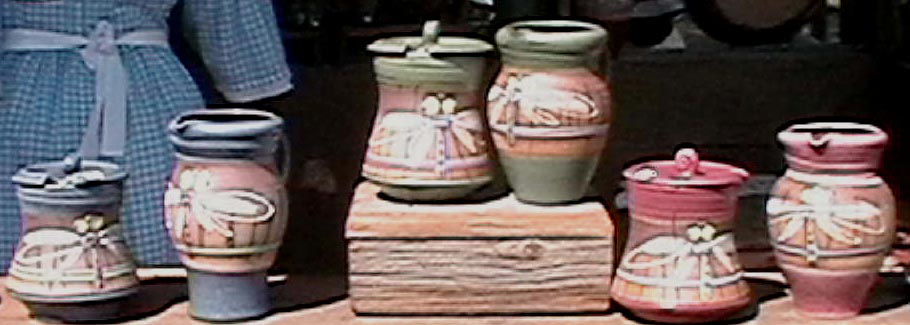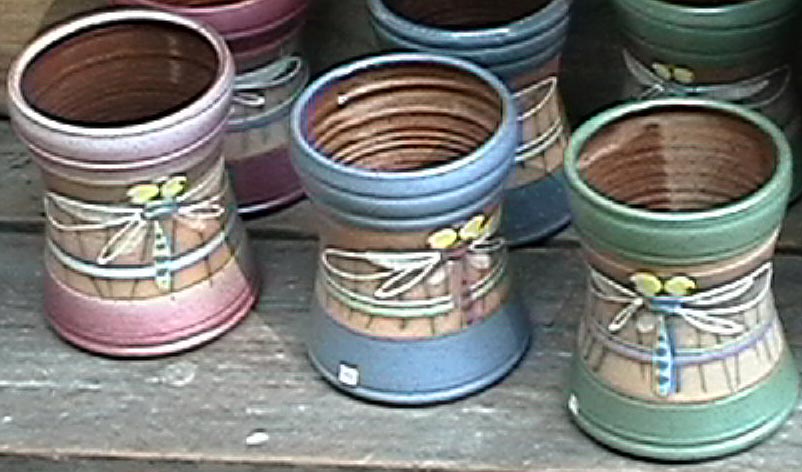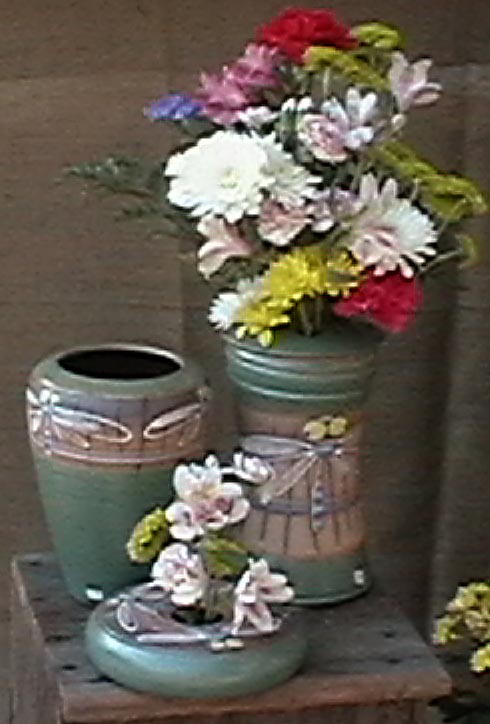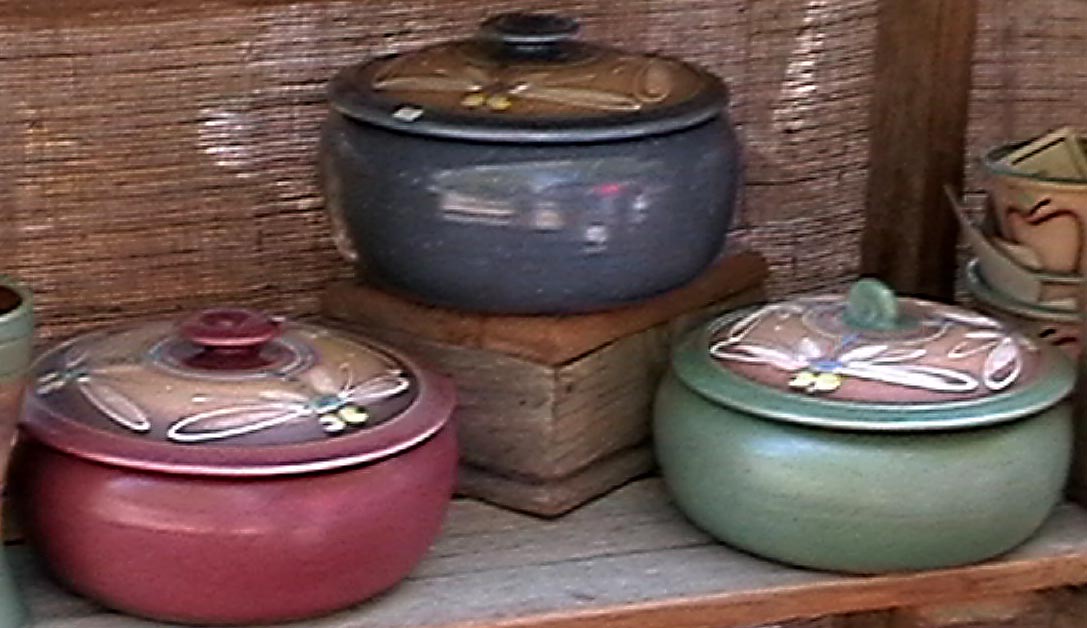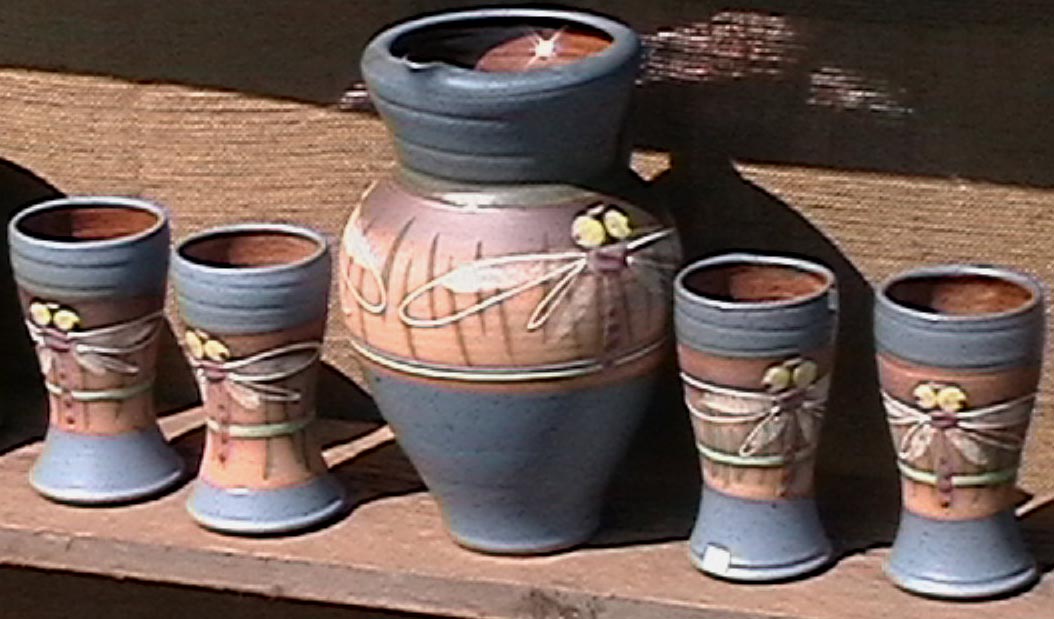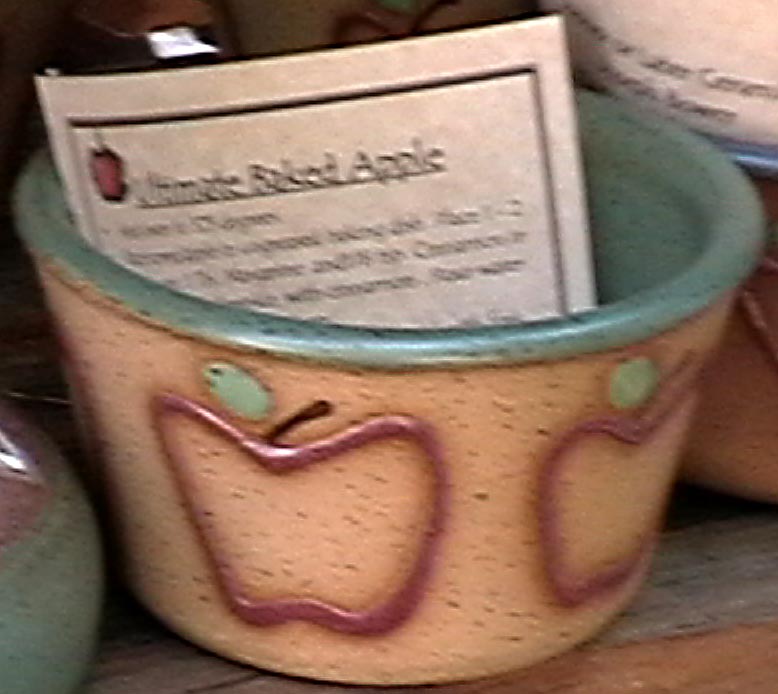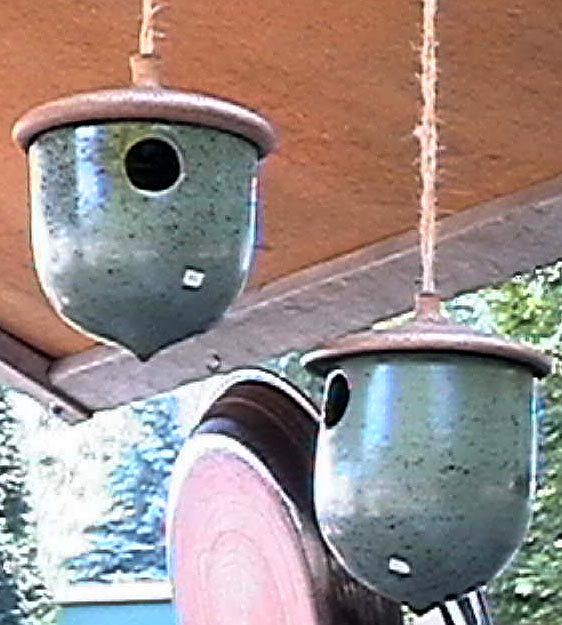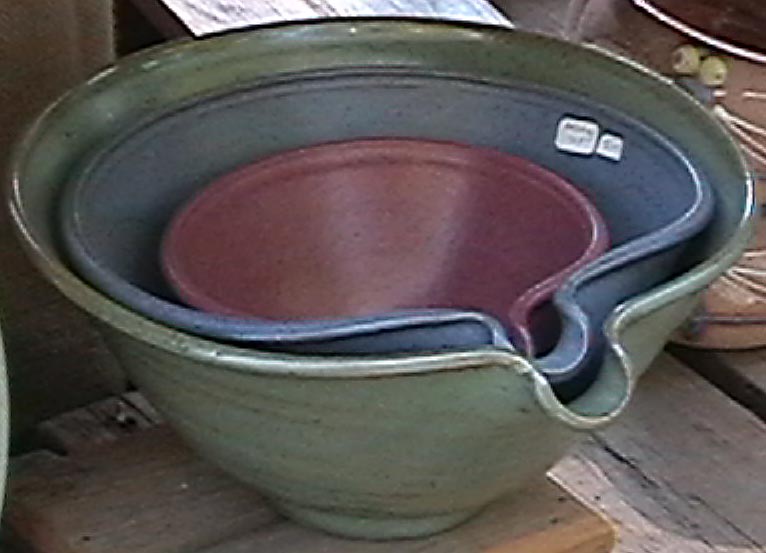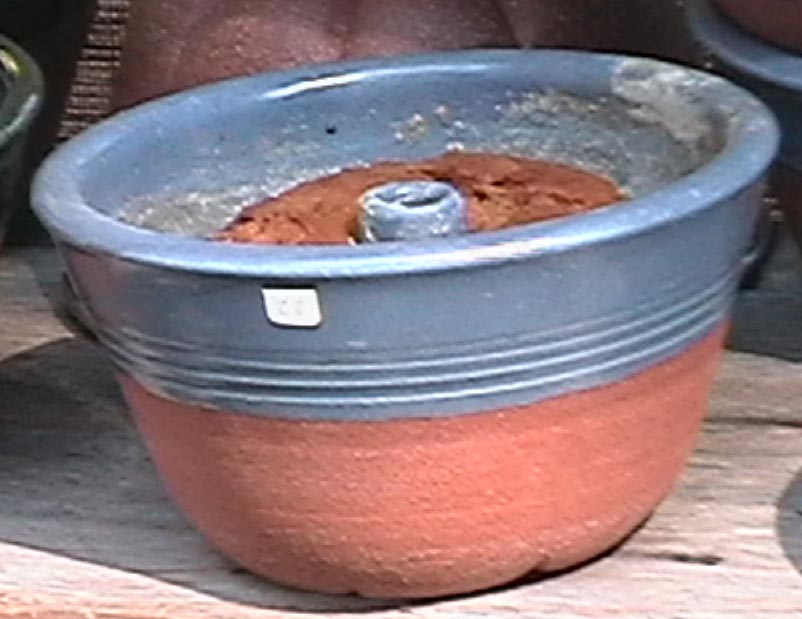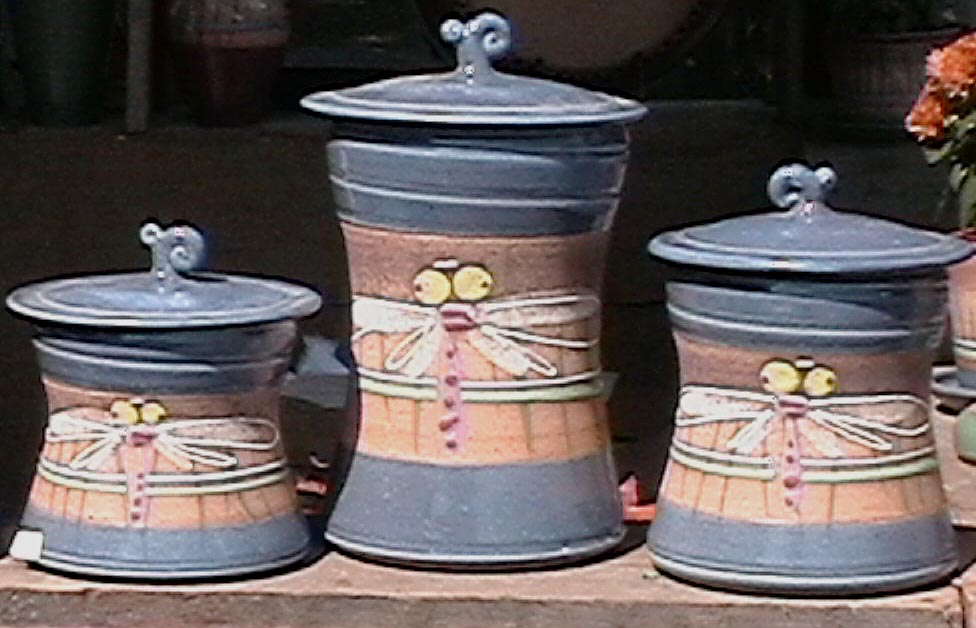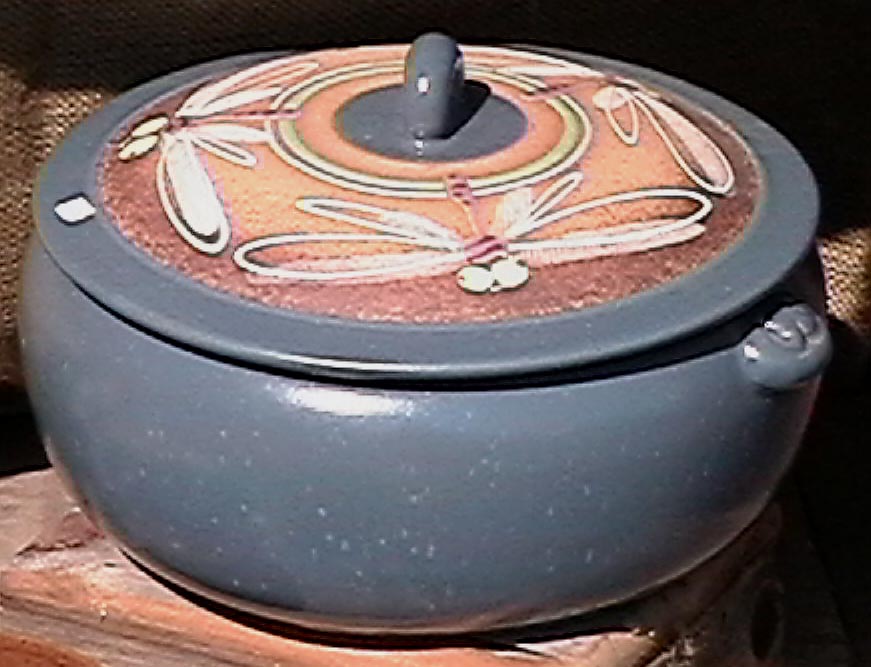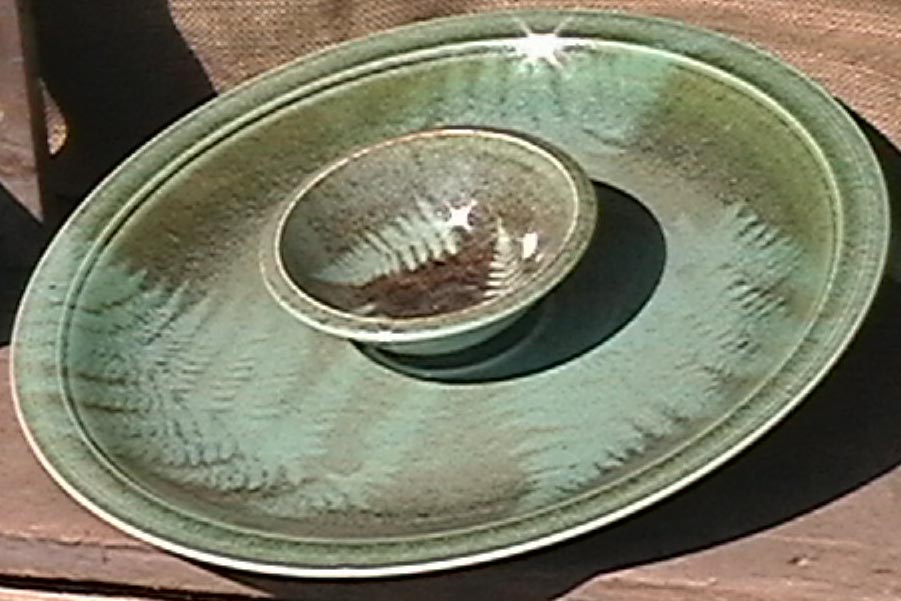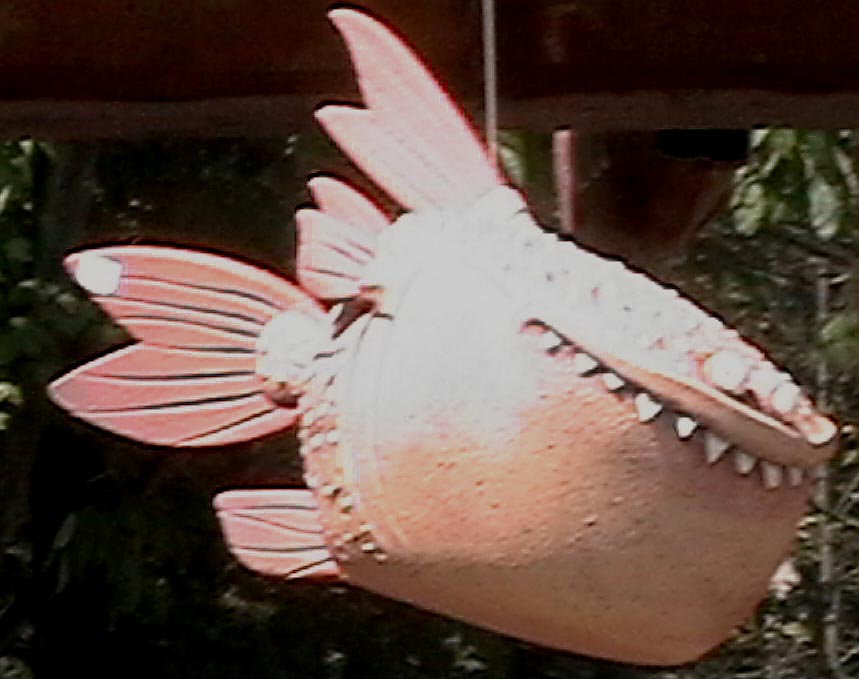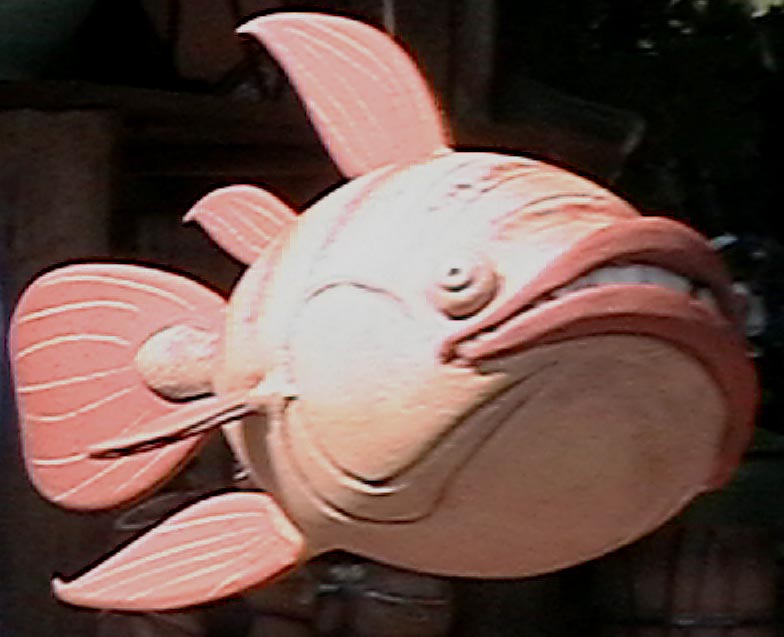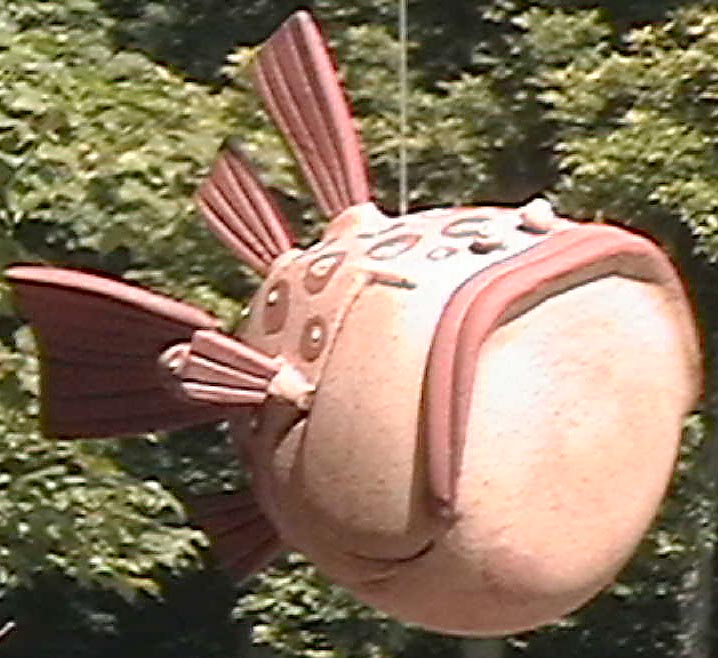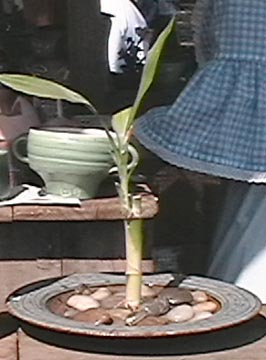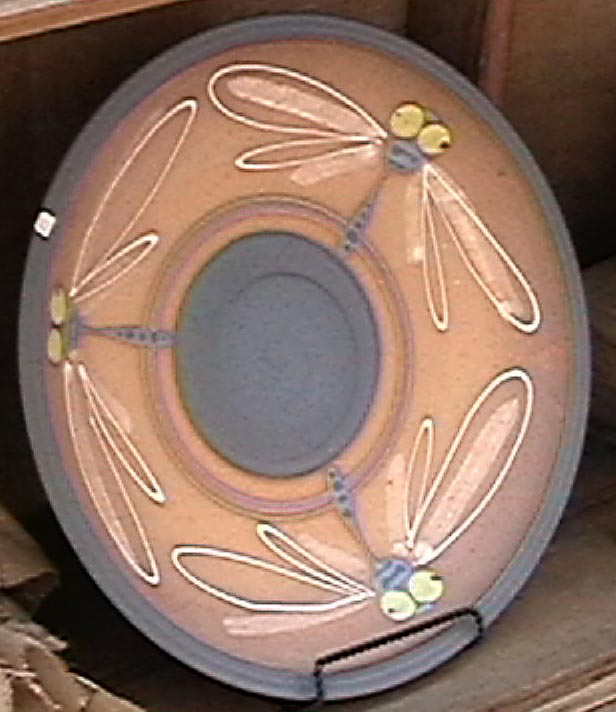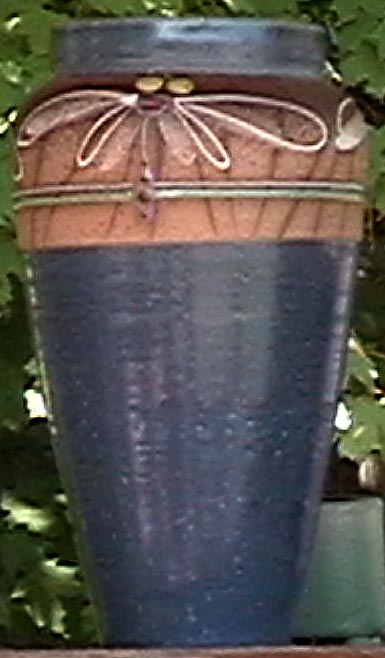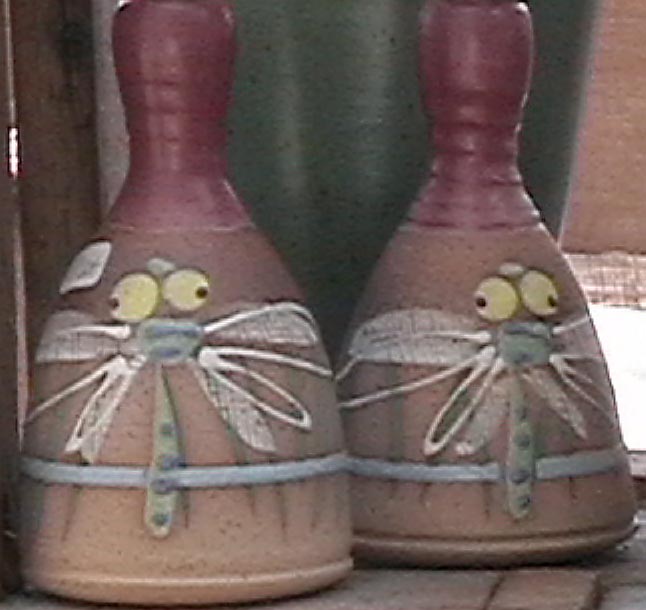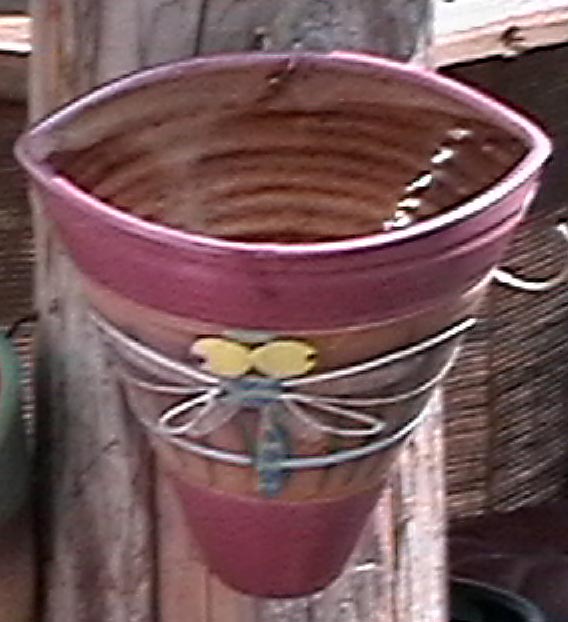


Sooner or Later Ceramics is the business name of J. Bower a potter located in Dover Ohio. His unique work of hand made pottery is beautiful and functional. His pottery is oven, microwave, and dishwasher safe and durable enough for ever day use. J. Bower has a wide variety of products from cups and bake ware to artistic 3D sculptures of fish. Below you will see some of his work and some information on the process of making these works of art.
|
|
|
|
|
|
|
|
|
|
|
|
|
|
|
|
|
|
|
|
|
|
|||
Tentative shows:
Yankee Peddler Festival, Canal Fulton, Ohio
Pottery, clay that is chemically altered and permanently hardened by firing in a kiln. The nature and type of pottery, or ceramics (Greek keramos,"potter's clay"), is determined by the composition of the clay and the way it is prepared; the temperature at which it is fired; and the glazes used.
PROCEDURES, AND TECHNIQUES
Stoneware—water-resistant
and very durable—is fired at temperatures of 1200°-1280° C (2191°-2336° F). The
clay turns white, buff, gray, or red and is glazed for aesthetic reasons.
(Stoneware was made by the Chinese in antiquity and became known in northern
Europe after the
Renaissance (14th century to 17th century).
Preparing and Shaping the Clay The plasticity of clay allows pottery to be shaped in several traditional ways. The clay can be flattened and then shaped by being pressed against the inside or outside of a mold—a stone or basket, or a clay or plaster form. A pot can be coil built: Clay is rolled between the palms of the hands and extended into long coils, a coil is formed into a ring, and the pot is built up by superimposing rings. Also, a ball of clay can be pinched into the desired shape. The most sophisticated pottery-making technique is wheel throwing. The potter's wheel is a flat disk that revolves horizontally on a pivot. Both hands—one on the inside and the other on the outside of the clay—are free to shape the pot upward from a ball of clay that is thrown and centered on the rotating wheel head.
Drying and Firing To fire without breaking, the clay must first be air dried. If the clay is thoroughly dry, porous and relatively soft, the pottery can be baked directly in an open fire at temperatures of 650°-750° C (1202°-1382° F); primitive pottery is still made in this way. The first kilns were used in the 6th millennium BC. Wood fuels—and, later, coal, gas, and electricity—have always required careful control to produce the desired effect in hardening the clay into earthenware or stoneware.
Decoration A pot can be decorated before or after firing. When the clay is partially dry and somewhat stiffened ("leather hard"), bits of clay can be pressed into the pot; the body of the vessel can be incised, stamped, or pressed with lines and other patterns; or clay can be cut out and the body pierced. The vessel walls can be smoothed by burnishing, or polishing, so that rough particles are driven inward and the clay particles are aligned in such a way that the vessel surface is shiny and smooth. Slip (liquefied clay strained of coarse particles) may be used: The bone-dry (completely dry) or partially dry pot can be dipped into slip of creamy consistency (to which color is sometimes added); or the slip can be brushed on or trailed on with a spouted can or a syringe. Designs can be drawn with a pointed tool that scratches through the slip to reveal the body, a technique known as sgraffito.
Glazes Glaze is a form of glass, consisting basically of glass-forming minerals (silica or boron) combined with stiffeners (such as clay and fluxes) and melting agents (such as lead or soda). In raw form, glaze can be applied either to the unfired pot or after an initial unglazed, or biscuit, firing. The pot is then glaze fired; the glaze ingredients must melt and become glasslike at a temperature that is compatible to that required for the clay. Many kinds of glazes are used. Some heighten the color of the body; others mask it. The effects of specific glazes on certain clay bodies depend both on the composition of each and on the potter's control of the glaze kiln.
Sooner or Later Ceramics
4040 Mt Pleasant Rd
Dover, OH 44622
|