|
1.
"Mutational Studies to Identify Residues Involved in the
Internalization of the Rat 5-HT2A Receptor."
National
Center for Biological Sciences (Tata Institute of Fundamental
research), Bangalore, India.
Guide:
Dr. Mitradas
M. Panicker
Background
of the project
As
5-HT2A receptors activate the phospholipase-C
pathway, the effect of
protein kinase C (PKC) on the internalization process of the
receptor was studied.
A construct was created in which the GFP was tagged
to the C terminus of the 5HT2A
receptor for easy visualization. The receptor remains
active and behaves as the native receptor, when tagged with GFP and
the fusion receptor internalizes on exposure to serotonin, its
native ligand . Activation
of PKC by its specific activator PMA (phorbol
12-myristate 13-acetate) causes internalization of the 5-HT2A
receptor in the absence of the ligand serotonin showing that
activation of PKC is sufficient to cause internalization. Inhibition
of PKC by its inhibitor sphingosine in the presence of 5-HT prevents
the internalization process, thereby, suggesting that activation of PKC
is not only sufficient but also necessary for the
internalization of 5-HT2A receptors.
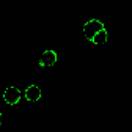
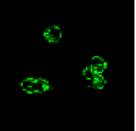
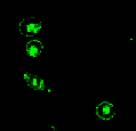
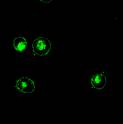
Ligand-independent
internalization of the 5-HT2A GFP receptor upon activation of PKC by
PMA in HEK293 cell line
Control
10nM
PMA
1mM
PMA
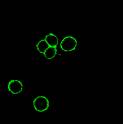
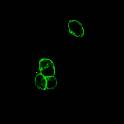
Inhibition
of the 5-HT2A GFP receptor internalization in the presence of
sphingosine (an inhibitor of PKC) in HEK293 cell line.
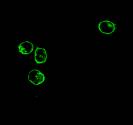
Control
10mM
5-HT
10mM
5-HT+50mM 10mM
5-HT+200mM
sphingosine
sphingosine
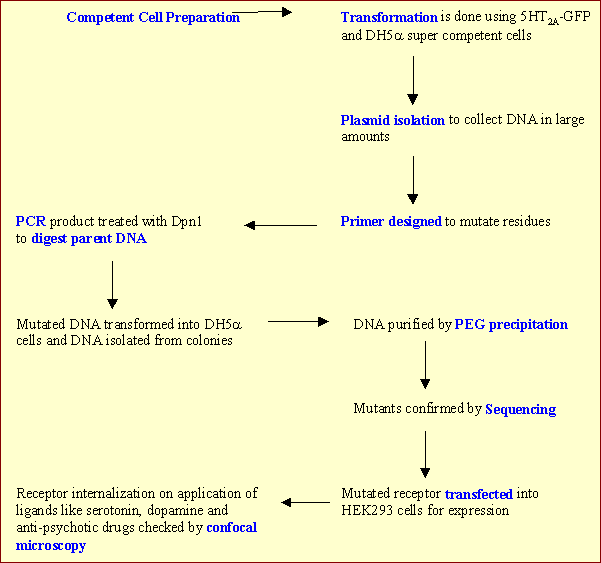
Scheme
of the experiment and Results
In order to identify the molecular mechanisms behind the
process, I had checked the role of the residues present in the third
intracellular loop and at the C terminus of 5-HT2A receptors, which
might be phosphorylated by PKC and thus played a role in the
internalization process. These residues were mutated sequentially by
site-directed mutagenesis. Failure to internalize implied that the
residue must be involved in the internalization of the receptor.
Discussion
Serotonin-2A (5-HT2A) receptors are
seven-transmembrane G-protein coupled receptors (GPCRs).
The sequence of the third intracellular loop has been found to be
conserved (98% homology) between rat and human 5HT2A
receptor, suggesting a strong conservation of G-protein coupling.
Various antipsychotic agents and
antidepressants bind with relatively high affinity at 5-HT2A
receptors. Chronic administration of 5-HT2A antagonists
results in a paradoxical down-regulation of 5-HT2A receptors;
such a down-regulation would be of benefit in the treatment of
depression. Antipsychotic
drugs such as clozapine, olanzapine, risperidone, sertindole, and
ziprasidone that are potent serotonin 5-HT2A
antagonist, as well as being a slightly less dopamine D2
antagonist, (serotonin-dopamine antagonist concept) are very
effective against diseases like schizophrenia. These drugs show lesser extra pyramidal side effects (EPS) than those, which are more
potent at Dopamine receptors
As the vasoconstrictor effects of 5-HT2A
receptor stimulation are markedly potentiated in hypertension and
atherosclerosis, selective 5-HT2A receptor antagonists,
notably ketanserin, are also clinically useful for hypertension.
Therefore, any findings from these experiments
regarding the internalization mechanism of 5-HT2A receptors would be an
important information to design drugs that act through this
receptor.
(The
project has now been completed and the residue which is responsible
for the internalization process has been identified. The results
will be sent for publication.)
2.
"Identification of Anti-Inflammatory Molecules that Block the
Leukotriene Biosynthetic Pathway, Towards the Development of a Drug
for the Cure of Asthma."
Cellular
Biochemistry Division, Indian Institute of Chemical Biology, Kolkata
(Under CSIR, Govt. of India)
Guide:
Dr. Siddhartha Roy & Dr. Ranjan Bhadra
The oxidation of arachidonic acid is mediated by 5-lipoxygenase leading
to the formation of leukotrienes, which are powerful triggers to
evoke asthma. Therefore the blocking of this enzyme is being
targeted as a therapeutic strategy for the control of asthma. As
part of an interdepartmental and inter-institutional project, I am
screening different compounds of synthetic and natural origin, to
identify potential inhibitors of this enzyme, which will eventually
lead to the development of a drug for asthma.
(The
project is in progress.)
3.
"Study of Immunomodulatory Responses on Macrophage Cells by Leishmanial Lipoproteins."
Cellular
Biochemistry Division, Indian Institute of Chemical Biology, Kolkata
(Under CSIR, Govt. of India)
Guide:
Dr. Ranjan Bhadra & Dr. Krishna Das Saha
Lipoproteins from several bacteria, Mycobacteria
and Mycoplasma show profound immunomodulatory roles including
cellular apoptosis. Lipid from Leishmania sp. has been seen
to modulate the function of the immune system. This lipid has been
found to be tightly associated with some proteins. Since, macrophage
is the host of Leishmania parasite, the present study was designed
to venture the role of Leishmanial lipoproteins on immune responses
of the macrophage cells. Effects on cytokines (interleukins and TNF-a), induced nitric oxide, ROS and signaling
intermediates (PKC, MAPK and NF-kb) are being studied by FACS, Western-blot analysis, RT-PCR and ELISA
studies.
(The
project is in progress.)
|
Knowledge of techniques...
Project1:
- Bacterial transformation
- Plasmid isolation
- Primer designing
- PCR and site-directed
mutagenesis
- DNA sequencing
Project 2:
- Oxygen consumption assay by
oxymeter
- ELISA based
spectrophotometric analysis
- Cell culture (human
pancreatic cancer cell line MIA-Pa-Ca-2, human prostate
cancer cell line PC-3)
- HPLC analysis.
Project 3:
- FACS
- Cell culture (rat
macrophage cell line RAW 264)
- Western Blot
- ELISA
- RT-PCR
- PKC, MAPK and NF-kb
assay.
|
|