 |
|
|
|
|
|
|
|
|
|
|
|
|
|
|
|
|
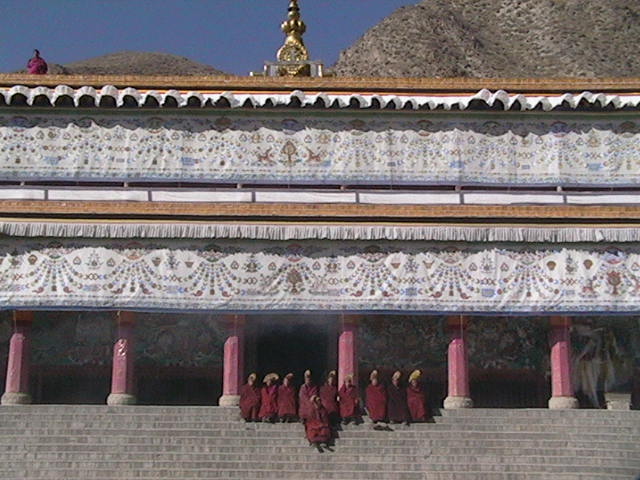
After breakfast in a tiny Tibetan teashop (Papa had porridge made of tsampa, i.e. barley flour, the main staple of Tibetans), the next day we visited the monastery. We walked through the various alleys (very dirty and smelly!) when we suddenly heard monks blowing on conch horns from the roof of the main temple hall. Inside the courtyard a dozen or so other monks were already seated on the stairs leading to the main entrance of the building and chanting prayers aloud. Soon more arrived from all over the monastery complex, many wearing large yellow hats, also sitting down on the steps and taking off their boots. On the roof we heard gongs being hit and one monk "Oohing" at the top of his lungs. |
|
|
|
 |
|
|
|
 |
|
|
|
|
|
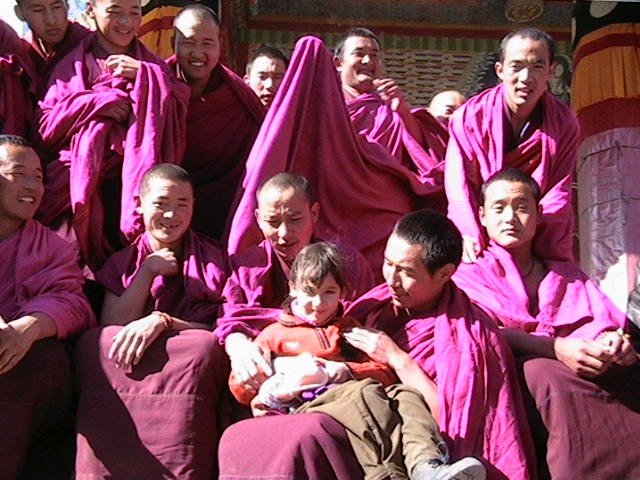
Then everyone went inside (we too with some other pilgrims). It was very dark and eerie with just a bit of daylight coming through here and there. The hall contained 400 large pillars amoung which the monks were sitting in rows. The walls were painted with scenes of Buddha's life. Small Yak butter oil lamps were burning at the back in front of large, golden Buddha statues. Some side rooms contained funerary stupas of former abbots. Everything seemed very holy as the pilgrims were bowing and praying in front of most of these shrines. Money was also offered, as well as Katas (thin white scarves). The monks were served salty Tibetan tea (with rancid butter) and tsampa before chanting prayers in unison. Later some of the younger ones came out to talk and joke around with us.
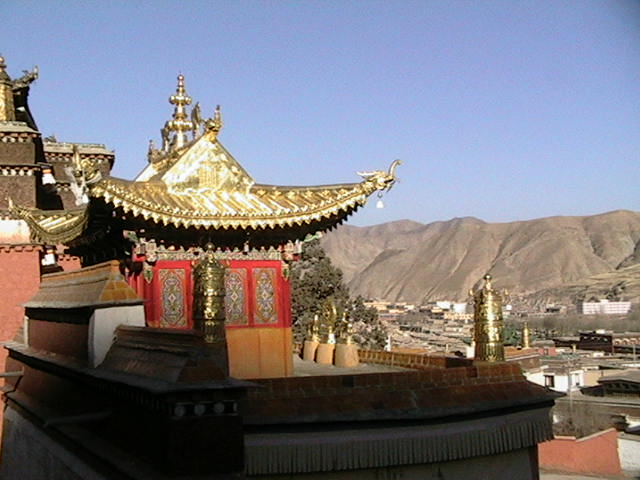
We visited other halls, all more or less similar, but sometimes locked unfortunately. Often groups of pilgrims would many times circumnavigate the building while whispering "Om Mani Pad Meum", turning prayer wheels or counting beads of a rosary. Some would even do this by prostrating (lying flat on the ground, moving 6 ft. forward, lying down again) all the way around or just in front of the main door. One stupa we could even climb to the top and have a great view of the area. There is a 3 km. busy pilgrim's path around the monastery, full of large fixed praying wheels (1000+) that one swings clockwise when one passes by (they are filled with prayers and each turn sends off all these prayers). Then 2 young monks invited us to visit their quarters around a small court: a bedroom, a praying room and a kitchen. |
|
|
|
 |
|
|
|
 |
|
|
|
|
|
The 3-4 days we stayed in Xiahe always started with pancake breakfast at the Labrang Restaurant, a friendly Tibetan restaurant with English menu. There we would meet other travelers and get information about our next destinations. Despite the cold weather (especially once the sun was down) we decided to continue south by road, instead of heading back to Chengdu by train via Lanzhou. You see, we had bought another souvenir in Xiahe. Mommy saw this pair of Tibetan carpets and liked them instantly. Then Papa was sent in to negotiate. After much haggling with the Hui shopkeepers, they closed the deal. Since bussing this and our packs over extra rough roads between 3-4000 m. elevation seemed a little much, we thought that hiring private transportation might be an acceptable option. Through the restaurateur we were able to find a taximan who would take us to Songpan, a 3-day trip south.
Our last day in Xiahe we walked around town and the monastery some more, had a typical lunch of Tibetan noodles (thugpa), and in the evening we ate fried and steamed Momos (dumplings). We were able to call A. Joanna in Toronto so Mommy knew Grandpa was OK, but it made me feel very homesick. |
|