 |
|
|
|
|
|
|
|
|
|
|
|
|
|
|
|
|
|
|
June 1, 2003, Gangtok, Sikkim (India)
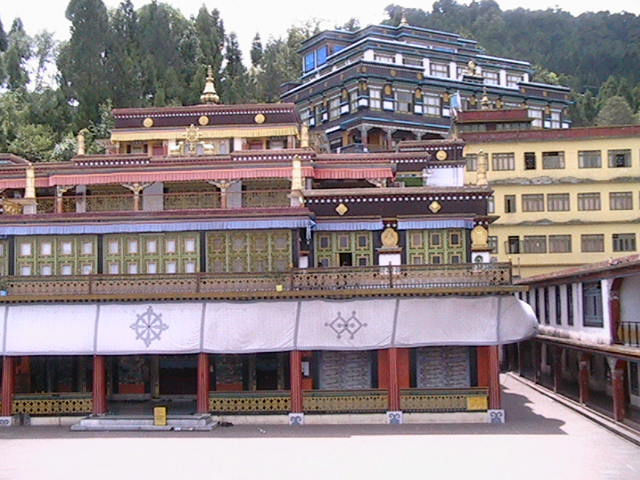
Our Jeep had to stop a few minutes at the Sikkim border to let us foreigners get our permits checked by the police (Indians don�t need a permit, neither a visa to visit Nepal by the way). It was late afternoon when we arrived in Gangtok, which like Darjeeling lies on top of a large ridge, but again no snow-capped Himalayan mountains to be seen due to the clouds. We managed to get the last room in Hotel Tibet, which had a beautifully decorated lobby. Our room though in the basement was something else and therefore we moved out to another place the next day. The town was full of Indian tourists and the locals had even more Tibetan features than those in Darjeeling. The weather was pretty drab and during the evening it would often rain. We still went out on an excursion the next day to the Rumtek monastery by taxi van. The sun had just come out when we reached it high up on one of the lush mountain slopes opposite Gangtok, providing for great views of it. You have to walk up a lane past small shops and teahouses as well as a bunch of prayer wheels. The now very familiar multi- |
|
|
|
coloured prayer flags, either strung in series between two points or vertically attached to long bamboo poles, could be seen all around too. It was pretty quiet inside the monastery: some monks were chanting prayers inside the main temple; two old pilgrims were walking around it with prayer wheels in their hands; a couple of Indian tourists were taking pictures and video; policemen were standing guard� The folks spent a quiet time appreciating the detailed decorations, enjoying the views and the general peaceful atmosphere. In June the place comes alive during the Saga Dawn festival with various processions and dances, the more impressive ones performed by monks in very colourful outfits and masks. |
|
|
|
 |
|
|
|
|
|
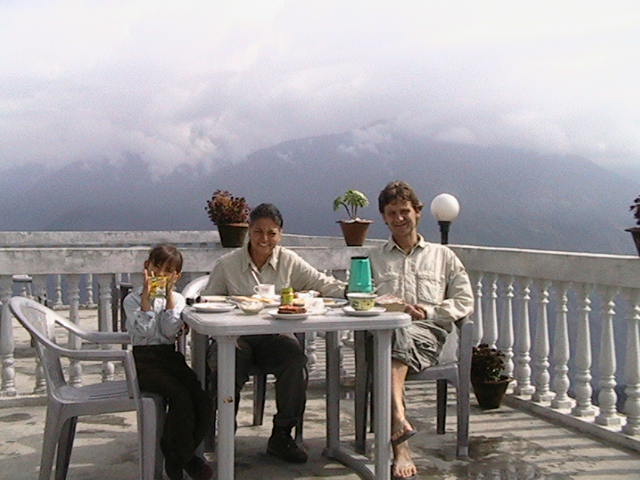
The next day we left for a week�s visit of the countryside (generally above 2000 m. altitude), starting off with a long Jeep ride to Pelling in southwestern Sikkim. The main differences with the mountain scenery further south in West Bengal is that it�s much more lush (it rains here more often and there are waterfalls everywhere), the valleys are steeper and the trees taller, there are less villages and cultivated fields (not as much populated) and the rivers seemed larger (the Teesta forms the border with India and is good for rafting). Pelling consists basically of a group of hotels and guesthouses on top of a ridge: not all that appealing, really. We had a basic room with a large terrace, providing during breakfast and lunch for great views when the fog would clear up. The main draw to this |
|
|
 |
|
|
|
|
|
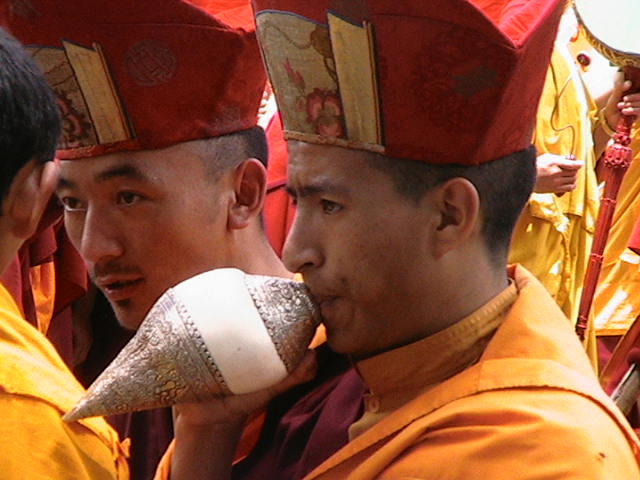
place is Pemayangtse monastery, one of the oldest in Sikkim. You walk on the road through a thick pine forest for a couple of kilometers before you come to the smallish temple on top of a wooded hill. There was hardly anybody around, maybe a monk or two and a couple of Indian tourists. The fog was quite dense too so it became a bit gloomy, especially inside the dimly lit temple where you can see the usual mural paintings and sculptures of Buddha and high lamas. One room had a huge collection of religious books, usually made of long bamboo leaves stacked between 2 wooden planks. When we went back the next morning with better light for pictures, the place was more interesting as there were a dozen or so monks that went in for prayers after 2 boys blew conch horns on the four corners of the temple. |
|
|
|
|
|
|
 |
|
|
|
|
|
We left in the afternoon for Yuksom, a wonderful, old little village set in a high valley. There were hardly any places to stay and we chose the only hotel: an old manor with a pleasant and pretty garden. Yuksom is also at the end of the most popular trek in Sikkim, leading over a 5000 m. high pass to an unobstructed view of Kanchen-junga. A group of 12 British gentlemen arrived that day with many porters in pouring rain. They were all friends and had completed 15 days of awful weather, tricky trails, but good comradeship and laughs. For the last eve-ning their porters had organized a song & dance show around the campfire, and they in turn planned the same. The result was a very entertaining evening where east and west intermingled and where I also tried a Nepali dance. The two days we stayed there I had a wonderful time playing in the garden and the hotel with a group of children from Calcutta: a lot of running around, feeding rabbits and collecting tadpoles. My parents and I did a steep hike past several prayer wheels powered by streaming water, to another old little monastery built in 1700. |
|
|
|
 |
|
|
 |
|
|
|
|