 |
|
|
|
|
|
|
|
|
|
|
|
|
|
|
|
|
|
|
|
|
|
|
 |
|
|
|
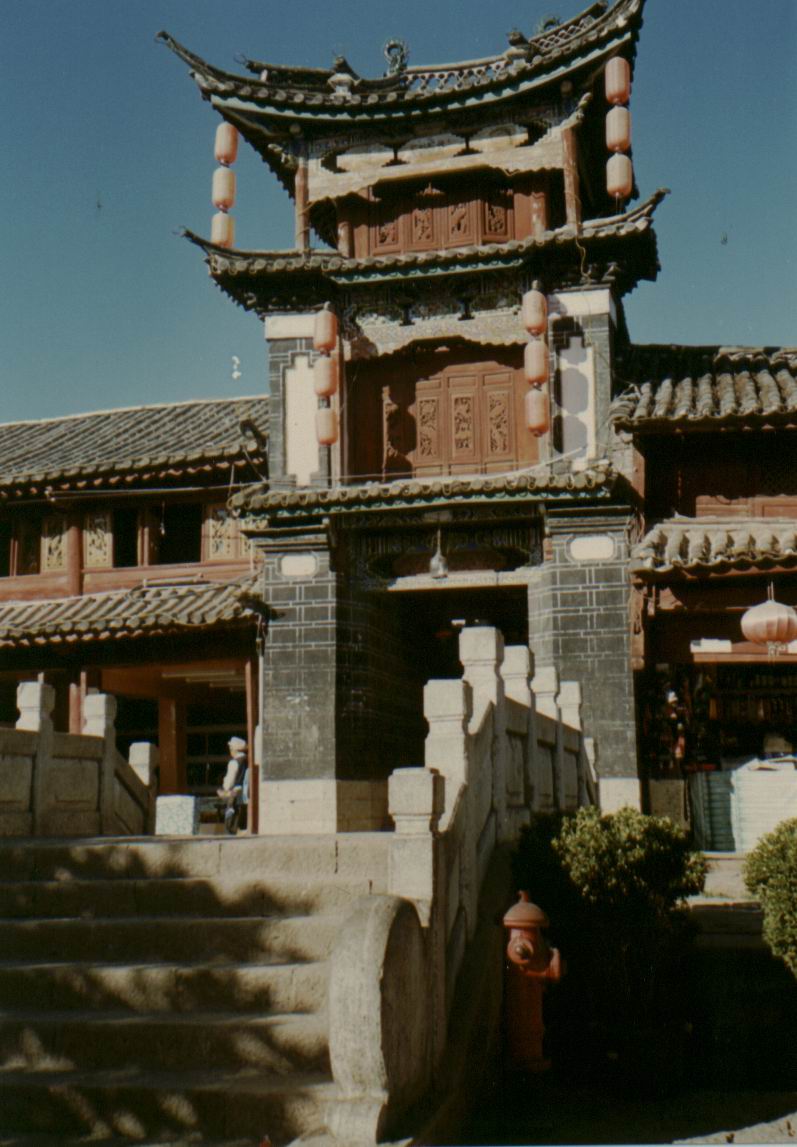
I should add another main attraction of Lijiang: its people. It is indeed the main town of the Naxi minority people, and again with mostly the older ladies in authentic blue costumes. They still live in the old town and can often be seen walking around or singing in groups on the main square. The Naxi also have one of the few remaining hieroglyphic scripts.
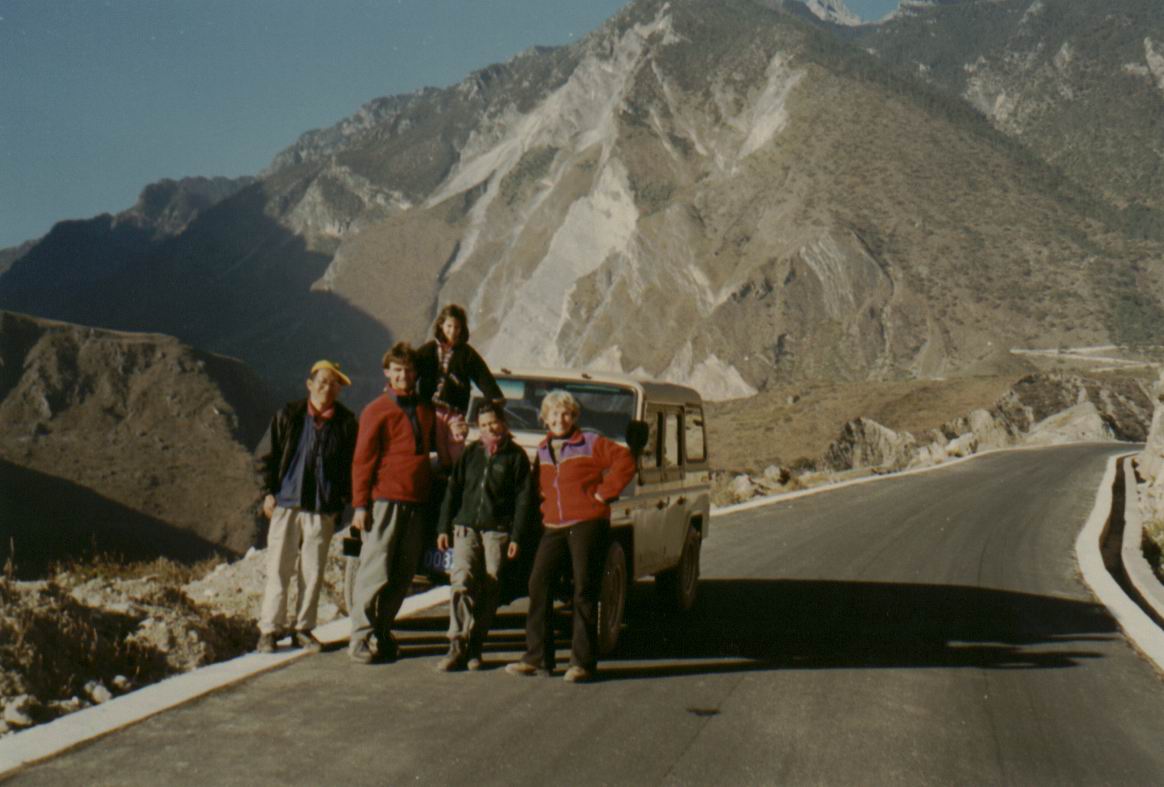
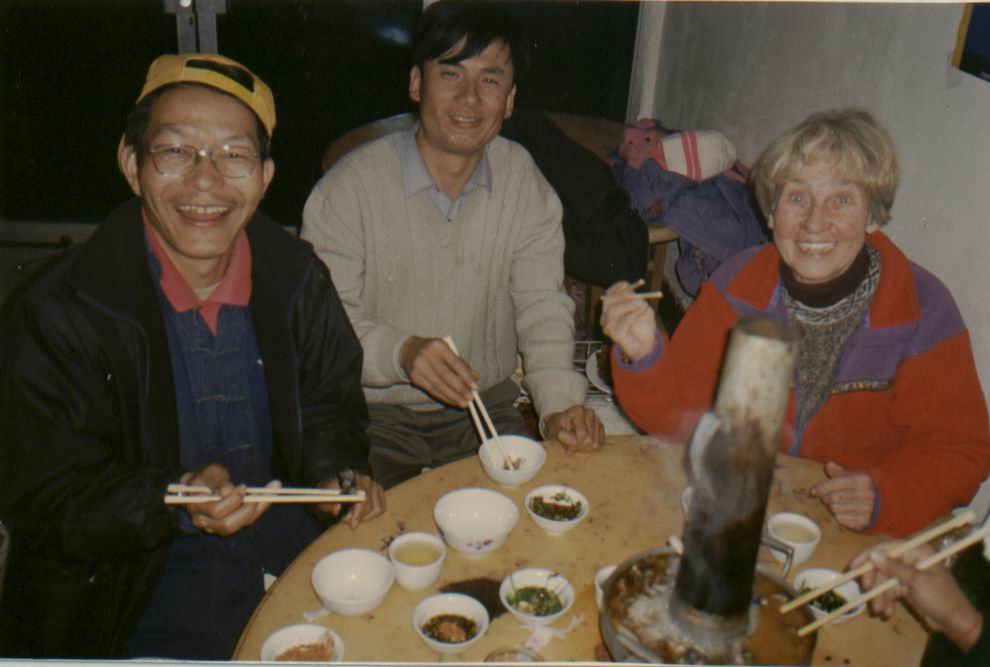
On our second day in Lijiang we were approached by Richard and his wife, both Naxi and who spoke English very well. He offered his guiding services and suggested to take us on a trip. Being naturally cautious with this type of approach, Papa did some due diligence and ended up making a deal with them: 2 days with a Jeep through a famous gorge and onwards north to Zhongdian. So on Dec. 10 they picked us up from our guesthouse and the Jeep (including Richard + driver) was indeed ready to go. It was not a comfortable Japanese four-wheel drive, but a Beijing Jeep: more like a regular bumpy Jeep. Our first destination was Shigu, an old Naxi village next to "the first bend" in the yellow/brown Yangtze River. From there |
|
|
|
|
|
 |
|
|
|
|
we followed the fifth largest river in the world into one of the deepest
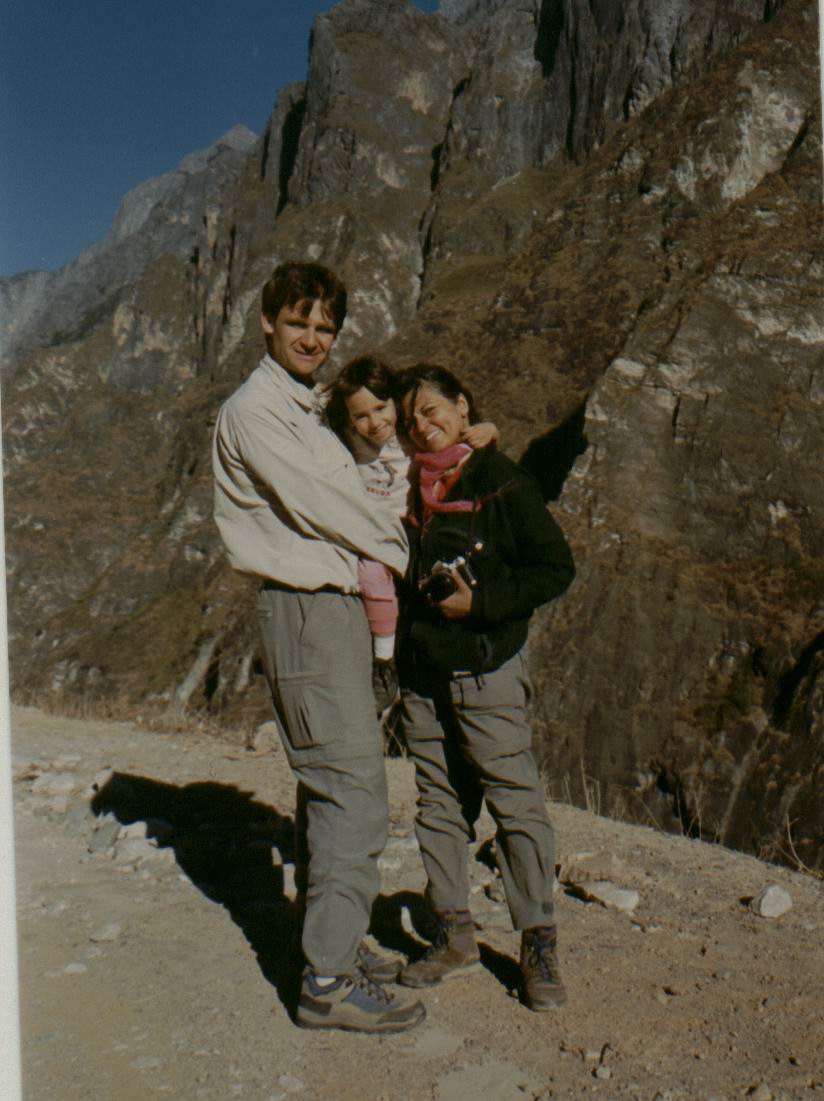
(3000 m. or 13,000 ft.) gorges in the world: Tiger Leaping Gorge, between Haba Mt. and Jade Dragon Mt. Most travelers tend to hike the entire gorge (50 odd km.) high up in the mountains, passing various villages with guest-houses. We took the recently completed road closer to the roaring river, providing us with dramatic scenery and vertiginous depths right off the road. Here and there workmen were busy repairing pretty scary damaged sections. Halfway through the gorge we |
|
|
|
|
|
 |
|
|
|
stopped at a guesthouse called Woody's Chateau. With two Swedish hikers we were the only guests that evening. Before dinner Papa had to dash 30 min. through terraced fields down to the Yangtze River - just for the fun of it! Sleep came easily in our humble wooden room, as it wasn't cold at all.
After breakfast the next day we continued our way through the steep walls of the canyon and only saw the sun when we exited. Took some spectacular shots and proceeded over very scenic mountainous terrain, inclu-ding the 2 snowy peaks in the distance. It was a good & comfortable road, recently completed and the weather was perfect. We stoppedfrequently for pictures or for a short walk in Naxi and Yi villages. I was especially amazed by the Yi ladies who were wearing wide black hats with some embroidery, as well as long, wide and colour-ful skirts. Very different from the Yi we had seen around Xichang. Needless to say we had a wonderful time; that is, until the car broke down at the end of the day! At a pass, near some foresters' homes, our Jeep refused to start again. For the next couple of hours the driver |
|
|
|
|
|
 |
|
|
|
|
and Richard tried all sorts of tricks; we were already making plans for the night... But then, with the help of a ranger, it worked. Gladly we jumped in the car and took off. Soon we reached the more desolate landscapes of the Zhongdian plateau, where only Tibetans live. Their houses were huge, so different from the ones in northern Sichuan: two stories and made of heavy, 1+ m. thick, wooden pillars and bricks. And as soon as the sun went down it really became freezing cold, the plateau being between 3000 and 3500 m. altitude. So when selecting a hotel in town, it was important not only to have
hot water, but also a working heater (+ we had |
|
|
|
|
|
|
The next morning the cold was even worse: -15 C in the sun!! Fortunately I had the right clothes on, but still... At 9 am the challenge was finding a heated place open for breakfast, since most businesses tend to keep their doors open (go figure...). A backpacker��s cafe had understood our needs and soon we had a great western meal of pancakes and muesli around a hot stove. The rest of our morning was spent in the streets of the old part of Zhongdian, where we also visited a small temple overlooking the town (incidentally, they were building a huge, 15 m. high prayer wheel there...). |
|
|
|
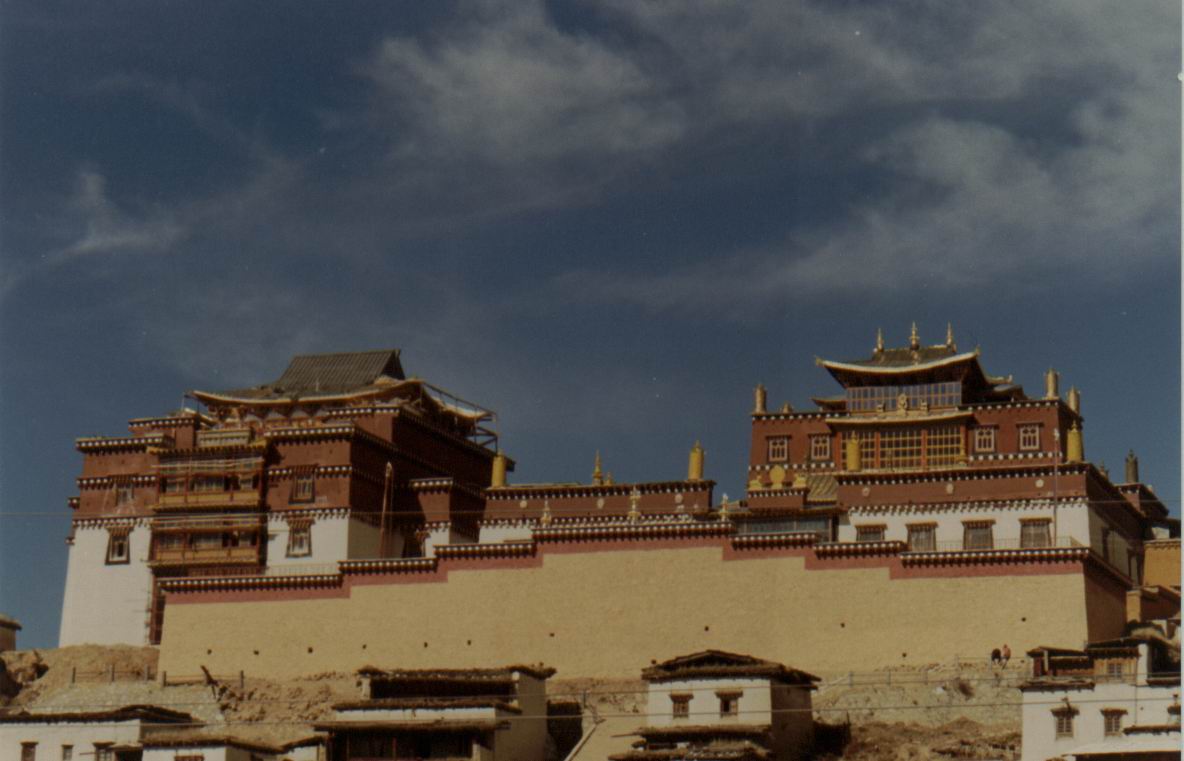
We had rendez-vous'd with our Jeep at 1 pm to first visit the main monastery in town: Songzanlin. Perched on a hill and surrounded by other, higher hills, the various temples and monk dwellings made for a very scenic ensemble, much like the Tibetan monasteries around Leh in Ladakh (the Chinese call this one also the "little Potala" but that is really exaggerated). We entered by climbing steep stairs to the main praying hall that is 5 stories high. |
|
|
|
 |
|
|
|
|
|
Please click here to go to the next page. |
|