It's extremely important that you have someone keep a constant vigil on key areas of your body. Examples of these are: the areas that have the least amount of skin thickness or muscle tissue; any area that has a bone that you can see or feel; and the hip area on which you have the majority of your weight (in sitting or lying down). A pressure sore can be detected and prevented if you know the signs for which to look. This is extremely important!
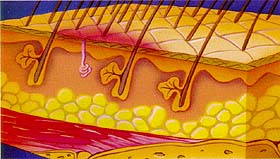
The beginning signs of a pressure sore (bedsore) are any redness or abnormal color in your skin. If you happen to see a tear in your skin, this is also a warning sign that you may be getting too much pressure. These symptoms usually occur when you've been sitting still too long or lying still in one position without getting any pressure relief. You must remember that your blood circulation isn't the same as before your accident. You'll usually have lower blood pressure and less circulation throughout your body. Sitting still too long without pressure relief results in the skin tissue dying due to a lack of blood supply and the beginning of a pressure sore. There are other causes for a pressure sore to occur. You can get one by moving one direction and the skin moves opposite of the bone underneath, which results in an interior skin tear. Yet another type is an abrasion, which occurs when you pull yourself or someone pulls you across a surface of any kind instead of lifting you. A stone bruise may also occur after a bump or fall and result in skin damage that may not show up immediately. You will need to check any area that you happen to bruise frequently to insure that you are not getting a pressure sore. It's also very important that you wear the proper type of shoes, since your feet tend to swell while sitting upright. You need to immediately consult your physician about any troubled area.
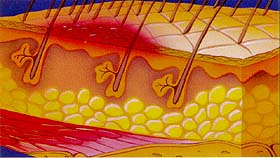
It's better to be over conscientious than to wait until it's too late. This is because a pressure sore can begin at the bone and works it's way outward in certain cases. (This is what my plastic surgeon says.)
If you remember, before your accident, you were constantly shifting your position while sitting in a chair or lying in bed although you may not have been aware of it. Your nerves were telling you that your body needed to be repositioned to get more comfortable. For example, ask anyone who isn't injured to sit absolutely still for 30 minutes. If they should last that long, you'll see how much they move around once they've stood up. Odds are that they won't last that long, I've had people try.
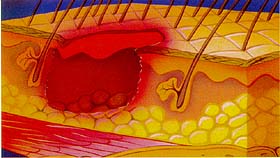
If and when you notice any redness or change in color that doesn't
disappear [fade] within 15 or 30 minutes after the pressure has been removed you need to
explore any possible cause. If the discovered area is on your hips, check your wheelchair
cushion and your bed for possible causes. You will need to make sure your wheelchair cushion
has the proper amount of air, with not too much or too little. You also need to examine every
aspect of your daily routine, starting from the time you get dressed and continue to examine
every procedure you go through until returning to bed. Examine every aspect from how you get
out of bed, insuring that you are not causing friction while transferring into your chair.
You may need to use a sliding board or other divce for easier transfer from bed to your chair. It's also
important that you maintain a balanced diet, eating plenty of protein and calories, to maintain
a healthy amount of skin growth. This also helps with the healing process. It's also important
to supplement your diet by taking multiple vitamins, as vitamins are important in the healing
process. You'll eventually be capable of determining what needs to be adjusted better--easier than your physician can.
Should you happen to get a pressure sore, it's important that you keep the pressure off by any means
possible. It's extremely important that you maintain good hygiene. Keep the damaged area clean by using
a mild soap or saline solution. Once you've cleaned the area, dry it thoroughly, but gently, to prevent
any further damage. Consult with your physician as soon as possible.
If a pressure sore is caught in time, it can heal without surgery, although it's an extremely difficult and time-consuming process. This is the last thing you want; believe me, I know first hand how bad things can get.
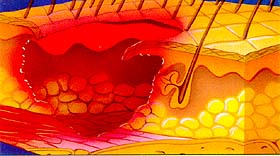
A pressure sore area will
deteriorate extremely fast if the pressure isn't removed. After you've had your physician or health care
provider examine the area, and should they determine that surgery isn't necessary, you need to know if and when
it starts healing. THE HEALING PROCESS will begin gradually. You may not even notice any change for some
time. Signs that it is healing are the beginning of it diminishing in size. The tissue surrounding the
sore will begin to turn a mild pink color, which shows you that you are receiving a proper amount of
blood flow to the area. If the sore hasn't started healing soon or starts getting a distinctive
rotten odor, this is a major cause for concern. If the sore becomes infected, you may develop a
fever and chills, so be extremely cautious.
Pressure sores (bedsores) are one of the leading causes
of death occurring in the disabled. This is a major WARNING SIGN that you should consult your physician
immediately.
If your pressure sore requires surgery, there are several different methods used
by surgeons. The first thing that most physicians do is to debreed the injured area. This results in
the doctor removing any dead tissue, using a laser scaffold or a manual scaffold. Once this procedure
has been completed, you'll be limited to bed rest only. My physician did this step as an outpatient
surgical procedure. It only took about 3 hours and then I was able to return home for a week.
While I was home, I was required to keep the open sore clean by using gauze soaked with saline
solution and clorpactin solution (a diluted type of medical bleach) to pack into the open area.
This prevents any infection while waiting to return for surgery. The procedure I had done was
called a flap; this involves taking part of a healthy muscle and moving it into the damaged area.
This will usually result in your hips being a slightly different, size since muscle tissue was moved around,
leaving an area with less muscle mass. After receiving any type of surgery that requires bed rest,
you'll experience a loss of skin durability from lying on your back for an extended period of time.
Now that you're not used to sitting for a prolonged period of time, you'll probably be transferred
from the hospital to the rehab center for about 2 or 3 weeks. Once you've settled in there, the
physical and occupational therapist will work on getting you on a sitting routine. This happens
only after the pressure sore has healed completely.
The scar tissue that results from surgery
isn't as tough as your skin was before getting a pressure sore. You must also remember that
the scar tissue may be a slightly different color than the surrounding skin. This means that
you're going to need to watch everything extremely close to prevent any further damage. The physical
therapy department will put you on a sitting regiment usually starting with 15 minutes at a
time (3 times daily). After your first time, you'll be helped back into bed where the nursing
staff and or doctor will examine you to insure that there isn't any redness. If there should
be, they will usually limit your sitting time accordingly until you are able to sit for a
longer period of time. After you've managed to sit for three, 15-minute sessions, you will
be gradually increased to 30 minute time trials each day. (Remember you should space your
sitting trials by one hour at least.) If at any time during this process you should notice
any redness or discolor, you should decrease your sitting time. You should hold at that level until three
successful trials have been achieved. You will gradually rebuild your skin tolerance.
If at any time during your sitting process you notice a reddish
color, return to the level you were before increasing your sitting time. After you've
managed to increase your sitting time to 1-hour periods, you should always get
pressure relief for about 5 or 10 minutes each hour. While your sitting in your
chair/wheelchair makes sure that you're sitting upright and straight as this
distributes the pressure equally, helping to prevent a reoccurrence.
I can't begin to stress how important it is for you to constantly check for areas
of skin irritation! I remind you, you should always relieve pressure at least once every hour
and the more often the better. If you are unable to relieve the pressure yourself, have a
family member or your healthcare attendant help you. PRESSURE SORES ARE ONE OF THE LEADING CAUSES OF DEATH FOR PEOPLE WITH
SPINAL CORD INJURIES