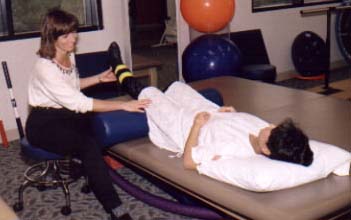
Physical therapists (PTs) provide services to help restore function, improve mobility, relieve pain, and prevent or limit permanent physical disabilities of patients suffering from injuries or disease. They restore, maintain, and promote overall fitness and health. Their patients include accident victims and those with disabling conditions such as low back pain, arthritis, heart disease, fractures, head injuries, and cerebral palsy.
Therapists examine patients' medical histories, then test and measure their strength, range of motion, balance and coordination, posture, muscle performance, respiration, and motor function. They also determine patients' ability to be independent and reintegrate into the community or workplace after injury or illness. Next, PTs develop treatment plans describing a treatment strategy, the purpose, and anticipated outcome. Physical therapist assistants, under the direction and supervision of a PT, may be involved in the implementation of the treatment plan. Physical therapist aides perform routine support tasks, as directed by the therapist.
Treatment often includes exercise for patients who have been immobilized and lack flexibility, strength, or endurance. PTs encourage patients to use their own muscles to further increase flexibility and range of motion before finally advancing to exercises that improve strength, balance, coordination, and endurance. Their goal is to improve how an individual functions at work and home.
PTs also use electrical stimulation, hot packs or cold compresses, and ultrasounds to relieve pain and reduce swelling. They may use traction or deep-tissue massage to relieve pain. Therapists also teach patients to use assistive and adaptive devices such as crutches, prostheses, and wheelchairs and may also show patients exercises to do at home to expedite recovery.
As treatment continues, physical therapists document progress, conduct periodic examinations, and modify treatments when necessary. Tracking the patient's progress allows them to prioritize areas requiring attention.
PTs often consult and practice with a variety of other professionals, such as physicians, dentists, nurses, educators, social workers, occupational therapists, speech-language pathologists, and audiologists.
Some physical therapists treat a wide range of ailments; others specialize in areas such as pediatrics, geriatrics, orthopedics, sports medicine, neurology, and cardiopulmonary physical therapy.
All states require physical therapists to pass a licensure exam after graduating from an accredited physical therapist educational program before they can practice.
Physical therapist assistants and aides perform components of physical therapy procedures and related tasks selected and delegated by a supervising physical therapist. These workers assist physical therapists in providing services that help improve mobility, relieve pain, and prevent or limit permanent physical disabilities of patients suffering from injuries or disease. Patients include accident victims and individuals with disabling conditions, such as low back pain, arthritis, heart disease, fractures, head injuries, and cerebral palsy.
Physical therapist assistants perform a variety of tasks. Treatment procedures delegated to these workers, under the direction of therapists, involve exercises, massages, electrical stimulation, paraffin baths, hot and cold packs, traction, and ultrasound. PT assistants record the patient's responses to treatment and report to the PT the outcome of each treatment.
Physical therapist aides help make therapy sessions productive, under the direct supervision of a physical therapist or physical therapist assistant. They are usually responsible for keeping the treatment area clean and organized and preparing for each patient's therapy. When patients need assistance moving to or from a treatment area, aides push them in a wheelchair, or provide them with a shoulder to lean on. Because they are not licensed, aides perform a more limited range of tasks that include: some clerical tasks, such as ordering depleted supplies, answering the phone, and filling out insurance forms and other paperwork. The extent to which an aide or an assistant performs clerical tasks depends on the size and location of the facility.
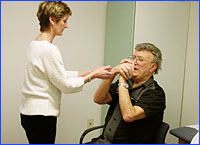
Occupational therapists (OTs) help people improve their ability to perform tasks in their daily living and working environments. They work with individuals who have conditions that are mentally, physically, developmentally, or emotionally disabling. They also help them to develop, recover, or maintain daily living and work skills. Occupational therapists not only help clients improve basic motor functions and reasoning abilities, but also compensate for permanent loss of function. Their goal is to help clients have independent, productive, and satisfying lives.
Occupational therapists assist clients in performing activities of all types, ranging from using a computer, to caring for daily needs such as dressing, cooking, and eating. Physical exercises may be used to increase strength and dexterity, while paper and pencil exercises may be chosen to improve visual acuity and the ability to discern patterns. A client with short-term memory loss, for instance, might be encouraged to make lists to aid recall. A person with coordination problems might be assigned exercises to improve hand-eye coordination. Occupational therapists also use computer programs to help clients improve decision making, abstract reasoning, problem solving, and perceptual skills, as well as memory, sequencing, and coordination-all of which are important for independent living.
For those with permanent functional disabilities, such as spinal cord injuries, cerebral palsy, or muscular dystrophy, therapists instruct in the use of adaptive equipment such as wheelchairs, splints, and aids for eating and dressing. They also design or make special equipment needed at home or at work. Therapists develop computer-aided adaptive equipment and teach clients with severe limitations how to use it. This equipment enables clients to communicate better and to control other aspects of their environment.
Some occupational therapists, called industrial therapists, treat individuals whose ability to function in a work environment has been impaired. They arrange employment, plan work activities, and evaluate the client's progress.
Occupational therapists may work exclusively with individuals in a particular age group, or with particular disabilities. In schools, for example, they evaluate children's abilities, recommend and provide therapy, modify classroom equipment, and in general, help children participate as fully as possible in school programs and activities. Occupational therapy is also beneficial to the elderly population. Therapists help senior citizens lead more productive, active and independent lives through a variety of methods, including the use of adaptive equipment.
Occupational therapists in mental health settings treat individuals who are mentally ill, mentally retarded, or emotionally disturbed. To treat these problems, therapists choose activities that help people learn to cope with daily life. Activities include time management skills, budgeting, shopping, homemaking, and use of public transportation. They may also work with individuals who are dealing with alcoholism, drug abuse, depression, eating disorders, or stress related disorders.
Recording a client's activities and progress is an important part of an occupational therapist's job. Accurate records are essential for evaluating clients, billing, and reporting to physicians and others.