 For all you photo
buffs with fast modems,
For all you photo
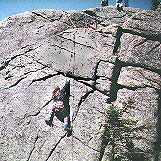
buffs with fast modems,check out some Climbing Pictures.
For all you photo
buffs with fast modems,
check out some Climbing Pictures.
Climbing in the Adirondacks fits no specific mold. Unlike the Gunks, there is no central hub of activity: with 6 million acres to cover, the locals are pretty spread out. Likewise, the type of climbing varies from crag to crag. At Chapel Pond Slab, folks enjoy easy routes with clean rock and little pro, while across the road hard guys are falling off the overhanging Spider's Web. Farther afield, bold leaders tiptoe up Sliderules on Big Slide Mtn. Those with a real bent for alpinism trek out to Wallface, one of the East's longest vertical drops and one of the most challenging cliffs anywhere.
In the southern Adirondacks, crags of every conceivable type abound. Many cliffs await a first ascent. For those who want to explore new rock or climb established routes in a remote setting, this area has plenty of both. In many ways, the southern Daks have the "new" crags, even though some of these "new" crags have been known and climbed for decades. The word has been slow getting out and the will to get to these cliffs weak. Those who have persevered have unearthed real gems: Pharaoh Mountain's huge lower wall and short upper tiers, Crane and Huckleberry Mountains' liberal quantity of cliff and slab, the better-known face of Roger's Rock, and remote areas like Barton High Cliffs and Puffer Mountain.
Note that most climbs in the Adirondacks have at least some sections with
little protection. Even bolted routes tend to have a lot of real estate between
bolts, testing the nerves of leaders. The prevailing philosophy of climbers
here has been traditioanal, bottom-up climbing. Although this has been challenged on almost every crag by preinspected, preprotected first ascents (many of which are excellent routes), the trend is not embraced as it has been almost everywhere else.
If you plan on putting up a new route, strive to adhere to a conservative method, and be honest in reporting your ascent style. In most established areas, bolts -if used at all- should be placed on lead. Some crags, Chapel Pond Slab especially, have a strong, ongoing NO BOLT ethic, and since pretty much the entire slab has been done without them (as Don Mellor points out, in hiking boots and even worse footwear), it proves nothing positive to place one. On both established routes and first ascents, a wire brush is a good companion. You don't need a monster on established lines, but on first ascents you can expect some scrubbing. In this, too, please be conservative: scrape off the holds, not the entire wall. Leave a little face for the lichen to enjoy!
If you plan on leading at all in the Daks, be prepared for a test of courage.
Start out on a route well within your ability, and back off before you're
up a creek. Here you will develop an excellent feel for just what your feet can really hold on to!
Keep in mind that most of the cliffs here are not only far from any hospital, they are often far from any road. An injured climber on, for instance Wallface, is at least a day away from modern medical facilities. This is a true alpine type of climbing, where the climbers are on their own.
The very best way to introduce yourself to Adirondack climbing is with a NYS licensed guide. These folks must have years of experience on the sharp end of a rope. They must have First Aid, CPR, and (believe it or not) Water Safety training; and they must pass a state test specifically on climbing and wilderness skills. Hiring an Adirondack climbing guide provides you with the knowledge of the best routes to start on, the current conditions of the area cliffs, and a leader who is accustomed to the peculiar nature of these mountains. A guide is your personal consultant for the Adirondacks, able to point out the classic lines, stay on route, deal with predicaments, and fill in your climbing day with all the facts and fables that make these mountains so special. There is no safer way to climb here than with a guide. And hiring one assures you will have a partner!
Adirondack Classic Routes
One of the latest areas to make the Adirondack Climbing Scene, the cliffs on Crane and Huckleberry Mountains have seen a lot of development since 1990. From boulder problems to 400' faces, these mountains have something for any climber willing to check them out. While most of Huckleberry's routes managed to get in the new Guidebook, Crane Mountain barely slipped in at the deadline, and more than half its routes aren't listed. Since Crane has occupied much of my time, I would like to mention a few of the newer routes and give my recommendations for the best of them. Click on the link to go to the Crane Page...