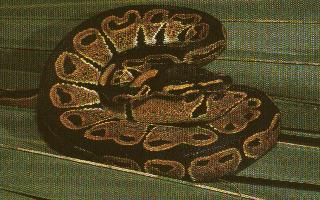
Common name : Ball Python (aka Royal Python)
Scientific name : Python Regius
Distribution : Central and Western AFrica
Size : Typically reach around 4' as adults. Large specimens can reach up to 5' - 6' in length.
Food : Amphibians, lizards, birds, and small mammals, such as gerbils and jerboas make up most of their diet in the wild. Mice and rats are not normally found in the wild for them to associate with food items. Wild caught balls are typically very picky eaters because of this fact. However, with a lot of perseverence and a ton of patience, they can be switched to frozen or freshly killed rodents as the mainstay of their diet. Force feeding should be used only as a last resort and should only be performed by an experienced herper.
Housing : Hatchlings can be housed in a glass aquarium for their first year. Adults should have the equalivent of 60" x 24" x 24".
Temprature and humidity : A temperature gradient of 80 - 85 degrees should be maintained for the daytime temperature with a nighttime drop of 70 - 75 degrees. A basking spot should be provided with a temperature of 90 degrees. DO NOT GUESS that the temperatures feel "about right". Use thermometers to ensure that they are within the limits. Access to a water bowl at all times should provide the proper humidity.
Lighting : Full spectrum UVA/UVB lighting is not needed. NEVER leave a light on 24 hours a day, 7 days a week. This will cause the snake to become stressed, unhappy, and unhealthy.
Heating : An under the tank heater will provide 24hr bottom surface heat which is neccessary for proper digestion. An incandescant bulb with a dome reflector situated above the basking area should provide the proper temperature gradient. REMEMBER to always use themometers to ensure temperatures are in the proper range. DO NOT GUESS.
Substrate : Newspaper or carpet type material is reccomended for its ease of cleaning and removal. For a more natural looking vivaria, orchid bark (Repti-Bark), pea gravel, aspen shavings, or pine shavings can be used. If you use shavings or gravel, you must ensure that the substrate is not ingested during feeding as this can lead to impaction and/or death. NEVER USE CEDAR OR REDWOOD SHAVINGS AS THEY CAN BE HARMFUL OR FATAL !!!
Water : Water should be made available in a large sturdy water bowl at all times. Aside from the necessity of providing water, a water container will also raise the humidity and provide an area for soaking to aid in proper shedding.
Maintenance : A weekly mainteance schedule should be implemented with all snakes. Clean the enclosure to remove feces and replace areas of soiled substrate as needed. Thw water container should be removed, cleaned, and disinfected weekly (sooner if the snake defecates in the water bowl, which is common for the bull snake). Never allow the substrate to remain damp as this could lead to to skin and health problems.
Notes : Ball pythons are one of the best starter snakes as long as you remember one thing - BUY ONLY CAPTIVE BRED. Buying fro a reputable breeder should help ensure that you are getting a healthy animall that is eating well. Also if you have any problems, you could contact the breeder for help. Balls are known for their "fasting" phase. Some may go without eating for up to a year. As long as no major weight loss is noticed, do not get too upset. This should not be a reason for getting a ball but it is something that you should consider.
