Why the music affects to our emotions?
Sneak preview to the music psychology
Why the music affects to our emotions? There is an answer to this question in Music psychology, but the problem of this answer is, that it is difficult to prove. It sciences one should prove ones theories, not only invent them. This theory is still a hypothesis, and that is why it is not widely known in the public. But I am not an academic, and I can write about it not fearing to loose my academic reputation. This is a sneak preview to the music psychology.
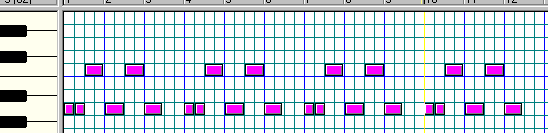
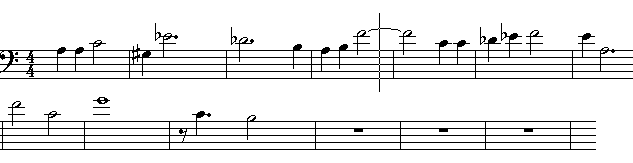
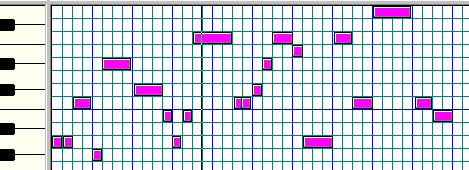
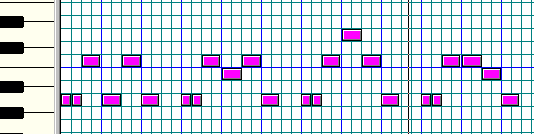
In the music we are always repeating a pattern of melody. There are always some notes forming a pattern, and in the music this pattern is repeated with variation. The variation is important - it is the key to music and emotions.
BasicPattern.wav
1. Basic pattern
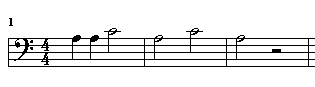
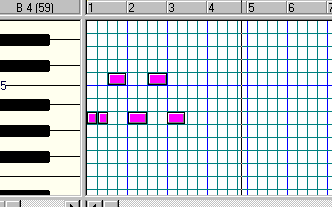 Graphics - Cakewalk Pro Audio: Bar displaying notes height and duration Graphics - Cakewalk Pro Audio: Bar displaying notes height and duration
|
The psychic system or our brains build a model of this pattern. This is inherent feature of our psychic system, it will always build a model of all kind of repetitive events in outside world, so it can diminish the information flow from outside world. In case of music these models of repetitive voices are very primitive or simple psychological models - they are called sensomotoric shemas - this kind simple schemas are typical for a little children when they are learning the basic movements and motoric skills.
But the variation of the melody pattern. Typical sensomotoric shemas can assimilate to them patterns, which are slightly different from previous pattern. The schema uses fuzzy logic when it accepts slightly different patterns. This is assimilation is basic quality of sensomotor schema - described in the beginning of 1900 by Piaqet.
At the same time the psychological sensomotric schema itself changes a little. This changing of inner schema is called accommodation.
Sensomotoric schemas, accommodation and assimilation are easy to remark and understand when one listen to music. But why the emotions? Sensomotric schemas are primitive, they differ from our more developed intellectual mental activity, so they have closer connection to emotional functions. On my view a human is holistic psychophysiological entity and emotional state of the organism have to be equivalent to level of schema change. There are differences how quickly schemas changes in different situations. Positive emotions mean that activity is successful and worth to continue, whereas negative emotions give the message to stop and change activity - change the schemas. The level of schema accommodation and assimilation tune the listener of music to respective emotional state.
The rhythm: We can distinguish very small errors in rhythm and recognize errors of milliseconds in the rhythm. So this assimilation accommodation process in rhythm is more difficult to percept on conscious level than in melodies or pitch levels of tones.
JavaFinn Frontpage - Multiple files music
Mailto Mikko Ahola